The Great Xbox Reset: Inside Microsoft’s Gaming Restructuring, Halo’s Move to Activision, and the Future of the Console Wars
Published: September 28, 2026 | by Vito Ruocco
Introduction: A Seismic Week in Gaming
If you blinked this week, you might have missed one of the most dramatic periods of restructuring in video game history. Xbox, Microsoft’s gaming division, is undergoing what CEO Asha Sharma has called the “most significant” transformation the company has ever undertaken — and the aftershocks are being felt across the entire industry. From the stunning transfer of the iconic Halo franchise to Activision, to the controversial closure of legendary British studio Ninja Theory, to Hideo Kojima’s blockbuster deal with Xbox for the spiritual successor to Metal Gear Solid, the landscape of console gaming is shifting beneath our feet.
This article breaks down every major story from this extraordinary week, analyzes what it means for gamers, and explores where Xbox — and the broader industry — is heading next.
1. The Xbox Reset: 3,200 Jobs Lost in Unprecedented Restructuring
In July 2026, Xbox CEO Asha Sharma dropped a bombshell that would set the tone for months of uncertainty. In an internal email later published on Xbox Wire, she announced the elimination of 3,200 roles across Microsoft’s gaming division — 1,600 effective immediately, and another 1,600 throughout the 2027 fiscal year ending June 2027.
“I know this is painful,” Sharma wrote. “These changes will directly affect people who have poured their creativity into building Xbox.” The CEO described the current state of Xbox’s business bluntly: “not healthy,” operating at margins three to ten times lower than comparable platform and publishing businesses.
But the numbers alone don’t tell the full story. Sharma’s letter outlined a fundamental rethinking of what Xbox even is:
- A thinner management structure: Some parts of the organization had up to 14 layers of management. Platform teams were 40% larger than at the start of this generation, even as player base and playtime declined.
- Studio portfolio rebalancing: Xbox acknowledged it was “neither possible nor desirable to own every great independent studio,” admitting it lost 64 cents for every dollar invested in some internal studios.
- New leadership: Helen Chiang, a 20-year Xbox veteran who oversaw Minecraft, was appointed the division’s first-ever Chief Operating Officer.
- Sustained investment: Despite the cuts, Sharma promised Xbox would invest as much in 2026 as ever — just with “greater focus, greater discipline, and greater clarity.”
“History is full of companies that mistake longevity for inevitability,” Sharma said. “We will not be one of them.”
2. Halo Goes to Activision: The End of an Era
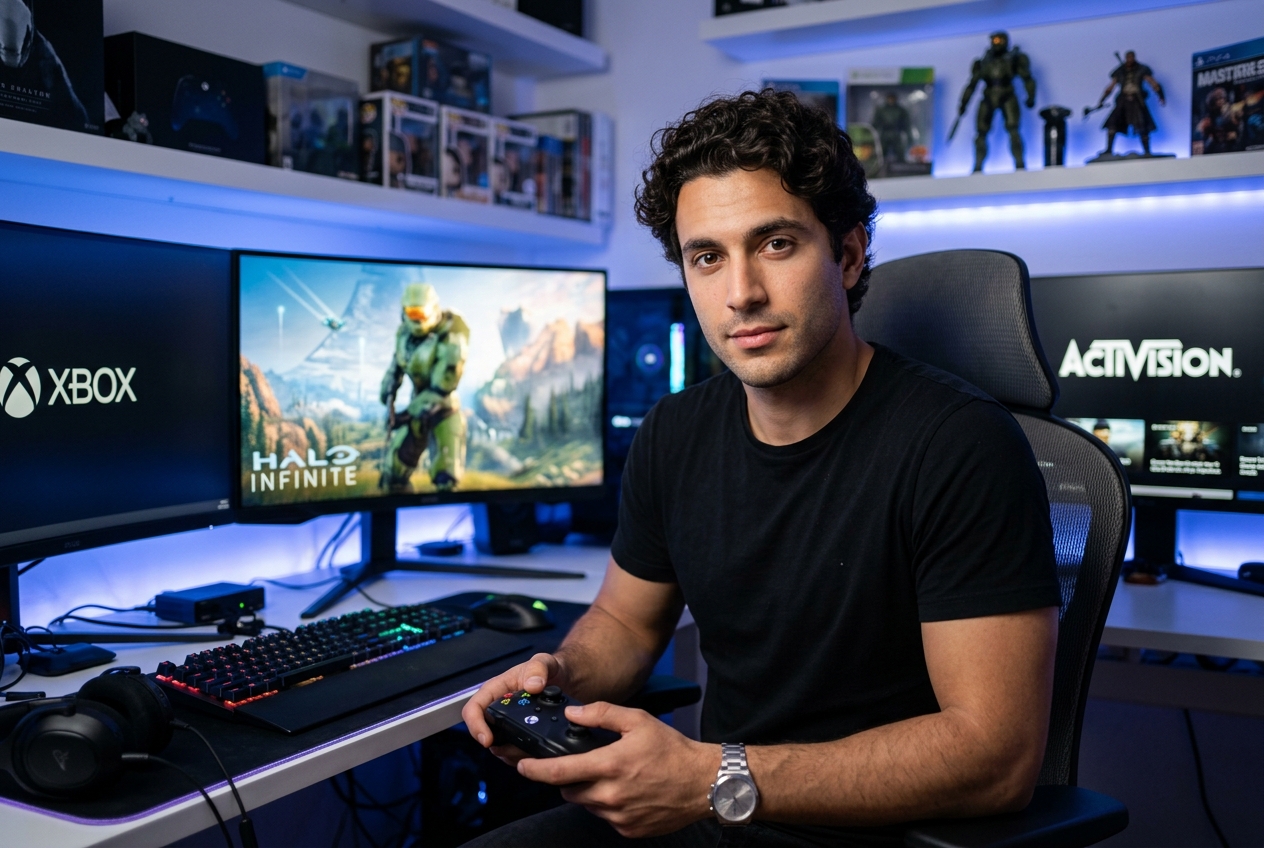
Perhaps no single announcement crystallized the scale of this restructuring like the news that the next Halo game will be developed by Activision. For a generation of gamers who grew up associating Master Chief with the Xbox brand itself, the news was nothing short of earth-shattering.
Xbox Studios chief Matt Booty confirmed that 268 roles were being eliminated across Halo Studios and other first-party teams. “Activision will also be developing the next Halo title, led by a new, purpose-built team that is separate from ongoing development and plans for Call of Duty,” Booty stated. A small team at Halo Studios will remain to support the existing community and in-market games.
The fan reaction has been, predictably, intense and divided. On social media, concerns about a potential lore reboot dominate the conversation. Some fans fear Activision will scrap the rich 25-year narrative built across games, novels, and comics — similar to what Disney did with the Star Wars Expanded Universe. Others argue a clean slate is exactly what the franchise needs.
“Hot take, but I want Activision to reboot Halo back to just after Halo 3, no 343 Forerunner lore, and focus on a war story about humanity rebuilding,” wrote one fan on X/Twitter. Another countered: “I fear they’ll just do a general reset on Halo’s established lore. If that happens, I’m out.”
Activision president Rob Kostich attempted to reassure fans, saying the goal is to “make the greatest Halo game ever, worthy of its universe and legacy, while staying true to what made players love it in the first place.”
In better news for Halo faithful, December’s Halo Fest Seattle — celebrating the series’ 25th anniversary — has been confirmed to proceed. Halo Studios’ esports lead confirmed the event is still on, though updates may take time as the studio focuses on “support and care for our teammates.”
3. Kojima’s Physint: How Xbox Landed a $400 Million Metal Gear Successor for a Fraction of the Cost
In another stunning power move, Xbox secured the rights to Hideo Kojima’s long-anticipated espionage title, Physint — widely understood as a spiritual successor to Metal Gear Solid. The story of how Xbox got it reveals a dramatic behind-the-scenes shift in console politics.
Physint was originally announced as a PlayStation project. Sony reportedly spent months negotiating with Kojima Productions before pulling out, with the project exceeding budget and missing deadlines. Kojima had quoted Sony a price range of $300 million to $600 million, with $400 million being the figure most commonly cited.
When Xbox stepped in, it negotiated a dramatically better deal. Industry journalists scrambled to clarify the numbers: Christopher Dring of The Game Business initially reported the $400 million figure, but quickly clarified Xbox is likely paying “quite a bit less.” Bloomberg’s Jason Schreier described Microsoft’s negotiated figure as “significantly less” than the original Sony quote. Windows Central’s Jez Corden went furthest, asserting Xbox is paying only a “fraction” of the original $400 million ask.
The deal also includes movie and TV licensing rights for Physint, along with improved terms for Kojima’s other in-development project, the horror game OD. While Xbox has recently confirmed that major titles like Gears of War: E-Day and Clockwork Revolution will remain exclusive, other games like Forza Horizon 6 and Fable are still slated for PS5 — leaving the door open for Physint to potentially reach PlayStation audiences as well.
4. The Studio Shuffle: Who Left, Who Stayed, and Who Went Independent
The restructuring has fundamentally redrawn Xbox’s first-party studio map. Here’s the full breakdown of what happened:
Studios That Went Independent:
- Double Fine (Psychonauts) — Returned to independent status with its IP, catalogue, and runway for next games.
- Compulsion Games (South of Midnight) — Similarly transitioned to an independent studio.
Studios Transferred to New Ownership:
- Ninja Theory (Hellblade) — Entered terms to join new ownership with funding to complete Senua’s story.
- Undead Labs (State of Decay) — Same arrangement, with funding to complete State of Decay 3.
Studios Moved Under Activision:
- Halo Studios (Halo franchise)
- Rare (Sea of Thieves, Banjo-Kazooie)
- World’s Edge (Age of Empires)
Other Changes:
- Obsidian Entertainment moved under Bethesda’s control
- Playground Games and Turn 10 Studios merged
- Arkane Lyon began consultations about potential strategic options
Notably, none of Xbox’s publicly announced games or projects have been canceled as part of these reductions, Sharma clarified.
5. Minecraft: The Undisputed King — 300,000 New Players Every Single Day
Amid the turmoil, Xbox’s crown jewel continues to shine brighter than ever. Xbox CEO Asha Sharma revealed over the weekend that Minecraft still gains approximately 300,000 new players every day, 17 years after its initial release and with over 425 million copies sold.
“After 17+ years and 425M+ copies sold, I love that Minecraft is still finding new players and giving longtime ones new things to discover,” Sharma wrote.
The timing coincides with Minecraft Live, where the biggest announcement in recent memory dropped: The Sift, Minecraft’s first new dimension in 14 years. Joining the Overworld, the Nether, and The End, this fourth dimension was previewed during the September 26 broadcast and promises new biomes, mobs, and gameplay mechanics. It will debut first in Minecraft Dungeons 2 (releasing September 29, 2026) before arriving in the base Java and Bedrock editions in 2027.
Minecraft is also coming to Nintendo Switch 2 on October 27, 2026, with existing Switch owners able to upgrade (though the upgrade is not free — consistent with Nintendo’s paid upgrade policy for titles like Zelda and Metroid Prime 4). And in perhaps the wildest news, a real-world Minecraft World theme park will open at Chessington World of Adventures Resort in London in 2027, complete with a Minecraft-themed hotel, deep-sea diner, and the world’s first Minecraft rollercoaster.
6. Satya Nadella Speaks: “Streamlining Is Great to See”
Microsoft CEO Satya Nadella publicly addressed the Xbox restructuring for the first time in a candid interview on the Sources podcast with Alex Heath. His comments, made just days after the latest 268 job cuts, drew both praise and criticism.
“I feel fantastic about the IP we have right now,” Nadella said. “If I look at the studios, the IP portfolio we have, and our ability to then take that and produce great games going forward — I feel fantastic. There’s some amount of streamlining the team is doing, and Asha is doing, which is great to see.”
Nadella emphasized the dual strategy of being both “a great publisher and a great platform provider for games across both PCs and Xboxes.” He expressed confidence that Xbox will “get back to growth this next fiscal year.”
The timing of his “streamlining” comments — praising cuts that have affected thousands of workers — sparked significant backlash online, particularly from developers and industry veterans. With over 3,200 Xbox employees facing job losses in 2026 alone, many questioned whether the language of “streamlining” adequately acknowledges the human cost.
7. Sony Surveying Developers: Second Thoughts on Ending Discs?
While Xbox dominates headlines, Sony isn’t sitting still. A fascinating report emerged this week suggesting the PlayStation maker may be having second thoughts about its planned end to PlayStation disc production.
Sony announced in July it would begin phasing out physical game discs from early 2028, citing declining physical sales and the shift toward digital distribution. The announcement generated massive backlash from preservation advocates, physical collectors, and even developers.
Now, according to YouTube tech-reporting channel Moore’s Law is Dead, Sony has sent developers “a bigger survey than they’ve sent almost ever before.” The survey reportedly asks a question along the lines of: “Is there any issue with how we sell games physically?” — effectively polling developers on the disc-ending decision.
Long-time PlayStation partner Hideo Kojima publicly spoke out against the move, calling the shift away from physical media “really sad.” It’s worth noting that Kojima’s relationship with Sony had presumably soured by then, given the Physint deal fallout.
While reversing the decision entirely seems unlikely, the survey may influence the pacing of the disc phaseout. Sony recently clarified that disc output would drop by 10% in 2028 (not to 10%), suggesting some wiggle room in the implementation timeline. For games like The Witcher 4 — slated for 2028 — a physical release may still be possible.
8. Industry Implications: What Does This All Mean?
Standing back and looking at the bigger picture, several themes emerge from this extraordinary period:
The End of Console Exclusivity as We Knew It
Xbox’s strategy has shifted decisively from “win the console war” to “be everywhere.” Games appearing on PlayStation, Nintendo Switch, and PC alongside Xbox — while certain tentpoles remain exclusive — represents a fundamental rethinking of what a console manufacturer is. As Xbox CEO Sharma put it, the goal is to “be where the world plays and creates.”
The Cost of Conglomeration
Microsoft’s $68.7 billion acquisition of Activision Blizzard was the largest deal in gaming history. The restructuring we’re seeing now is, in many ways, the digestion phase — integrating thousands of new employees, rationalizing overlapping studio functions, and cutting costs to justify the enormous investment. The 64 cents lost per dollar figure Sharma cited reveals just how much inefficiency existed in the pre-restructuring portfolio.
The Human Toll
It’s easy to analyze this as business strategy, but the human cost is staggering. Over 3,200 Xbox employees this year alone. Hundreds at Halo Studios. The likely closure of legendary studios like Ninja Theory, makers of Hellblade: Senua’s Sacrifice. This isn’t abstract — it’s careers ended, lives disrupted, teams that built beloved games scattered to the winds.
Gaming’s New Axis
With Halo at Activision, Rare under Activision’s umbrella, and Kojima making games for Xbox, the old hierarchies are crumbling. PlayStation is still dominant in raw sales but faces hard questions about its disc-less future. Nintendo, as always, marches to its own beat with Switch 2 on the horizon. The console wars of the 2000s feel increasingly archaic — the battlefield has shifted to content libraries, subscription services, and cross-platform ecosystems.
Conclusion: A New Chapter Begins
This week will be remembered as a watershed moment in gaming history. The Xbox reset — painful, controversial, and difficult as it is — represents a clear-eyed acknowledgment that the old model wasn’t working. Sharma’s honesty about margins, management layers, and studio inefficiency was refreshingly direct for a corporate leader.
For gamers, the short-term uncertainty is real. Will Activision’s Halo be worthy of the legacy? Will Ninja Theory survive under new ownership? Can Kojima deliver Physint without the constraints that made Sony walk away? These questions will take years to answer.
But the long-term vision is intriguing: a Microsoft that powers gaming across every screen, with a leaner but more focused studio system, blockbuster franchises spanning from Halo to Minecraft to Call of Duty, and partnerships with the industry’s most visionary creators. Whether that vision succeeds — and whether the human cost was worth it — will be the defining story of this console generation.
One thing is certain: the era of Xbox as we knew it is over. What rises in its place will shape gaming for decades to come.
Vito Ruocco covers the gaming industry from the intersection of technology, business, and culture. This article was published on September 28, 2026.