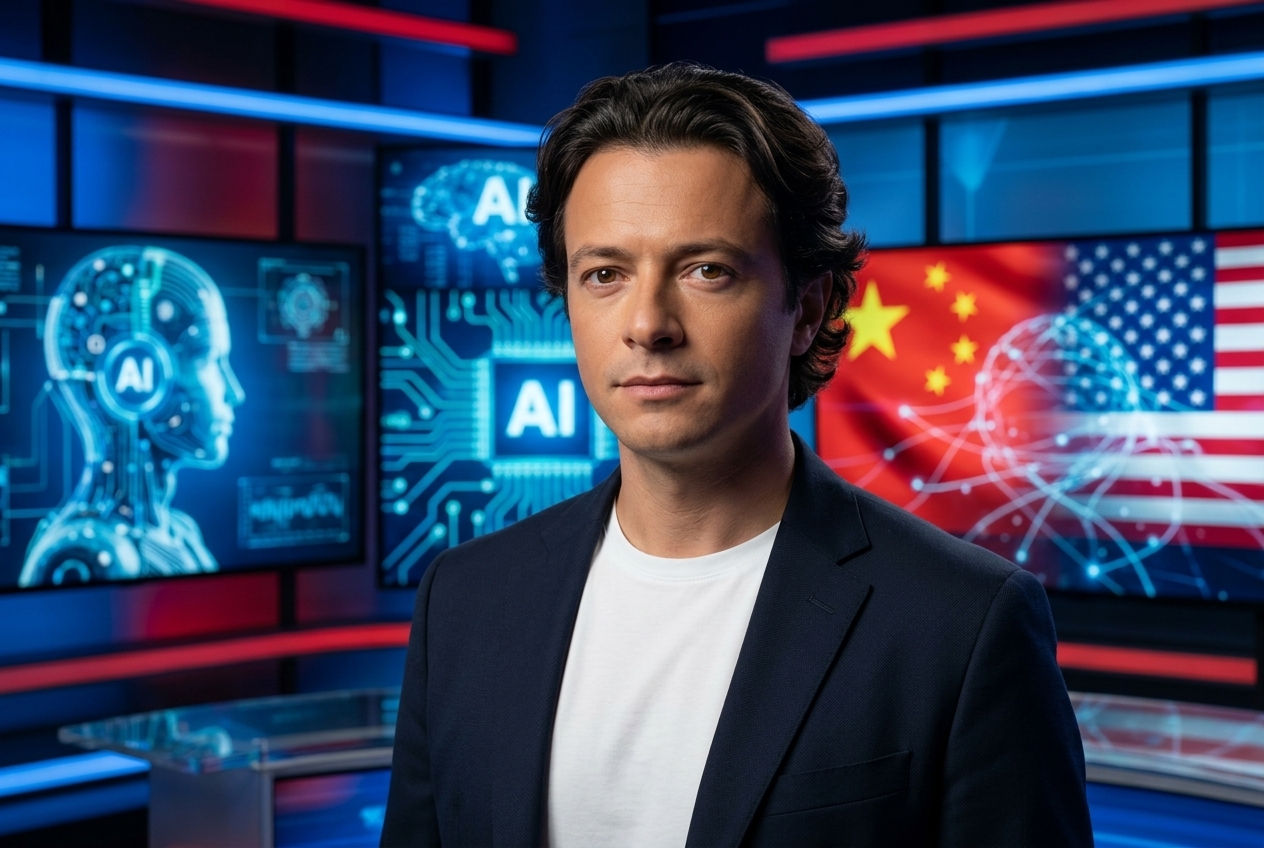
China’s AI Onslaught: Moonshot and Alibaba Unleash Open-Source Models That Rival America’s Best
July 24, 2026 — The global AI race just shifted into a higher gear, and the front lines are moving fast.
In a week that may well be remembered as a turning point in the global artificial intelligence race, Chinese AI companies Moonshot and Alibaba have unveiled open-source models they claim can stand toe-to-toe with the most advanced systems from OpenAI and Anthropic — at a fraction of the cost. The releases come as the White House alleges that one of those companies trained its model on restricted Nvidia chips, adding fuel to an already blazing geopolitical fire.
The implications stretch far beyond benchmarks and parameter counts. They touch on national security, the open-source versus proprietary debate, the effectiveness of US export controls, and the very question of whether America’s lead in AI — long assumed to be unassailable — is as durable as once thought.
Moonshot’s Kimi K3: The World’s Largest Open-Source AI Model
Beijing-based Moonshot AI fired the opening salvo on July 18th with the unveiling of Kimi K3, a model it describes as the world’s largest open-source AI system. With a staggering 2.8 trillion parameters, Kimi K3 represents a scale of open-source release never before seen in the industry.
According to Moonshot’s own testing, Kimi K3 ranks consistently above nearly every US system, trailing only OpenAI’s GPT-5.6 Sol and Anthropic’s Claude Fable 5 — the two most powerful proprietary models currently available. On certain benchmarks, Moonshot claims Kimi K3 actually outperforms both.
The model’s full weights are scheduled for release on July 27th, giving the independent AI research community just days to prepare for what could be the most significant open-weight drop in history. The decision to release the weights — the internal numerical values learned during training — means developers worldwide will be able to download, modify, and build upon the model freely.
This is not a stripped-down or distilled version. Moonshot is putting its full-weight model into the open world, a move that stands in stark contrast to the guarded approach of leading US labs like OpenAI and Anthropic, whose most advanced systems remain tightly proprietary.
Alibaba’s Qwen3.8: A Trillion-Parameter Follow-Up
Not to be outdone, Chinese tech behemoth Alibaba followed up over the weekend with a preview of Qwen3.8, a 2.4 trillion parameter model the company describes as “one of the most powerful models available today” and “second only to Fable 5,” Anthropic’s flagship system.
Alibaba says Qwen3.8 is “continuously evolving” — a hint that the model may receive ongoing updates rather than existing as a static release. The company has promised that Qwen3.8 is “going open-weight soon,” though a specific date has not been set.
The back-to-back releases from Moonshot and Alibaba represent a coordinated show of force from China’s AI sector. Where American companies have typically released models one at a time with months between major announcements, the Chinese approach has been rapid-fire, aggressive, and pointed directly at the heart of US AI dominance.
Neither OpenAI nor Anthropic disclose exact parameter counts for their leading systems, making direct comparisons difficult. But the sheer scale of the Chinese models — measured in the trillions of parameters — sends an unmistakable message about China’s growing technical capabilities.
The White House Allegations: Restricted Nvidia Chips and Model Distillation
As if the technological challenge were not enough, the geopolitical dimension of this story escalated dramatically on July 22nd when Michael Kratsios, director of the White House Office of Science and Technology Policy, publicly accused Moonshot AI of accessing Nvidia’s high-end GB300 processors in Thailand — chips that are subject to strict US export controls designed specifically to keep them out of Chinese hands.
Kratsios made the allegations in a post on X (formerly Twitter), writing that Moonshot had accessed the restricted chips despite the export controls. He further accused Moonshot of distilling Anthropic’s Fable AI model — a technique where one model learns from another’s outputs — to build Kimi K3.
If true, the allegations would represent a significant breach of the export control regime that the US government has spent years building. The GB300 is among Nvidia’s most advanced processors, specifically restricted to prevent Chinese AI companies from achieving frontier-level capabilities. The suggestion that Moonshot accessed these chips through Thailand raises questions about the enforceability of export controls in a globalized supply chain.
The distillation accusation is equally explosive. If Moonshot used Anthropic’s proprietary model as a teacher for its own system, it would raise intellectual property concerns and potentially undermine the argument that Kimi K3’s capabilities are entirely homegrown. It would also highlight a vulnerability in the proprietary AI model: that once a model’s outputs are accessible, they can be used to train competing systems.
Alphabet’s Q2 Earnings: Gemini Hits 950 Million Users
While Chinese companies were making waves with open-source releases, Google was reporting its own AI milestones. Alphabet’s Q2 2026 earnings report, released on July 22nd, revealed that Gemini now has 950 million monthly active users — a massive jump from the 750 million the company reported just five months earlier in February.
The growth underscores how rapidly Google has integrated AI across its product ecosystem. From Search to Workspace to Android, Gemini is becoming the connective tissue of Google’s entire consumer and enterprise offering. The earnings report also showed a 24 percent year-over-year increase in revenue to $119.8 billion, with AI-related products cited as a key growth driver.
But the earnings weren’t all good news for Google investors. The company also announced an increase in capital expenditures for 2026, reflecting the enormous infrastructure costs of building and running AI at scale. The market reaction was tepid — Alphabet shares slipped as investors weighed strong revenue growth against rising AI infrastructure spending.
The 950 million user figure is particularly significant when viewed alongside the Chinese AI expansion. While Google’s Gemini is a proprietary, closed system, Moonshot and Alibaba are betting that open-source models can ultimately win by being freely available to developers worldwide. The question is whether scale and integration (Google’s approach) or openness and accessibility (China’s approach) will define the next era of AI.
Gemini Spark: Google’s Answer to the Agent Revolution
On July 23rd, Google made another significant move: it expanded access to Gemini Spark, its always-on AI agent platform, to Google AI Pro subscribers in the United States. The platform had previously been limited to Google AI Ultra subscribers, and the broader rollout signals Google’s intent to make AI agents a mainstream consumer product.
Gemini Spark, first announced at Google I/O 2026, is powered by the newly introduced Gemini 3.5 Flash model and runs continuously in the background using virtual machines on Google Cloud. It can write emails, create study guides, monitor credit card statements for hidden fees, and interact with third-party apps including Canva, OpenTable, and Instacart through the Model Context Protocol (MCP).
“Even when you close your laptop or turn off your phone, Spark can keep working in the background as you go through your day,” said Josh Woodward, vice president of Google Labs, Gemini, and AI Studio, during a briefing. “When you use it, it almost feels like you’re tossing things over your shoulder, Spark’s catching them, and gets the job done.”
Google plans to give Spark the ability to interact with local files through the Gemini app on macOS later this summer, and will eventually allow users to text and email with Spark directly. The company also plans to connect Spark to Chrome and display live updates on a new UI space called “Android Halo.”
The platform is designed to operate “under your direction,” asking for permission before performing high-stakes actions like making payments or sending emails — a design philosophy that reflects growing concern about AI autonomy and safety.
OpenAI’s GPT-Live: The End of Awkward AI Conversations
Also on July 23rd, OpenAI began rolling out GPT-Live-1, a major overhaul of ChatGPT’s voice mode that the company says makes talking to AI “more like talking to another person.” The new model is a full duplex system, meaning it can speak and listen simultaneously — a fundamental shift from the turn-based voice model ChatGPT previously used.
“What it really means is that it can speak and listen at the same time,” explained Atty Eleti, OpenAI’s product lead for the feature. “From the model side, it can process the stream of inputs and produce the stream of output continuously and simultaneously.”
GPT-Live-1 introduces several features that bring AI voice interaction closer to natural human conversation:
- Real-time translation: Instead of waiting for you to finish speaking, ChatGPT can translate while you talk
- Interruptibility: The model is designed to interrupt you less and wait for you to continue speaking if you pause
- Acknowledgment cues: It uses phrases like “mhmm,” “yeah,” and “got it” to signal it’s listening
- Visual supplements: For topics like weather, stocks, and sports, the model generates relevant visuals showing scores, forecasts, and data
- Silent mode: Users can ask ChatGPT Voice to stop talking until called upon
Under the hood, GPT-Live-1 automatically routes queries to OpenAI’s best text models — like GPT-5.5 — when it needs to reason or search the web, allowing for faster transitions from research to conversational responses. The model is rolling out across iOS, Android, and the web for ChatGPT Go, Plus, and Pro subscribers, with a smaller GPT-Live-1 mini model serving free users.
OpenAI has also built in safety features, including crisis helpline support for conversations about self-harm and age-appropriate responses for teens — a notable addition given the lawsuits the company currently faces alleging ChatGPT has harmed users’ mental health.
The Open-Source Advantage: Why China’s Strategy Could Work
Perhaps the most strategically significant aspect of this week’s developments is the open-source approach itself. While US companies like OpenAI and Anthropic keep their most powerful models locked behind proprietary walls, Chinese companies are increasingly differentiating themselves by making their models freely available.
This is not altruism. It’s a calculated strategy with several advantages:
- Developer adoption: By releasing full model weights, Moonshot and Alibaba are inviting the global developer community to build on their platforms. Every app, tool, and service built on Kimi K3 or Qwen3.8 creates an ecosystem dependency that benefits the Chinese companies.
- Geopolitical influence: Open-source models from China are already being adopted by developers in countries that may not have easy access to US AI services due to export controls or pricing. This soft power through technology is a page from the playbook that China has used in telecommunications infrastructure and 5G.
- Rapid iteration: When thousands of developers can inspect, modify, and improve a model, innovation accelerates. The open-source community found ways to improve DeepSeek’s model far beyond what its creators initially envisioned, and the same could happen with Kimi K3.
- Undermining the competition: If a free, open-source model approaches the quality of a $20-per-month proprietary service, the economic case for the proprietary service weakens — especially for cost-sensitive applications and markets.
The contrast with US policy is striking. The Trump administration has been actively working to restrict global access to AI technology through export controls, including forcing Anthropic to pull its most capable system from the market over concerns it could help foreign competitors. Meanwhile, Chinese companies are flooding the global market with open-source alternatives.
As The Verge’s Robert Hart noted, the Chinese releases “raise questions about whether the vast sums of money US companies are pouring into chips, data centers, and model training can secure a durable advantage, particularly if Chinese rivals can approach — or surpass — that frontier with fewer resources.”
US AI Leadership in Turmoil: The CAISI Resignation and Policy Confusion
The timing of China’s AI offensive could hardly be worse for the United States from a policy perspective. On July 20th, Chris Fall, the head of the Center for AI Standards and Innovation (CAISI) — the US government’s primary AI safety agency — resigned after just three months on the job. The reasons for his departure remain unclear.
Fall’s exit adds to a growing leadership vacuum in US AI policy. Venture capitalist David Sacks, who previously served as the White House AI and crypto czar, stepped down from that role in March and has yet to be replaced. The lack of consistent leadership comes at a moment when the administration is trying to implement an AI executive order signed in June that asks developers to voluntarily provide models to the government for assessment ahead of full release.
The implementation process has been murky. OpenAI agreed in June to limit the rollout of its GPT-5.6 model series to “trusted partners” at the government’s request. Anthropic was forced to disable access to its Fable 5 and Mythos 5 models to comply with an export control directive from the Commerce Department. Both companies later managed to release their models more broadly, but the back-and-forth has created uncertainty for companies trying to launch new AI products.
The White House has also launched a clearinghouse called “Gold Eagle” to find and fix cybersecurity vulnerabilities and to manage which companies can access cutting-edge AI models. Notably, CAISI — the agency Fall led — was not named as involved in the Gold Eagle initiative’s development.
Meanwhile, the administration announced “Genesis Mission” on July 22nd, a massive AI science initiative with more than $5 billion in federal commitments across 278 awards and 342 institutions. Big tech companies including Microsoft and Google have announced millions in compute and AI credits for the effort. But the initiative has drawn criticism for potentially redirecting research funds away from large universities and toward individual fellowships and awards.
The Broader Landscape: Layoffs, Lawsuits, and AI’s Growing Footprint
Beyond the geopolitical and technological dimensions, this week’s news cycle highlighted the real-world impact of AI on the economy and society:
Uber’s AI-driven layoffs: Uber announced it is laying off 10 percent of its customer service workforce as it continues to “embrace AI.” The company is also asking remote customer service employees to return to the office. The move is one of the clearest examples yet of AI replacing human jobs at scale in a major tech company.
Anthropic’s $1.5 billion copyright settlement: A federal judge granted final approval of Anthropic’s landmark settlement with authors who sued over the training of its Claude AI chatbot using copyrighted works. It is thought to be the largest copyright recovery case in history. Authors will receive approximately $3,000 per covered work, with around 465,000 books included in the settlement. Lawyers will take $101 million of the total. However, Judge William Alsup has since put the settlement on pause, raising concerns about the claims process and whether authors are being adequately protected.
Amazon AGI team cuts: Amazon confirmed it is “eliminating some roles within parts of our AGI (artificial general intelligence) organization” as the company focuses on “initiatives that matter most for customers.” The scale of the cuts is unclear, but the move suggests that even the biggest tech companies are finding that not every AI research direction is worth pursuing at unlimited cost.
AI music flooding streaming platforms: Deezer reported that AI-generated music now makes up half of all daily song uploads on its platform, with nearly 90,000 AI-generated tracks uploaded each day — a significant jump from the 75,000 it reported in April. The streaming service says it will take down AI tracks “used to generate fraudulent streams” and those that haven’t been streamed in six months or more.
Vibecoded apps flooding the App Store: According to Sensor Tower, the number of apps added to Apple’s App Store nearly doubled to approximately 560,000 in the first half of 2026, compared to about 600,000 added in all of 2025. The surge is attributed to AI making it trivial to develop apps — a double-edged sword that democratizes app development while potentially flooding the ecosystem with junk and malware.
What Happens Next: The Stakes Have Never Been Higher
As the dust settles on this extraordinary week in AI, several key questions emerge that will shape the industry’s trajectory in the coming months:
Will Kimi K3 live up to the hype? We won’t know until the model weights are released on July 27th and the independent research community can put the model through its paces. If Moonshot’s claims hold up under scrutiny, the implications are enormous. If they don’t, it will be another case of Chinese AI companies overpromising — though the track record of DeepSeek, which largely delivered on its claims earlier this year, suggests the skepticism should be tempered.
Can US export controls keep pace with a globalized tech supply chain? The White House’s allegations about Moonshot accessing restricted Nvidia chips in Thailand suggest that export controls may be more leaky than US policymakers would like to admit. If Chinese companies can access the chips they need through third countries, the export control regime may need a fundamental rethink.
Will the open-source approach win? The strategic battle between proprietary and open-source AI is entering a new phase. If Chinese open-source models can match the quality of US proprietary systems, the economic model that justifies billions in AI infrastructure spending comes under pressure. Google’s 950 million Gemini users and Alphabet’s $119.8 billion in quarterly revenue suggest that the integrated, proprietary approach still has enormous commercial power — but the open-source alternative is gaining ground.
Who is leading US AI policy? With the head of CAISI gone and the AI czar position unfilled, the United States lacks a clear, consistent voice for AI strategy at a time when China is executing a coordinated, aggressive push. The administration’s “Genesis Mission” and “Gold Eagle” initiatives are ambitious, but they are being implemented against a backdrop of leadership instability and policy confusion.
What does this mean for the average person? The competition between US and Chinese AI companies is ultimately about who controls the technology that will increasingly power our daily lives — from search engines and email assistants to customer service and creative tools. Google’s Gemini Spark and OpenAI’s GPT-Live are making AI agents and voice assistants more capable and more integrated into our workflows. But the underlying power dynamics — who builds the models, who controls the weights, and who sets the rules — will shape the digital landscape for decades.
The Bottom Line
This week may be remembered as the moment when the AI race stopped being a one-horse contest. China’s Moonshot and Alibaba have demonstrated that they can build models at the frontier of what’s possible, and they’re giving those models away to the world. The United States still has the most powerful companies, the most advanced infrastructure, and the deepest talent pools — but the gap is narrowing, and the open-source strategy being pursued by China is exploiting vulnerabilities that the US approach can’t easily address.
The next few weeks will be telling. On July 27th, Moonshot will release the full weights of Kimi K3, and the world will get its first real look at whether the model is everything its creators claim. On September 25th, Judge Alsup will revisit Anthropic’s settlement. And in between, the Trump administration will continue trying to build an AI governance framework without stable leadership at the top.
One thing is certain: the AI race is no longer just about who has the smartest model. It’s about who sets the rules, who controls the infrastructure, and who gets to participate. And right now, the answers to those questions are shifting faster than anyone predicted.