Steam Dominates as Consoles Struggle: The Great Gaming Divide of 2026
September 5, 2026 — by Kaito
If the first eight months of 2026 have taught us anything about the gaming industry, it’s that the tectonic plates are shifting beneath our feet — and not everyone is standing on stable ground. While one platform is breaking revenue records at a staggering pace, two of the biggest names in console gaming are fighting for relevance amid layoffs, declining hardware sales, and an increasingly uncertain physical future. This week alone brought enough news to fill a year’s worth of industry analysis: Steam posted its best six months ever with $11.1 billion in revenue; PlayStation and Xbox are bleeding momentum; GTA 6 is single-handedly propping up console sales; and beloved franchises like Onimusha made triumphant returns. Here’s your complete roundup of the state of play in September 2026.
1. Steam’s $11.1 Billion Half-Year — A New Record
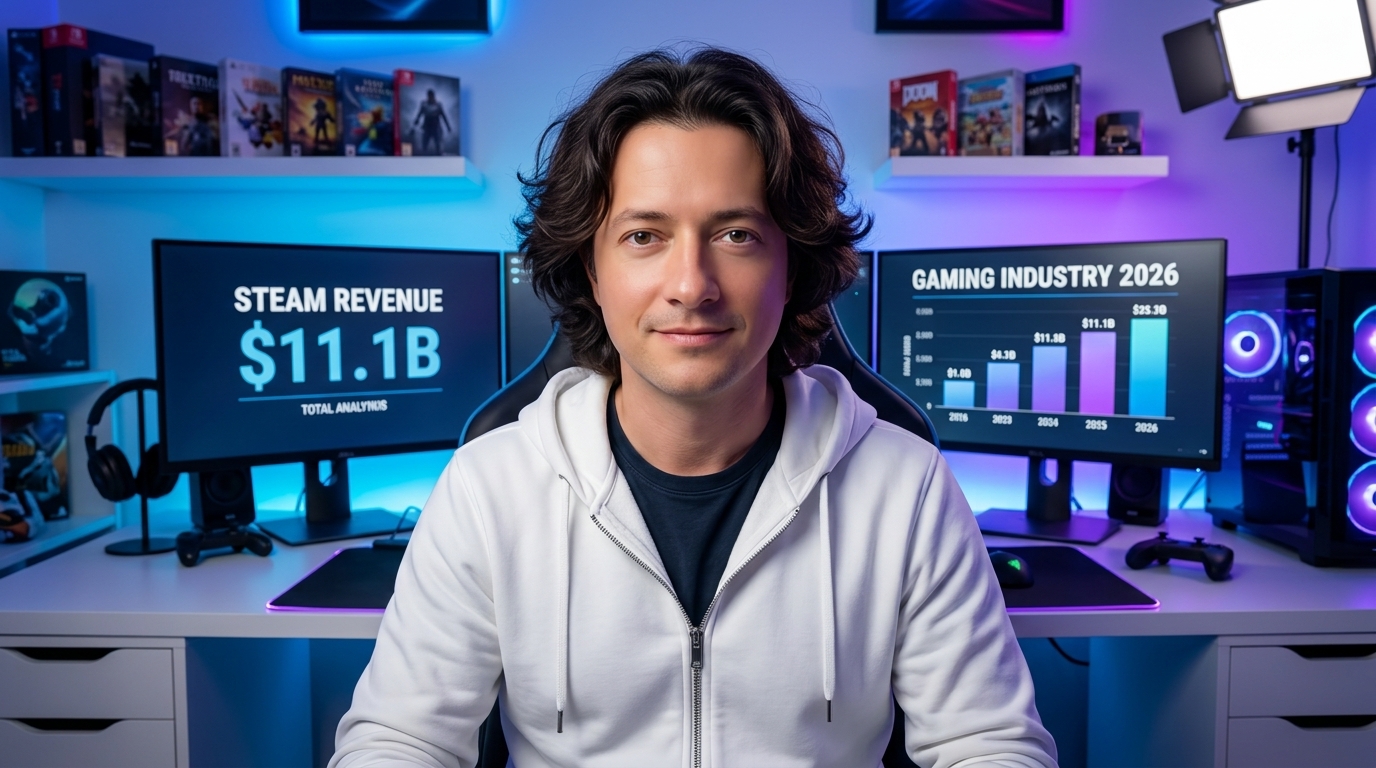
Valve’s PC storefront is on an absolute tear. According to fresh estimates from market analysis firm Alinea Analytics, Steam generated an enormous $11.1 billion in revenue during the first half of 2026 — the highest six-month total in the platform’s history. To put that in perspective, the platform has nearly quintupled its revenue since the first half of 2017, riding an unbroken wave of seven consecutive half-years of growth.
“Zoom out over the last decade and things get really crazy,” noted Rhys Elliott, head of market analysis at Alinea. “There’s obviously a visible dip as the market normalised after the pandemic sugar-high, but the long arc is relentlessly up.”
What’s driving this unprecedented growth? Multiple factors are at play:
- The Chinese market: As far back as February 2025, over 50% of all Steam users spoke Chinese. The Asian PC gaming audience continues to expand at a breathtaking rate.
- Higher price points: New releases now launch at premium prices, driving up per-unit revenue.
- Publisher returns: Third-party publishers like Ubisoft are returning to Steam after years of trying their own launchers, bringing their full catalogues back to Valve’s ecosystem.
- Blockbuster releases: Forza Horizon 6 alone earned $197.7 million in under two months on Steam. Resident Evil Requiem pulled $194.5 million since its February launch — including $1.3 million from a cosmetics pack alone. And newcomer Crimson Desert has generated $190 million since its March debut.
But perhaps the most heartening stat is the success of indie titles: Slay the Spire 2 ($141.7M), Subnautica 2 ($133.6M), and Meccha Chameleon ($71.3M) are proving that the PC market rewards quality regardless of budget size.
2. PlayStation and Xbox: A Tale of Two Struggles
While Steam soars, the console giants are navigating rough waters. Microsoft’s gaming revenue is down 7% year-on-year, and the company’s recent “reset” — involving significant layoffs at studios including Double Fine, Compulsion Games, and Ninja Theory — has sent shockwaves through the industry. The bitter irony: many of these studios were acquired by Microsoft specifically to create exclusive content, only to see their teams gutted years later.
Sony isn’t faring much better. First-party PlayStation exclusive sales have been declining steadily since 2020, and the company’s recent announcement that it will cease large-scale production of physical game discs by January 2028 has triggered a firestorm of criticism. A petition against the move has gained significant traction, with preservationists and retail advocates sounding the alarm.
To make matters worse, Sony recently declared it will no longer bring future single-player exclusives to PC — effectively cutting off a revenue stream that had been showing promise. Meanwhile, both companies are grappling with the AI-fuelled RAM crisis, which has driven up hardware costs and forced multiple price increases on consumers. Newzoo’s Ronan Patrick notes that the PS5 is now 67% more expensive than at launch when adjusted for inflation, while Xbox consoles have doubled in price.
3. GTA 6 Is Already Saving Console Sales — And It’s Not Even Out Yet
Perhaps the only bright spot for console manufacturers this year has been Grand Theft Auto 6. Rockstar’s September State of Play showcase — which gave us an extended look at Lucia and Jason’s criminal (and possibly romantic) adventures — was a viewership phenomenon: 4 million concurrent viewers on livestreaming platforms, 31 million on Netflix, and an additional 22 million on YouTube.
The hype has translated directly into hardware sales. According to data from NielsenIQ, the week following the showcase saw:
- PS5 sales in the UK: up 33%
- Xbox Series X/S sales in the UK: up 34%
Even the Nintendo Switch 2 — which has no GTA 6 in sight — saw a 33% bump, possibly driven by anticipation of its own upcoming price increase. With GTA 6 set for a November 2026 release, console makers are hoping the momentum holds through the holiday season, though analysts caution that the high cost of hardware may limit the traditional “Halo effect” of a system-seller.
4. PlayStation Kills Physical Media: “A Hammer Blow for Games Retail”
Sony’s announcement that it will end large-scale disc production in January 2028 has dominated industry conversation this week. Eurogamer spoke with multiple experts to assess the fallout, and the picture is grim for brick-and-mortar retailers.
“PlayStation games do sell well at physical retail,” said Chris Dring of The Game Business. “It’s a smaller part of the business than digital, of course, but we’re still talking millions of sales worldwide. So the news surprises me. From a retail perspective, it’s clearly a blow.”
Rhys Elliott of Alinea Analytics was more blunt: “This is a hammer blow for games retail. The margins on new physical games are so thin for retailers, but used games are where the real money was. GAME has already stopped accepting trade-ins, and CEX is basically gone.”
Elliott’s most damning observation? “Why pre-order a ‘physical’ copy from Amazon or GameStop when what arrives is a slip of cardboard with a download code? A code-in-box has none of the things that made physical worth choosing: no resale value, no lending, less collectability. The physical channel has no reason to exist.”
Piers Harding-Rolls of Ampere Analytics offered a cautiously optimistic perspective: “Many of these chains have massively reduced in size compared to two decades ago and have diversified their businesses. Calling time on physical media may prompt innovation around digital games sales in-store.”
5. Onimusha Is Back — And It’s Beautiful
In one of the most pleasant surprises of the week, Capcom released Onimusha: Way of the Sword on September 4, 2026, and early reviews are glowing. The game loosely follows legendary swordsman Miyamoto Musashi and incorporates his actual martial philosophy into its combat system.
Eurogamer’s review praises the game’s “issen” counterstrike system — a parry-like mechanic that rewards patience and observation over aggression. “By dancing around your enemies, and forcing them to spend stamina and dignity in whiffing attacks, you open them up both physically and psychologically,” the review notes. “It’s a more effective role-play than anything I’ve encountered in Nioh or Wo Long or even Sekiro.”
Capcom hired actual swordsmen for motion capture and combat design, resulting in a game where even basic enemy animations are so detailed they “make FromSoft’s weaker enemies look embarrassing by comparison.” For fans of the samurai genre, this is shaping up to be an essential purchase.
6. Crimson Desert Gets Its First DLC — Charting the Unknown
Pearl Abyss’s breakout hit continues its dominance. During this week’s State of Play, the developer announced Charting the Unknown, the first DLC for Crimson Desert, arriving October 15 on PC, PS5, and Xbox Series X/S for $24.99.
The expansion adds new story missions following Kliff, Oongka, and Damiane deeper into the continent of Pywel, along with homesteading features, house-building mechanics, and what appears to be a romance and marriage system. NPCs were also shown cooking, suggesting a new camp-management layer.
This follows the recently released Crimson Desert Enhanced — a free upgrade that bundles all previous patches with new skills, story additions, localization in multiple languages, and a revamped skill-equipping system. The game has sold over 6 million copies since its March launch, making it one of 2026’s biggest success stories. A Switch 2 version is also in development.
7. The Amazon AI Game That Was Doomed From the Start
In a story that encapsulates the industry’s current dysfunction, Eurogamer published an investigative report this week on Project Trident — an internal Amazon Game Studios project that was pressured to integrate generative AI, scrambled to make it work, and was cancelled anyway, with its team laid off in October 2025.
Project Trident was a third-person action game set in a comedic Nordic setting featuring a parody company called “Valhalla.” Despite showing promise internally and dutifully following Amazon’s company-wide AI mandate, the project was axed as part of a broader pivot away from big-budget internal development at Amazon Game Studios.
The report reveals that the AI directive came from the top — a “mandate” introduced as part of a company-wide push to use the technology — but it wasn’t enough to save the team from closure. The layoffs also claimed teams working on New World (now scheduled for end-of-life after its 10th season), Lost Ark, and a Lord of the Rings MMO that sources say has been cancelled despite Amazon’s claims that something is still in the works with the IP.
The story serves as a cautionary tale: chasing AI trends doesn’t protect you from corporate restructuring, and the human cost of these pivots continues to mount.
8. What It All Means: PC Gaming’s Golden Age
Stepping back, the narrative of September 2026 is clear: PC gaming is thriving while consoles face an identity crisis. Steam’s $11.1 billion haul isn’t just a number — it’s a signal that the center of gravity in gaming has shifted. Higher prices, global audiences (especially in China and Asia), and a steady stream of both AAA blockbusters and indie darlings have created a virtuous cycle that shows no signs of slowing.
For consoles, the path forward is less certain. GTA 6 will undoubtedly shift units when it launches in November, but the underlying challenges remain: rising hardware costs, declining consumer confidence, a messy transition away from physical media, and corporate belt-tightening that’s hollowing out the very studios meant to produce exclusive content.
One thing is certain: 2026 will be remembered as a watershed year. Whether it’s for Steam’s dominance, GTA 6’s cultural arrival, or the beginning of the end for physical games, we’re living through a pivotal moment in interactive entertainment. The only question is who adapts — and who gets left behind.
What are your thoughts on the state of gaming in 2026? Are you team PC, console, or both? Drop a comment below and join the conversation.