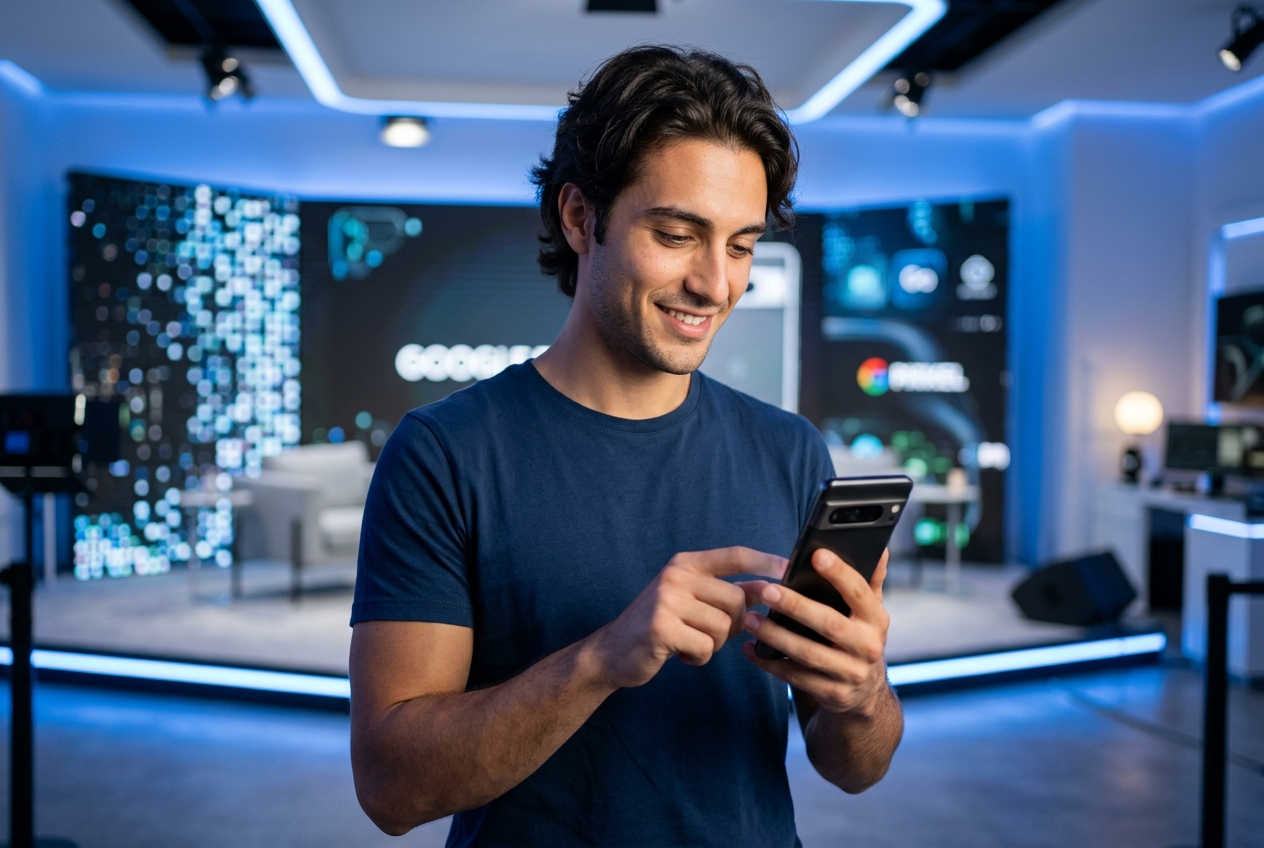
Google Pixel 11 Is Here: Tensor G6, Camera Looks, HiLight LED, and a $100 Price Hike
Published August 13, 2026 — by Vito Ruocco
Introduction: The Pixel Evolution Continues
On August 12, 2026, Google took the stage at its annual “Made by Google” event — this time hosted by comedian Trevor Noah — to unveil the Pixel 11 lineup. And while the event had its share of cringey moments, the hardware and software Google revealed are anything but laughable. The Pixel 11, Pixel 11 Pro, Pixel 11 Pro XL, and Pixel 11 Pro Fold represent a significant leap forward, blending Google’s signature computational photography prowess with new AI-driven features, a custom Tensor G6 chip, and a bold new design language.
But it’s not all good news: every model in the lineup got a $100 price bump, starting at $899 for the base Pixel 11. Still, with 256GB of base storage across the board, improved cameras, brighter displays, and a host of AI-powered software features, Google is betting that users will pay more for a smarter phone.
Here’s everything you need to know about the Pixel 11 series — from the Tensor G6 chip and Camera Looks to the quirky new HiLight LED and the Pixel Tag item tracker.
Tensor G6: The AI Engine That Powers It All
At the heart of every Pixel 11 device is Google’s fifth-generation custom silicon: the Tensor G6. While Google has historically focused on on-device AI and machine learning capabilities with its Tensor chips, the G6 takes it to a whole new level. Google claims the Tensor G6 delivers 25 percent faster web browsing, 15 percent faster app loading, and up to 20 percent improved power efficiency compared to last year’s Tensor G5.
But the real story is in the neural processing unit (NPU) and the new image signal processor (ISP). The ISP is what enables many of the Pixel 11’s most impressive camera tricks — including the new Camera Looks feature, which fundamentally changes how the phone processes images at the sensor level rather than applying filters after the fact. The improved NPU also powers faster Gemini interactions, real-time language translation, and enhanced on-device AI capabilities that keep your data private.
Battery life gets a major boost too: Google promises over 30 hours of battery life on the standard Pixel 11 and Pro models, with the Fold managing up to 24 hours. Wireless charging has also been upgraded thanks to Qi2.2 support, offering up to 25W — a significant jump from the Pixel 10’s 15W maximum.
Camera Looks: Google’s Radical Rethink of Smartphone Photography
The most fascinating feature of the Pixel 11 series isn’t a hardware upgrade — it’s a software philosophy shift. Google’s new Camera Looks feature is arguably the most significant change to the Pixel camera experience since the original Pixel’s HDR+ mode.
For years, smartphone cameras have been locked in an arms race for technical perfection: brighter night shots, sharper details, more dynamic range. But Google’s Pixel camera lead, Isaac Reynolds, noticed something interesting: “The gap between what two random people want from their camera is growing dramatically.” Some users want perfectly optimized photos, but a growing number want something more authentic, more traditional, or even deliberately imperfect.
Camera Looks is Google’s answer. Unlike traditional filters that merely apply edits after processing, Camera Looks changes how the camera captures and processes image data at the sensor level. The feature offers a range of stylized presets — from Natural (minimally processed), Editorial (film-inspired with rich contrast), and Digi (mimicking early 2000s digital cameras), to Classic and Velvet. Each Look comes with six or more adjustable parameters like contrast, warmth, tint, saturation, and even sharpness and grain.
“The pipeline spans the entire system,” Reynolds explained. “It’s inside HDR Plus. It’s inside the processing engine. It’s inside the camera app as well in how we make certain decisions about auto exposure and integration time.” The result is that a photo taken with the “Natural” Look genuinely looks less processed — with softer edges, less aggressive sharpening, and highlights that are allowed to stay blown out if that’s what the user wants.
Apple’s Photographic Styles on the iPhone offer a similar concept but with far less control. Google gives users access to computational settings like sharpness and grain — parameters that can dramatically change the feel of an image before you press the shutter button. This is a photographer’s dream and a clear signal that Google is listening to the growing community of users who find today’s computational photography too aggressive.
Magic Capture and Creator Suite: Tools for the YouTube Generation
Google is also targeting content creators with two new camera features. Magic Capture is a hybrid photo-video mode that automatically pulls out short clips and still images from longer recordings. While our early hands-on showed it needs some refinement — it only extracted one clip and one photo from a 15-second recording — Google says it’s designed for longer events like kids’ birthday parties where you want to capture moments without having to juggle between photo and video modes.
The Creator Suite is even more ambitious. Integrated directly into the Camera app’s new Creator tab, it includes an on-screen teleprompter, speech enhancement, social media framing guides, and automatic folder structures for video projects. This is a clear play for the growing creator economy, positioning the Pixel 11 Pro as the ultimate smartphone for solo content creators who want professional features without carrying a full camera rig.
Pixel 11, Pro, and Pro Fold: What You Get for Your Money
Pixel 11 — $899
The standard Pixel 11 starts at $899 with 256GB of storage and 12GB of RAM. The design is refined with a thinner camera bar (over 40 percent thinner than the Pixel 10) made from a single piece of glass. New colors include frost (lilac), hibiscus pink, pistachio green, and obsidian black. The camera system features a 48MP wide lens (56 percent more light sensitivity), 13MP ultrawide, and 10.8MP 5x telephoto with up to 30x Super Zoom. It launches August 20.
Pixel 11 Pro — $1,099 / Pro XL — $1,299
The Pro models feature Google’s new HiLight LED ring on the camera bar — an RGB indicator that glows blue during Gemini interactions and can signal calls from favorite contacts. The display is the brightest ever on a smartphone at 3,600 nits peak brightness. Camera upgrades include a new 50MP wide lens, 48MP telephoto with 120x Pro Zoom, and a 42MP selfie camera. Night Sight is up to 4.5x faster than last year. The Pro models come in canyon, fog, olive, and matte obsidian.
Pixel 11 Pro Fold — $1,899
The Fold features the thinnest bezels ever on a Google foldable and is three times as durable as the Pixel 10 Pro Fold with IP68 rating. Both displays are 20 percent brighter at up to 3,600 nits. It includes the same Tensor G6 chip, a 48MP wide lens, and up to 24 hours of battery life. Available in olive and black.
Pixel Watch 5: Health Monitoring Gets Smarter
Alongside the phones, Google also unveiled the Pixel Watch 5. While it looks nearly identical to its predecessor, the software upgrades are substantial. The new Breathing Emergency Detection feature — a follow-up to last year’s Loss of Pulse detection — can trigger an emergency call if it detects a significant, sustained drop in blood oxygen saturation (SpO2).
The watch also tracks nightly sleep breathing quality and offers monthly reports. Starting in September, Google will introduce Blood Pressure Trends and Insulin Resistance Trends, turning the Pixel Watch into a more comprehensive health monitoring device.
Fitness features include AI-generated strength training plans and rep tracking directly from the watch. Google claims the Pixel Watch 5 has the “most accurate GPS route tracking for exercise, outperforming Apple Watch Ultra 3 and Garmin Fenix 8 Pro.” The watch starts at $399 (a $50 increase) and comes in 41mm and 45mm sizes. A Steph Curry special edition will be available September 3 for $579.
Pixel Tag: Google Finally Enters the Item Tracker Market
In a move that surprised many, Google announced the Pixel Tag — its own item tracker designed to compete with Apple’s AirTag. The oblong-shaped tag measures 1.1 by 1.8 inches, is IP67 rated, and features a replaceable CR2032 battery that lasts over a year. Priced at $29 individually or $99 for a pack of four, it’s launching on November 11 — just in time for the holiday season.
The Bigger Picture: AI Everywhere, But at a Cost
The Pixel 11 launch reflects a broader trend in the smartphone industry: artificial intelligence is no longer a bonus feature — it’s the foundation. From Tensor G6’s on-device AI that powers real-time translation and Gemini interactions, to Camera Looks that use the ISP to intelligently process images based on user preference, to the HiLight LED that visually signals AI interactions, Google is weaving AI into every aspect of the Pixel experience.
But this AI-first approach comes at a cost — literally. The $100 price increase across the entire lineup is significant, especially in a market where consumers are increasingly price-sensitive. Google is betting that the combination of more base storage (256GB versus 128GB), better cameras, brighter displays, and AI-powered features will justify the premium. Whether users will pay $1,899 for a foldable or $1,099 for a Pro phone remains to be seen.
With the Pixel 11 series launching on August 20, we won’t have to wait long to find out. Early hands-on impressions are positive, with particular praise for the Camera Looks feature and the improved battery life. If Google can deliver on its promises, the Pixel 11 could be the most compelling Android phone of the year — albeit at a price that might give some buyers pause.
What do you think about the Pixel 11 lineup? Are the AI features worth the $100 price hike? Let us know in the comments below.