
Published: November 5, 2026 | By Vito Ruocco
Anthropic just bought a company that was one person and Claude. A famous electronics engineer watched Claude rebuild the firmware of his multimeter in less than a day, and it works. People are pulling the ads out of their TVs, freeing their old Kindles and finding malware on their own computers. I collected more than twenty of these stories, I checked every single one against its original source, and then I did the part that matters most: I took three of them and built them myself, live, with Claude Opus 5.5 on the normal twenty dollar Claude plan. One prompt each, no tools, no internet, no fixes. Here is everything, with the limits nobody mentions and the three builds you can open in your browser right now.
The Short Version
- At home: people are using Claude Code to strip ads and bloatware from smart TVs, jailbreak old Kindles, tune slow Wi-Fi routers, design a dictation microphone from scratch and give an Echo Dot a second life. Some TVs got bricked along the way.
- The professionals noticed: EEVblog’s Dave Jones had Claude Code rebuild the entire firmware of his 121GW multimeter as C code in under 24 hours, and it runs on the real meter. A Red Hat engineer got a film scanner working on Linux the same way.
- Security: a Mac user asking for a simple temperature monitor ended up with Claude finding a hidden crypto miner eating about twelve cores.
- Money: Anthropic’s Project Deal let 69 employees’ agents haggle on their own: 186 deals, just over $4,000, and the people with the weaker model never noticed they got worse prices.
- Science: a planet candidate found in NASA telescope data, a new CRISPR-like enzyme system spotted by about 950 Claude agents, and Mithril Medicine, the one-person biotech Anthropic bought on October 27.
- My test: a 3D room planner, a drone lab and a smart-home wall panel, each written by Claude Opus 5.5 in about eight minutes, recorded live. They all worked on the first run.
- Try them yourself: ruocco.it/ai-demos/opus-5-5-room-planner-drone-lab-wall-panel.
A note before we start. Many of these stories come from posts on X and Reddit, which means they are what one person says happened. Where a story is a single report, a candidate or an early result, I say so. That is the difference between a list of headlines and a list of things you can actually rely on.
At Home: Your Devices Are More Hackable Than You Think
The TV with no ads
In October, Ryan Doyle sent Claude Code the store listing of his TV and asked one simple question: can you hack this? Claude walked him through it. The ads were gone, the bloatware was gone, the laggy menus were gone, and in their place he got a new screensaver that shows his calendar, the weather and notifications for new Stripe payments. A day later he posted a second clip showing how fast the menus move now that the preinstalled junk is deleted, and the difference is not subtle.

The next day it went viral. Another user did the same thing on a Xiaomi TV: he gave Claude Code the model number, Claude found the TV on the Wi-Fi network, removed twenty five preinstalled packages and built a clean launcher in their place. His words: basically an Apple TV now.
Here is the honest warning that the viral posts tend to leave out. Some people also reported bricked TVs after trying the same thing. A television is a small computer, and if you delete the wrong system package, it may not start again. If you want to try this, do it on your own device, at your own risk, and make sure you understand what each step does before you approve it.
The Kindle set free
Adrian plugged an old Kindle into his laptop over USB and let Claude Code jailbreak it. It removed the Amazon apps and added a private network, so he could reach the device from his other machines.
To be fair to everyone involved, Claude did not invent a new exploit. Adrian gave it the public jailbreak instructions that already exist for that Kindle model. What Claude did was the boring part: run every step in the right order, check the result, and carry on. That is less dramatic than “AI hacks a Kindle”, but it is also more useful, because it is exactly the kind of tedious, error-prone work people give up on halfway through.
The slow Wi-Fi router
A user called Codila sent Claude Code a photo of his slow Wi-Fi router and told it what was wrong. Claude went through the router’s settings, the channel, the band, the channel width, and for every fix it showed the old value and the new one, and asked before each change. He says the whole thing took about five minutes. That is his own report, and the details of every router are different, but the method is sound: these are the settings that slow most home routers down, and most people never touch them.
A microphone designed from scratch
Robert Bye, who works at Anthropic, built a dictation and voice-mode microphone this way. According to his post, Claude picked the components, designed the circuit, wrote the firmware, drew the breadboard diagram, and designed the case, already optimised for the 3D printer. That is an entire hardware product, from parts list to printable shell, guided by a chat.
An Echo Dot with a new brain
Even an Amazon Echo Dot got a second life: someone used Claude to root one and turn it into a Home Assistant satellite. Old hardware, new brain, and one less device talking to a cloud you don’t control.
The Professionals Noticed
EEVblog: an entire firmware rebuilt in a day
This is where the story stops being about hobbyists. Two days before my video, Dave Jones of the EEVblog channel, one of the best known electronics engineers on YouTube, asked Claude Code to reverse engineer the firmware of his 121GW multimeter. In under twenty four hours, it had rebuilt the entire firmware as C code. Then he did the only test that really counts: he flashed it onto the real meter. It works.
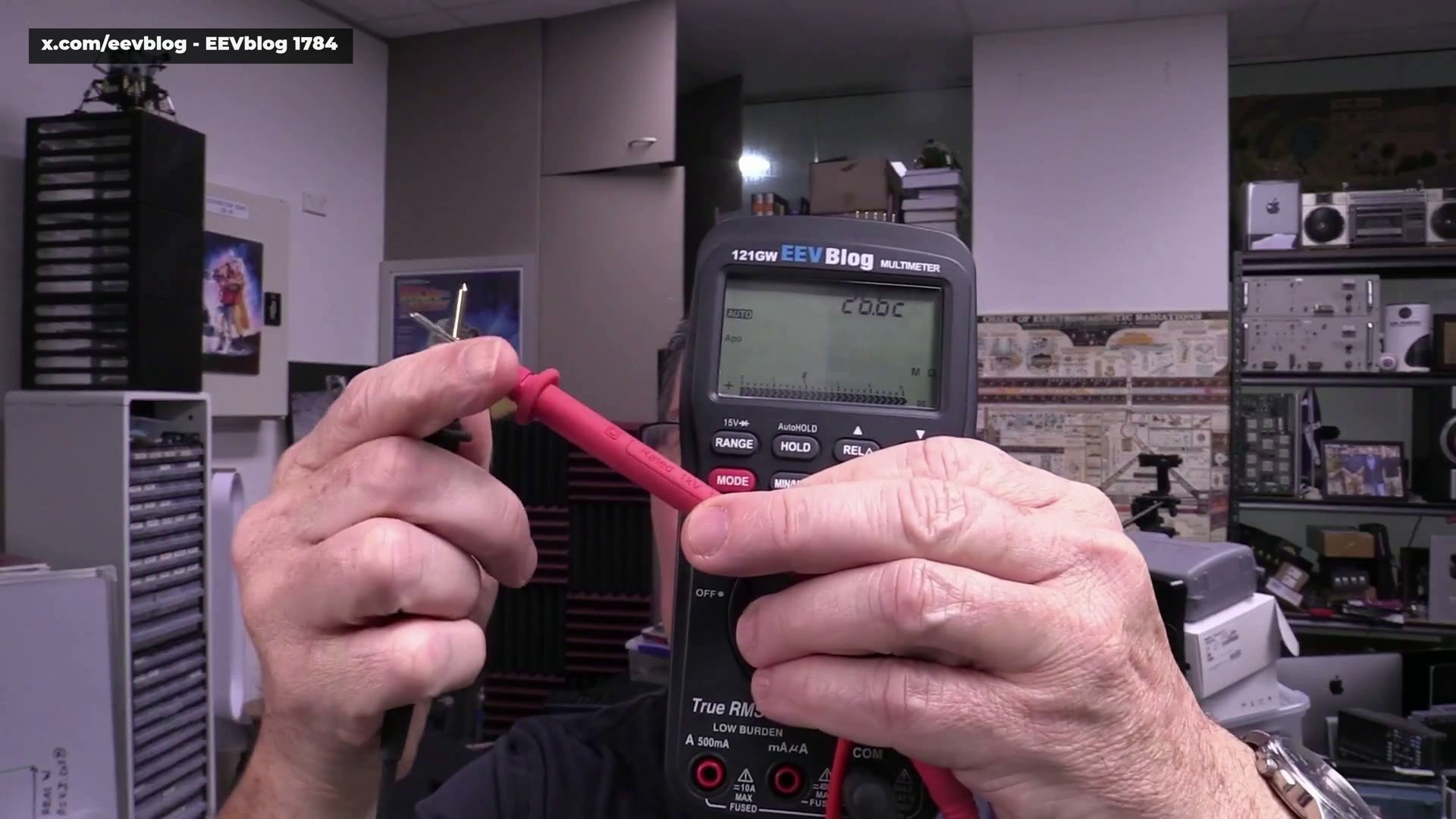
That last step is important. Code that compiles proves very little. Code that runs on the real hardware and measures correctly is a different thing.
A Linux driver, by watching the Windows one
At Red Hat, Christian Schaller had a film scanner that Linux did not recognise. His earlier attempts with an AI agent had stalled, because the agent had nothing to compare against. So he changed the setup: Claude drove the manufacturer’s Windows driver inside a virtual machine, recorded what it sent to the scanner over USB, and then rebuilt that behaviour on Linux, comparing the two traces until they matched. According to The New Stack, he had his first recognisable scan within hours. He later published the harness so other people can do the same.
Three hundred and forty thousand stars
The tooling is spreading fast. An open source project called Reverse Engineer Anything, which connects coding agents like Claude Code to professional reverse engineering tools, passed three hundred and forty thousand stars on GitHub. One researcher told 404 Media that software as a service is dying as a business model, because rebuilding the features you want has become this easy.
I would add one line of caution. Code written this fast still deserves a careful look before you trust it, especially if it ends up on a device that matters. But the direction is very clear.
Security: The Assistant Noticed What Nobody Asked
A Mac user asked Claude Code to build a simple temperature monitor. The numbers it read looked far too high, so Claude went and checked what was using the processor, and found a hidden crypto miner called XMRig, eating about twelve cores, with the chip at one hundred and twelve degrees. Then it asked before cleaning it up.
This is one user’s report, with screenshots, not a forensic investigation. Nobody has independently confirmed how the miner got there. But the story shows something genuinely new: the assistant noticed something the human never asked about, because the data it was given did not make sense.
Money: Subscriptions, Haggling Agents and the Game Nobody Made
Cancelling the subscriptions
Pieter Levels says he cancelled one hundred percent of his software subscriptions and built his own replacements instead. He now pays only for domains, servers, storage and AI. He also notes the irony himself: as someone who sells software, he could be replaced in exactly the same way.
Project Deal: agents that haggle for you
Anthropic tested something bigger inside its own San Francisco office. In Project Deal, sixty nine employees each got a Claude agent and a budget of one hundred dollars. The agents listed items, haggled and closed deals on their own, with no human approving each sale. The result: one hundred and eighty six deals across more than five hundred listed items, worth just over four thousand dollars.
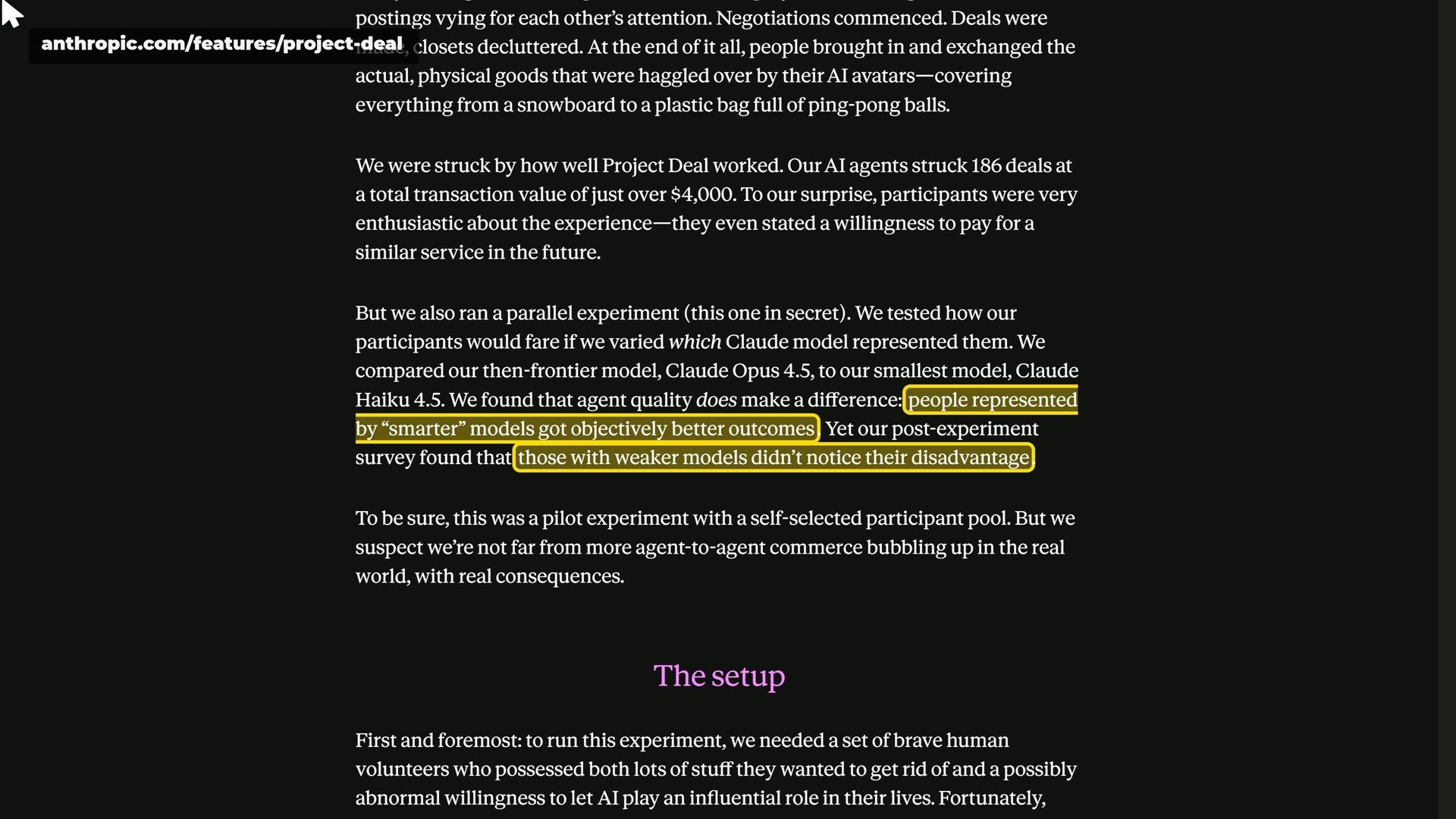
Here is the uncomfortable part. In a parallel run that participants did not know about, Anthropic gave some people a stronger model and some a weaker one. People represented by the stronger model got objectively better prices, buying and selling, and in the survey afterwards, the people with the weaker model did not even notice their disadvantage.
In the follow up, Project Swap, two hundred and one employees across six offices traded books through agents. Anthropic found that the model an agent ran on made more of a difference to its negotiating results than the instructions people gave it. When agents start negotiating for us in real markets, which model you use may matter more than how you ask.
The game nobody has made yet
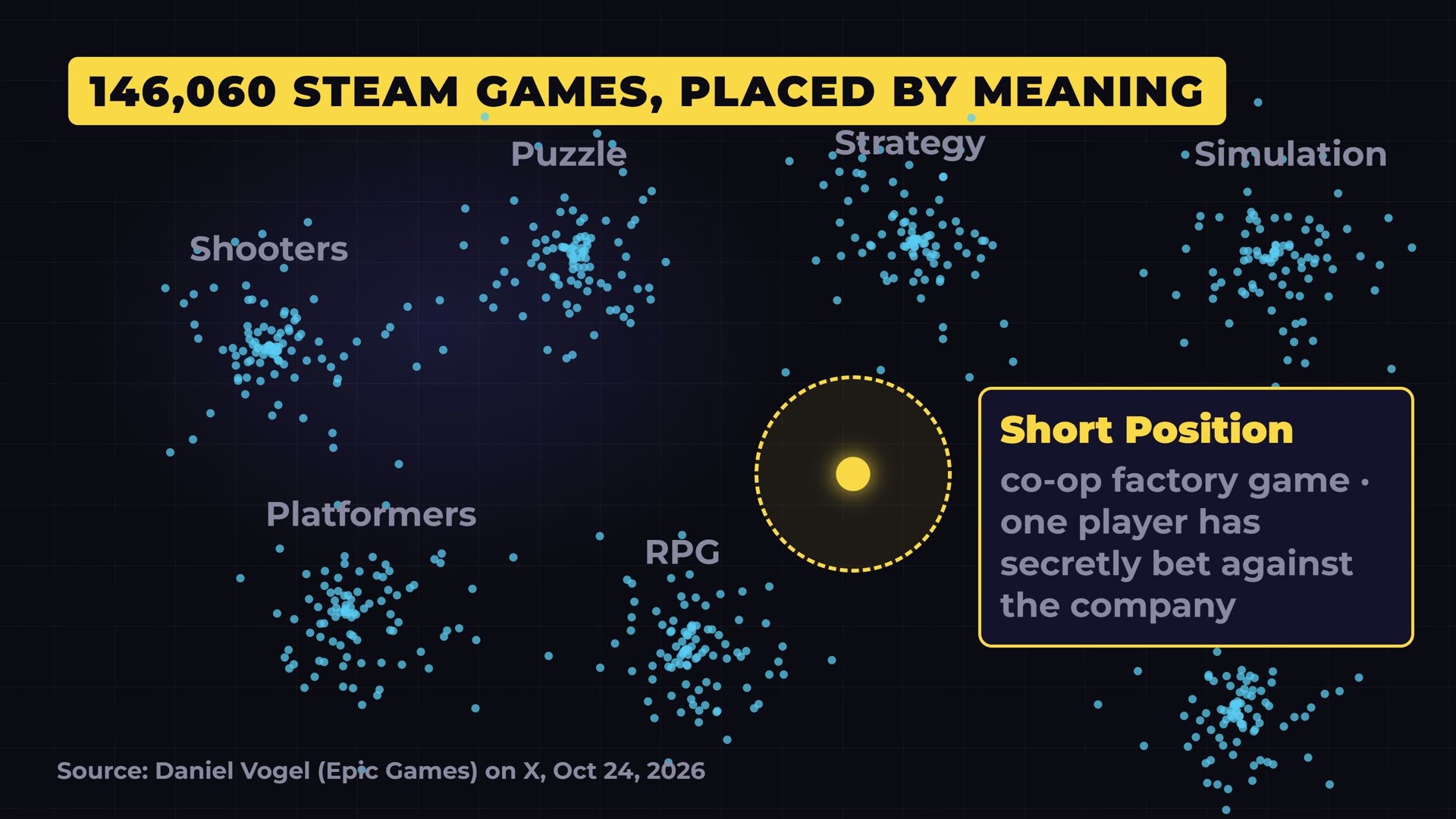
What should you build next? Daniel Vogel, the chief operating officer of Epic Games, had Claude place all one hundred and forty six thousand Steam games on a map of meaning, then look for the empty spaces between them. Its pick: a co-op factory game where one of the players has secretly bet against the company. Nobody has made it yet. You could do the same exercise for almost any market.
Claude’s new rule on game clones
And one change you should know about. On October 27, Anthropic updated Claude Code on Opus 5.5 to steer it away from recreating someone else’s specific game, and confirmed it to Game Developer. Original games, games in a genre and games built from your own designs and assets still work. Copies do not. Given how many studios were worried about AI clones of their demos, this is a reasonable line.
Science: Where It Gets Serious
A planet candidate in NASA data
A Reddit user had Claude Code write more than a thousand scripts to search seven years of NASA’s TESS telescope data. It found a star, one hundred and sixteen light years away, that dims by a tiny amount, about 0.05 percent, every 3.18 days, for roughly two hours. The same dip shows up in the data from 2018, 2020 and 2025. If it is a planet, it is about 1.4 times the size of Earth.
It is still a candidate, not a confirmed planet, and follow up observations are planned. A few days later, another user found a second candidate the same way, and tried to work out why the signal had been missed.
A new enzyme system, spotted by a machine
In September, Anthropic’s new biology lab pointed about nine hundred and fifty Claude agents at a database of more than two hundred thousand enzymes, for twenty one hours. One agent noticed something strange in the raw DNA next to an unusual enzyme: a long run of evenly spaced repeats that looks a bit like CRISPR.
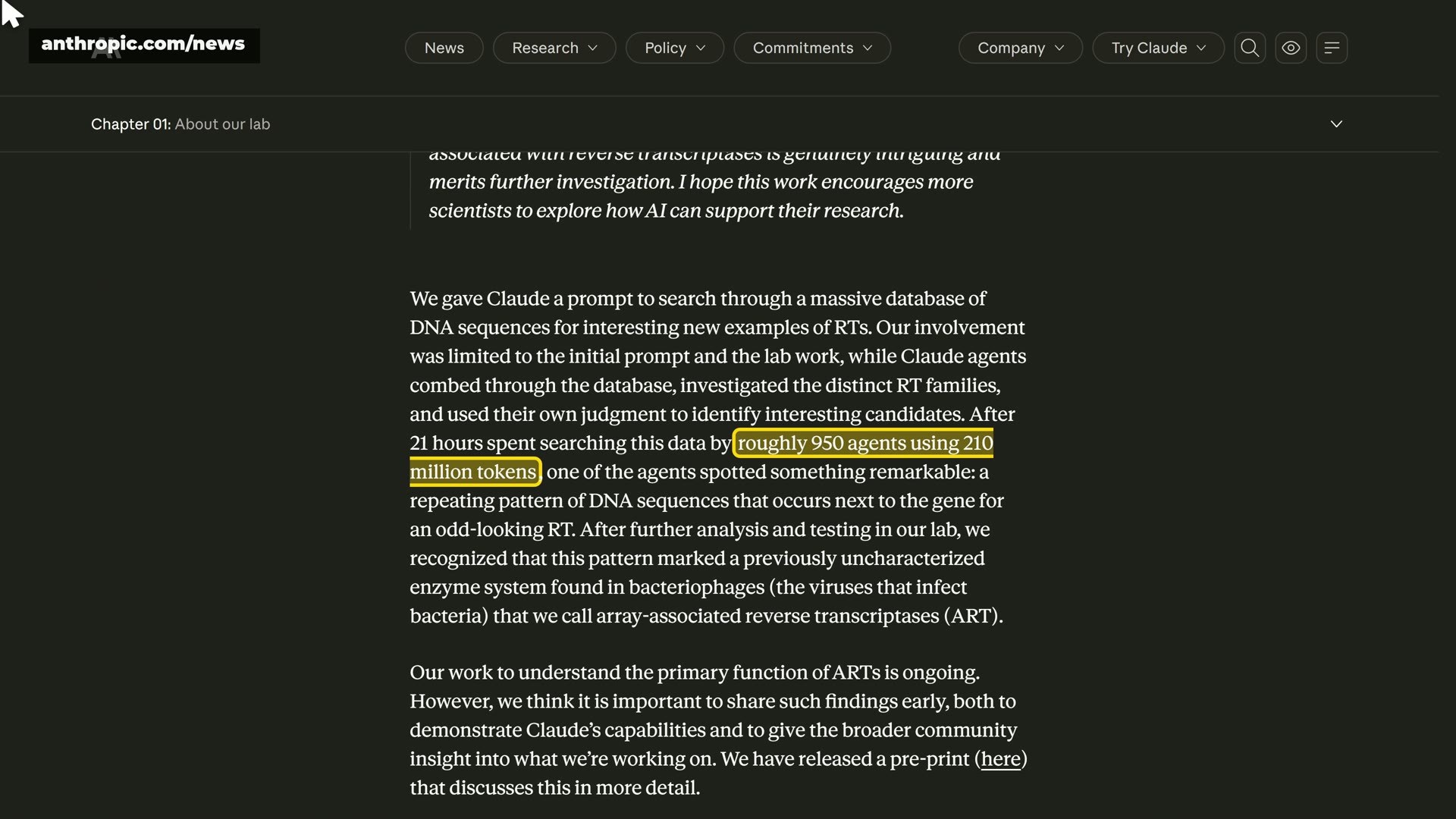
Nobody knows yet what this system does. Human scientists ran all the lab work, and they say themselves that it is early. But it was a machine that spotted the pattern, in data that humans had not looked at closely.
One person plus Claude, bought by Anthropic
And this is the story from the start. Cody Tranbarger, known online for years as Professor Oak, ran a biotech company alone. Claude coordinated his contracts, his logistics and his experiments with eleven outside labs. In under eighteen months, a possible treatment for a rare form of muscular dystrophy went from an idea to promising results in mice. On October 27, Anthropic bought the company, Mithril Medicine, and its programs became Anthropic’s first internal drug research.
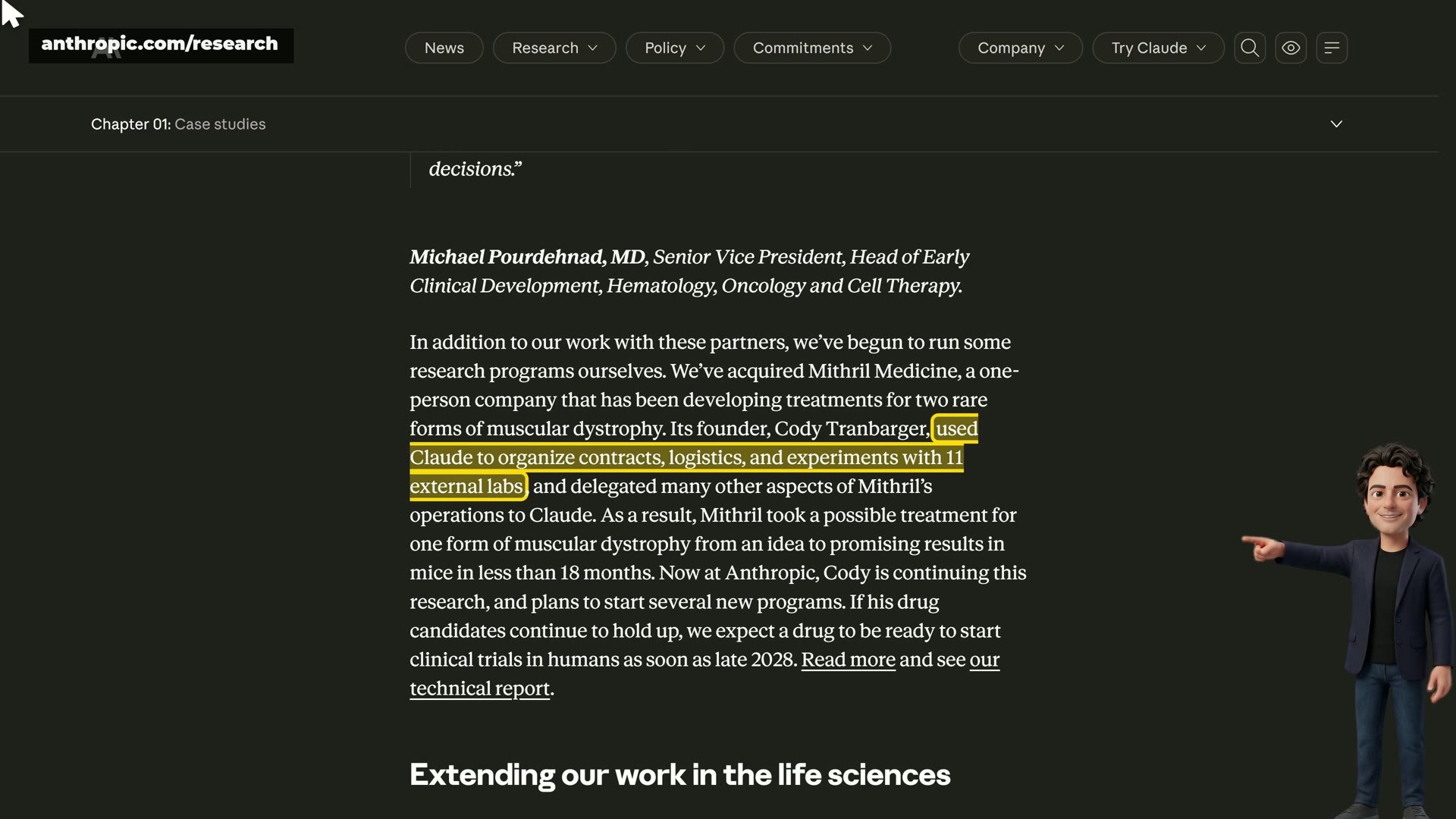
To be clear about what this is and is not: mice are not people, and if the candidates keep holding up, the earliest human trials would be in late 2028. But one person, plus Claude, did the work of a small company.
The Family Side
A French speaking father bought his four year old son an old point and click series for children, but half of the games had never been released in French. He gave Claude one job: pull out the voices from the game, transcribe them, translate them and speak them again in French, using free voice models running on his own computer. Now his son can play.
Anthropic’s own account showed Claude Code with a camera, left running all night on a London street, taking its own pictures. Another user showed Opus 5.5 turning a floor plan into a 3D house you can walk through before it is built. And Movez built a site where you assemble a drone part by part and then fly it, so you can learn how drones work without crashing a real one.
That is where I stopped reading and started testing.
My Test: Three Ideas, One Prompt Each
Here is how I set it up. I took three of the ideas you just read about and gave each one to Claude Opus 5.5, on the normal twenty dollar Claude plan, through Claude Code’s command line. One prompt each. Every tool switched off, so no searching the web, no reading files, no running code. And it had to write the whole thing as one single web page. I recorded every run, so what you see in the video is what it wrote.
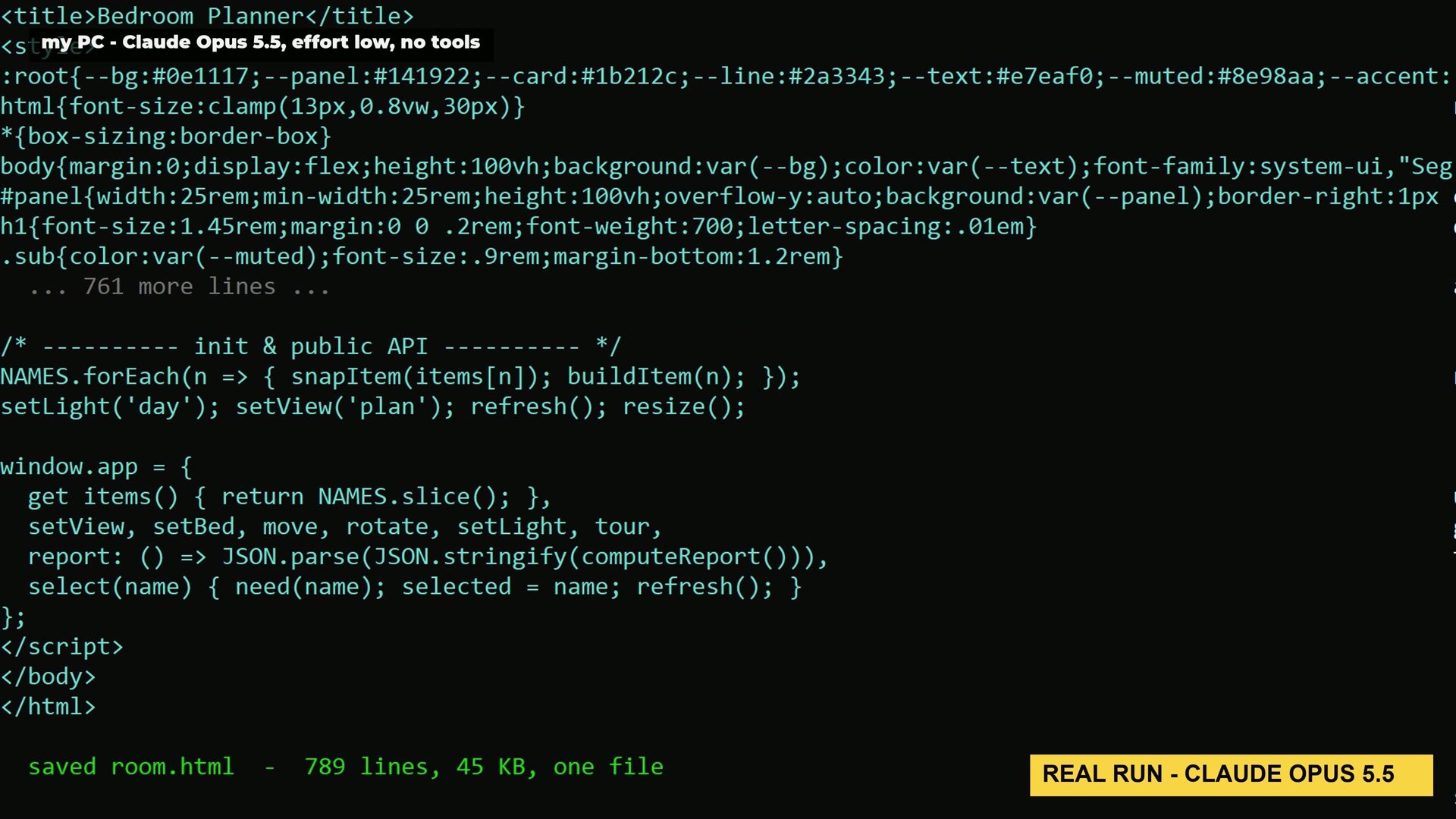
Each run took about eight minutes and produced between 52,000 and 54,000 output tokens. There was no extra cost on top of the subscription. And none of the three needed a single fix: what you open in the gallery is exactly the file the model wrote.
Test one: will the new bed fit?
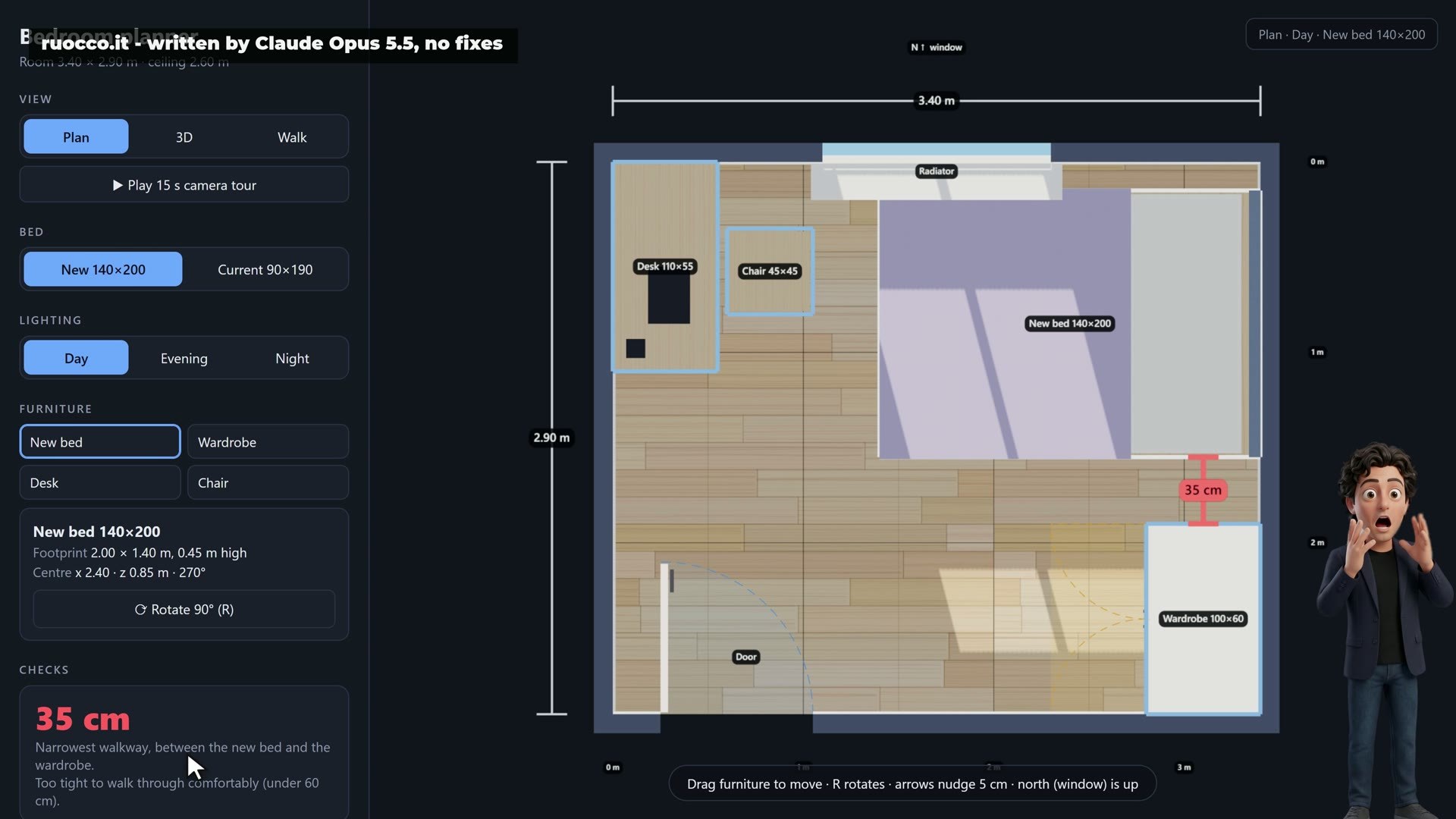
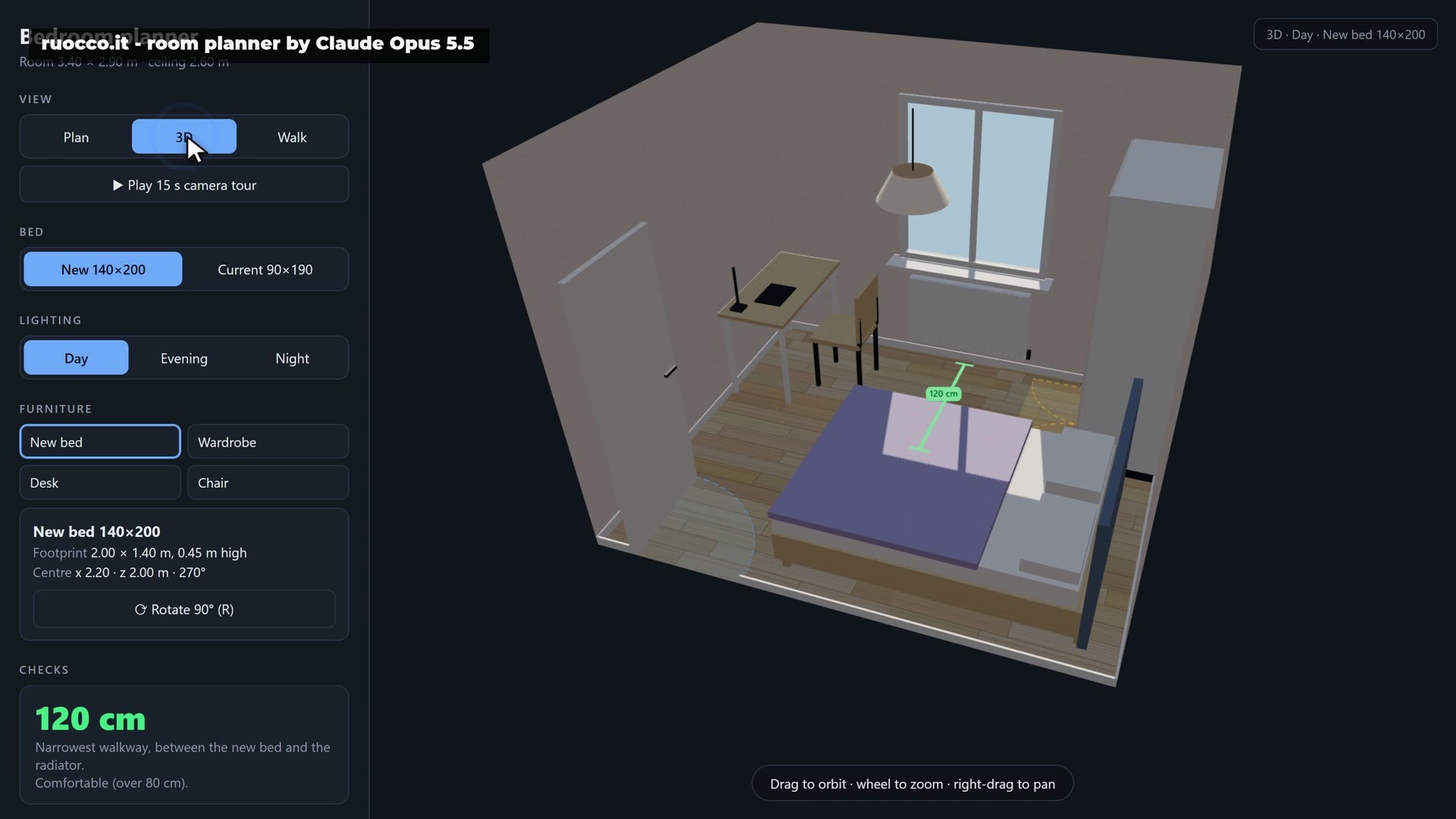
I described a child’s bedroom: three metres forty by two metres ninety, with the door, the window, the radiator, a wardrobe and a desk, all with their real measures. Then I asked one question: does a new bed, one forty by two metres, fit? I asked for a plan view, a 3D view, a walk-through mode, furniture you can drag, and live checks written in plain words. Claude Opus 5.5 took about eight minutes and wrote 789 lines.
The page works exactly the way you would hope. You get a plan with real measures and a metre grid, and every piece of furniture can be dragged or nudged five centimetres at a time with the arrow keys. With her current bed, the narrowest walkway in the room is eighty five centimetres, shown in green.
Now switch to the new bed, and the panel turns red: thirty five centimetres between the bed and the wardrobe. That is the answer we needed before buying. I even searched every position of the new bed with the rest of the furniture where it was, and the best spot still left only forty centimetres.
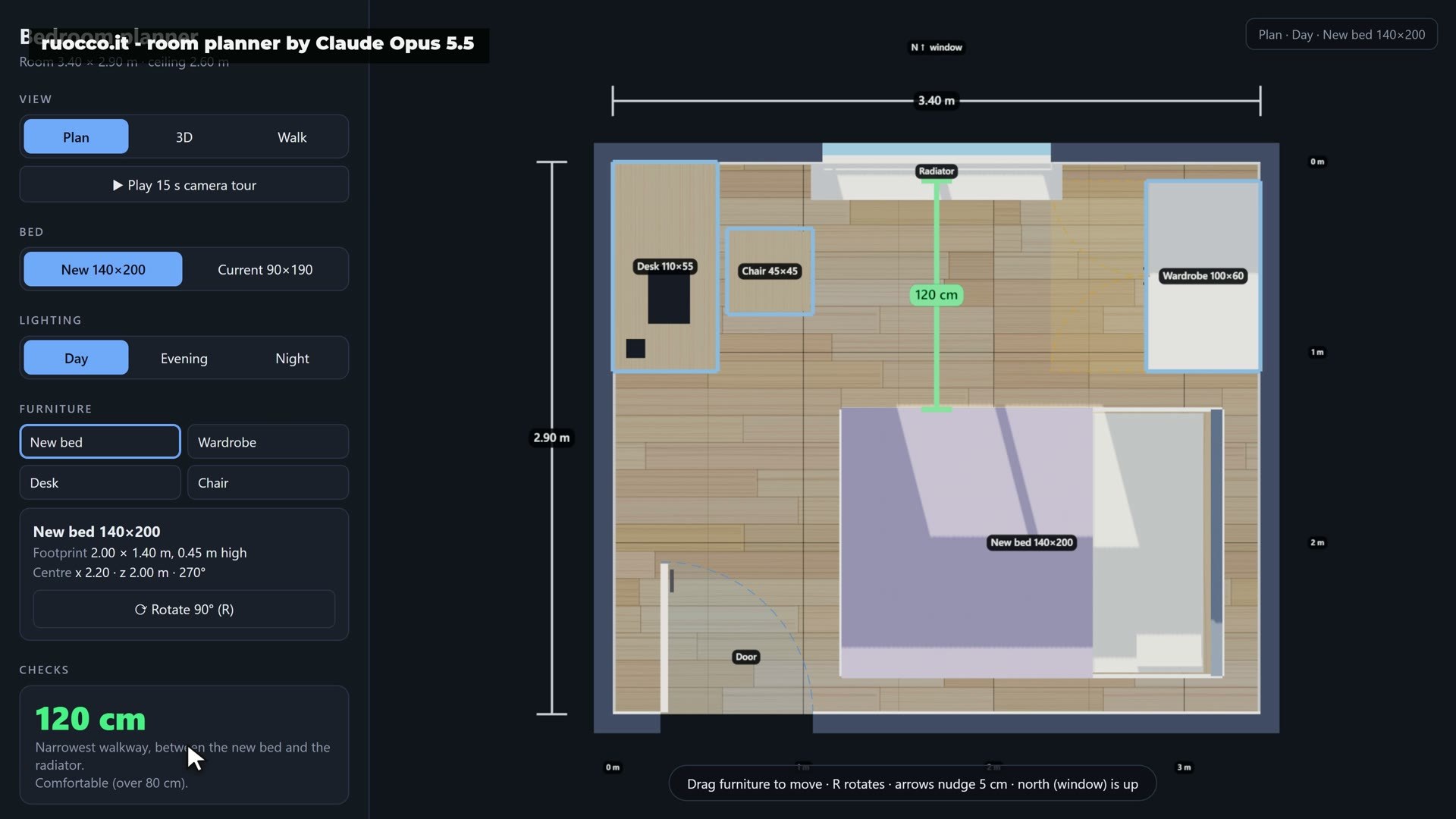
So I fixed it the way you would in real life. I moved the wardrobe to the window side and pushed the bed against the other wall. One hundred and twenty centimetres, green, and the door still opens.
Then the 3D view, with the evening light on, and the walk mode, where you stand in the room at eye height and look around, with our own measures. It is not a professional CAD tool, but for the question “will it fit, and where”, it gave us a clear answer in a few minutes.
Test two: a drone lab you build, then fly
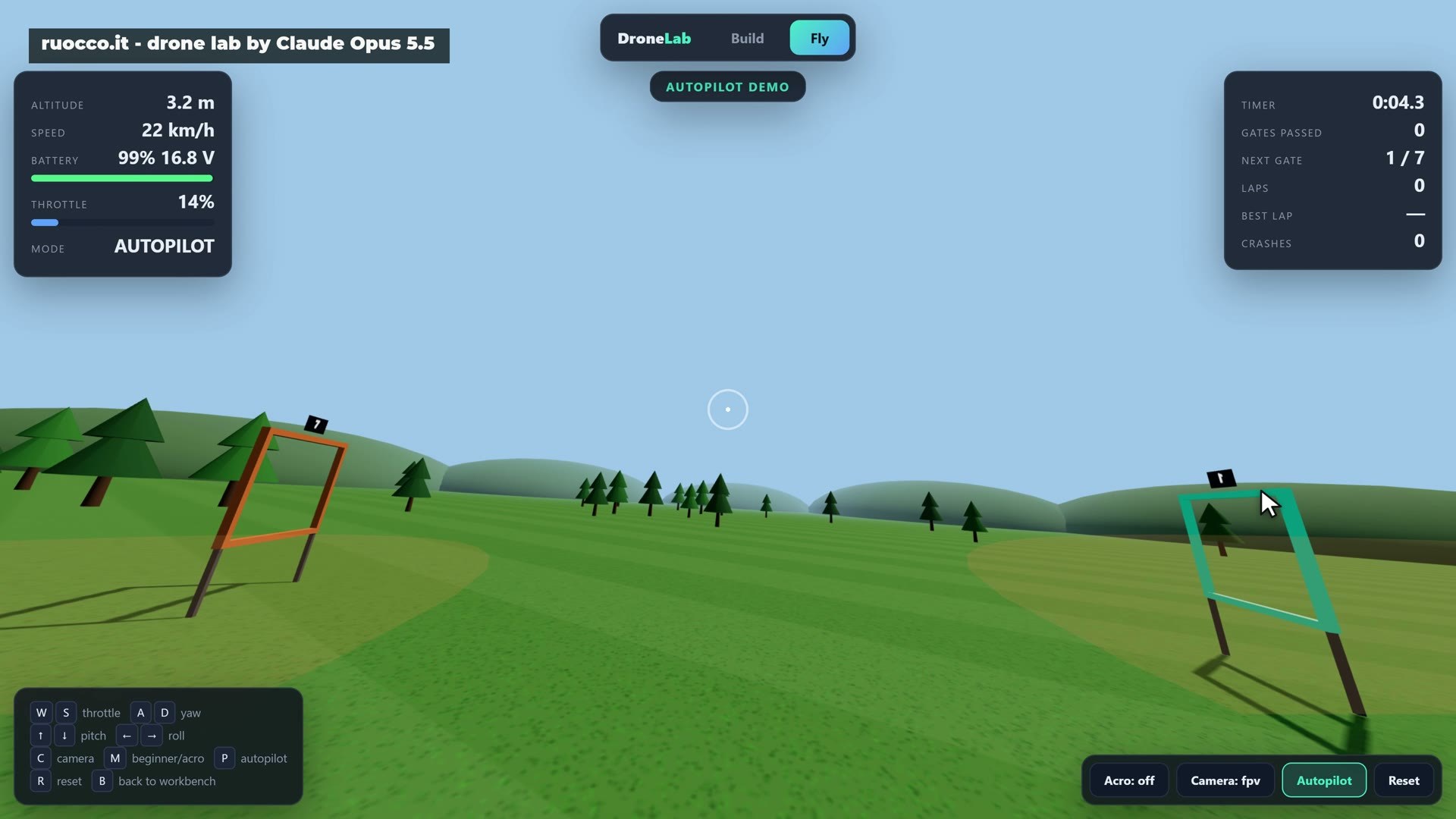
For the second test, I asked for a lab where you build a quadcopter part by part and then fly it, with one condition: the way it flies has to depend on the parts you chose. About eight and a half minutes, seven hundred lines.
You start with the frame. Every part snaps on with a short animation, and the numbers update live: total weight, total thrust, the thrust-to-weight ratio, the estimated flight time, and one line that explains what that part does and why the numbers just changed.
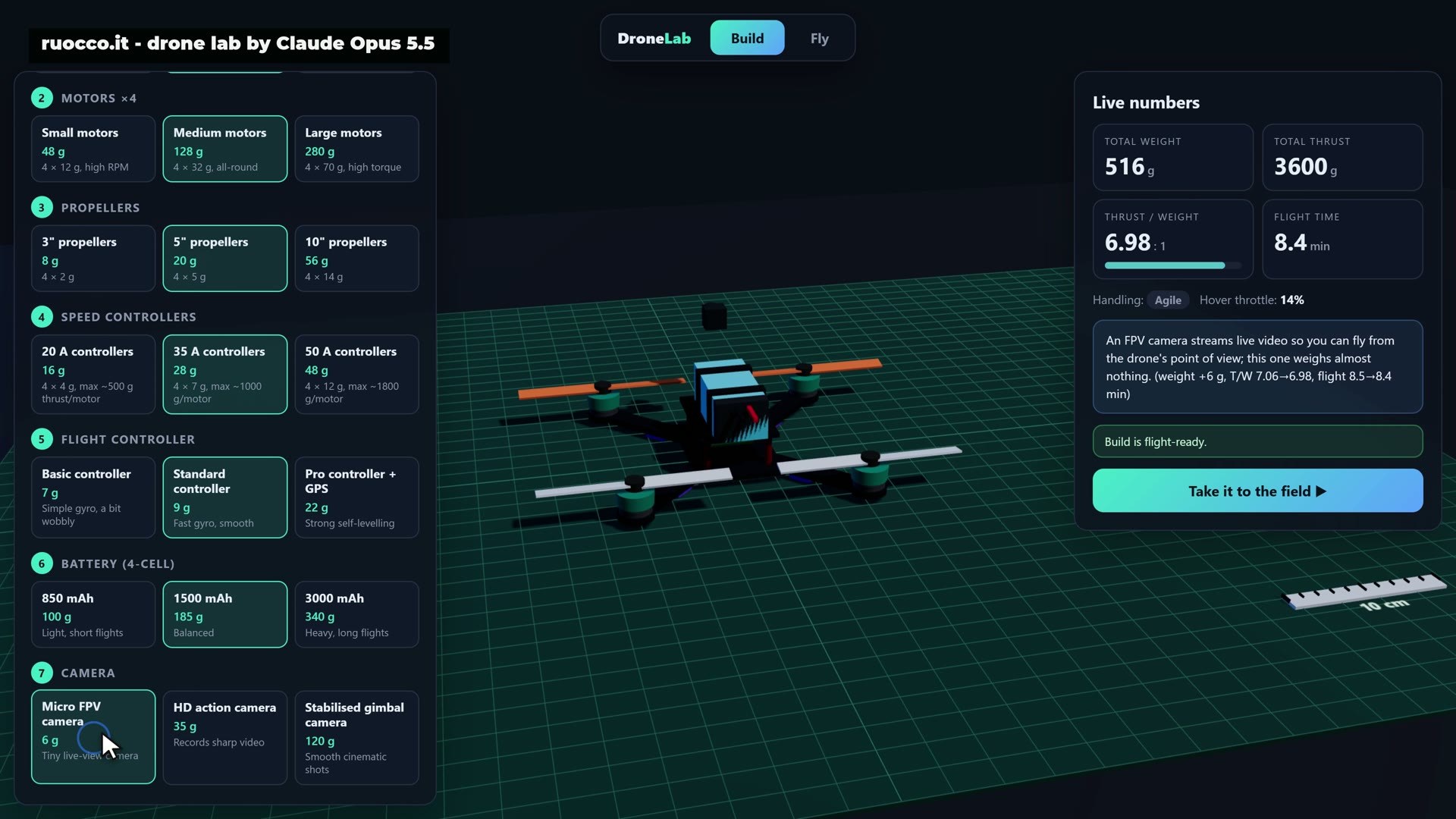
Then I built it wrong on purpose: a big frame, small motors and the heaviest battery. The lab told me straight away: thrust-to-weight 0.90, this drone cannot even lift off, and the motors and propellers are poorly matched. With a sensible build, it says flight ready.
Then you take it to the field: an outdoor course with gates, trees and a landing pad, a HUD with altitude, speed, battery and timer, and a chase camera or a first person camera. I let the autopilot fly the course by itself: two full laps, fourteen gates, no crashes. The physics is a simplified model for learning, not a flight-certified simulator, but the cause and effect is right, and that is the whole point of learning.
Test three: a wall panel for an old tablet
The third idea came from people turning old iPads into smart-home wall panels. I asked for a page that runs even on an old browser, with plain JavaScript and every icon drawn in code, and every device simulated. Claude wrote 1,015 lines in about eight minutes.
You get a big clock, the weather with a six hour strip, the next calendar events, an energy tile that reacts to what is switched on, and six rooms with lights, heating and blinds, plus a door lock and a little camera tile in the entrance. I tapped Movie night: the living room lights dim, the blinds come down, the front door locks and the power use changes. Good morning turns the lights back on and opens the blinds.
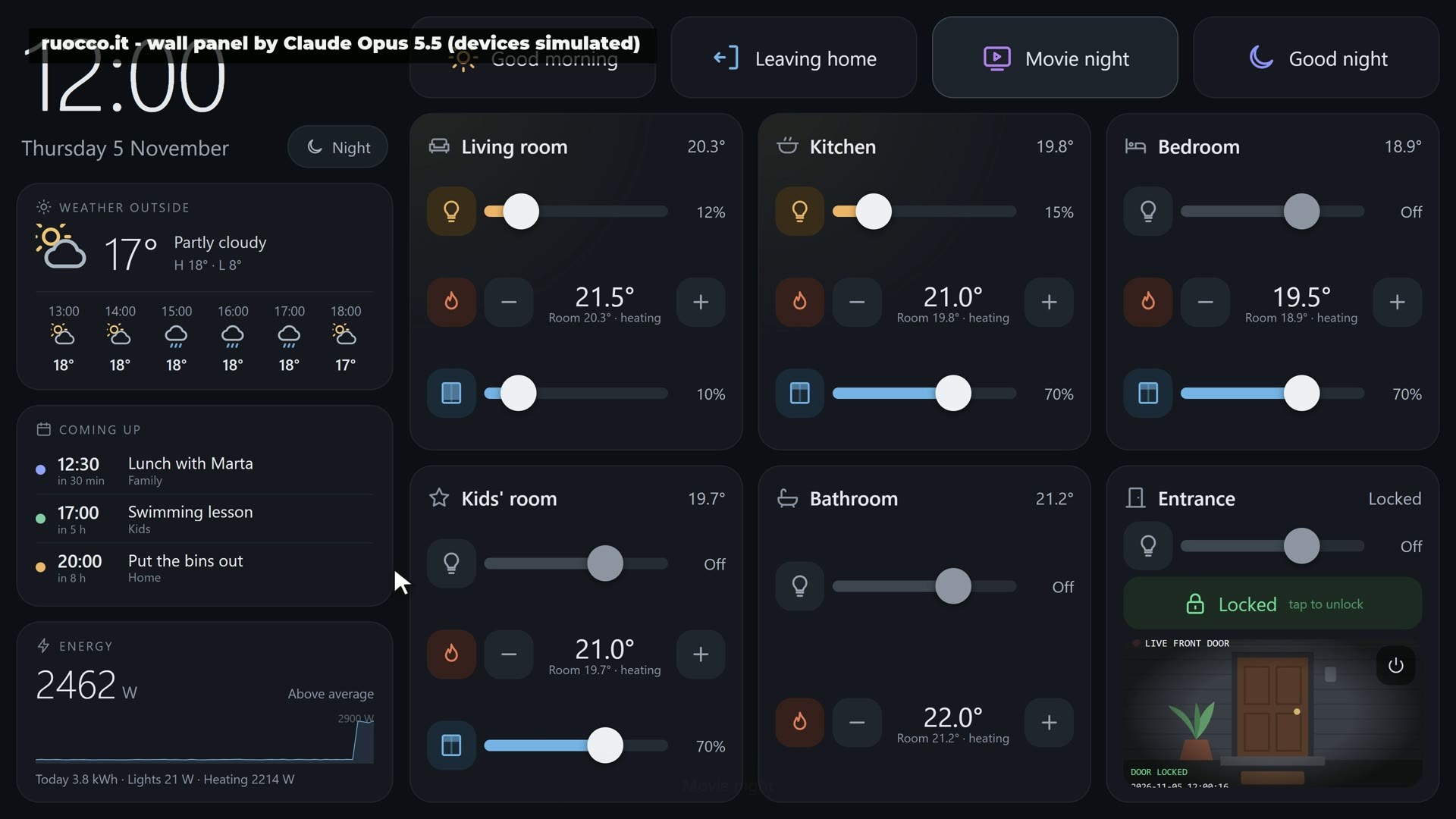
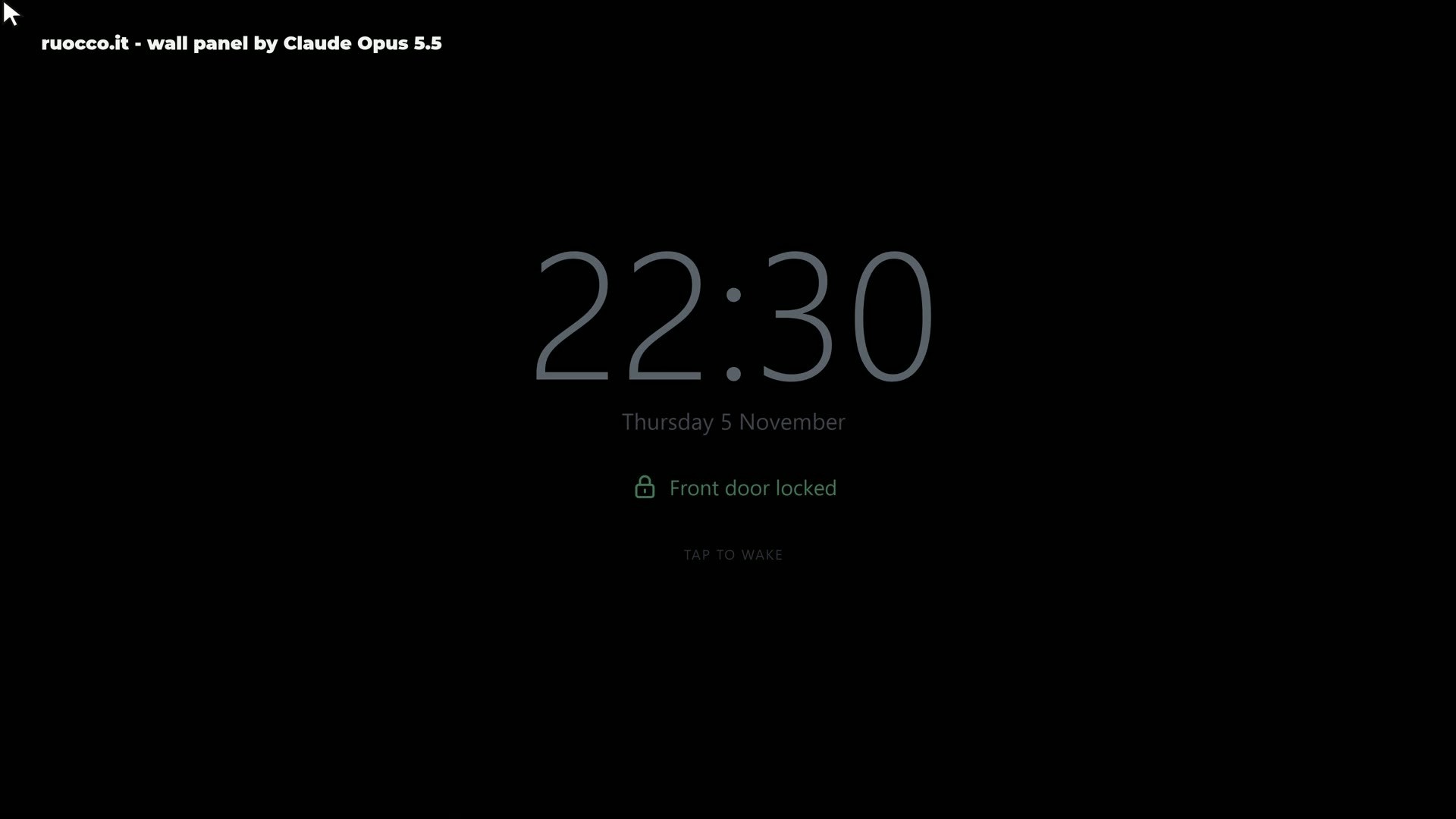
And after ten at night, it turns into a dark, quiet screen with just the time and the state of the front door, and wakes up when you tap it. On a real tablet, you would only connect your own smart home where the comments in the code tell you to: the model marked exactly where the real calls would go.
So, What Is Real Here?
The stories at the start of this article are real people with real results, and real limits. Some are single users’ reports, like the crypto miner and the router. The planet is still a candidate. Mithril’s results are in mice so far. Some people bricked their TVs. If you read any of these as a promise, you will be disappointed.
But the three pages I built were written in one go, by a model anyone can use today, for no extra cost on a normal plan. A room planner that answered a real question, a drone lab that teaches cause and effect, a wall panel that would give an old tablet a job. That is the part that changes things for ordinary people: you no longer need to be a developer to get a small, working tool for your own problem.
Try Every Demo, and Get the Prompts
All three builds are live, free and running in your browser on my site:
- 3D room planner: will the new bed fit?
- Drone lab: build it part by part, then fly it
- Wall panel for an old tablet
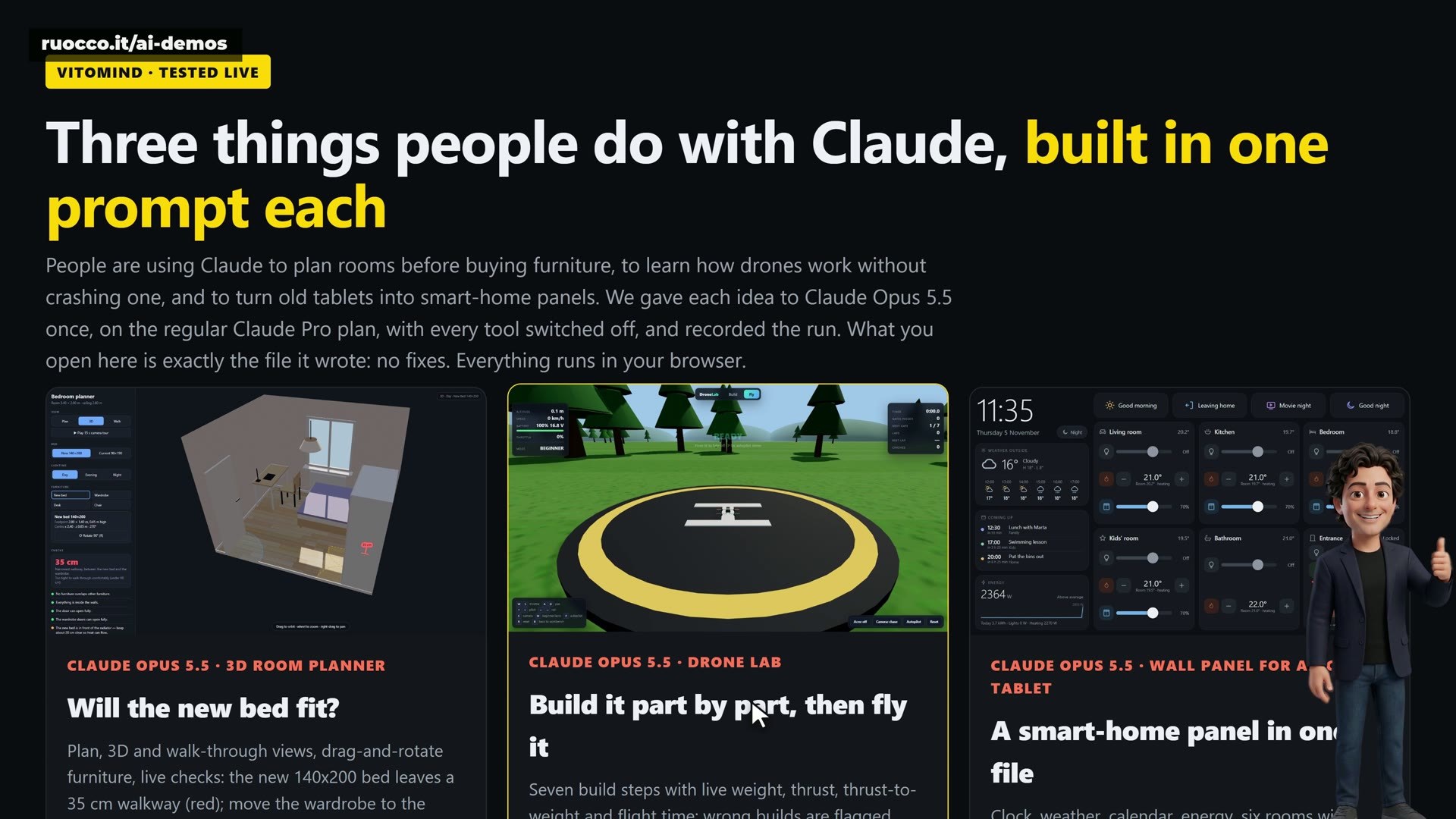
The gallery page is here: ruocco.it/ai-demos/opus-5-5-room-planner-drone-lab-wall-panel, and every demo I have made for the channel is at ruocco.it/ai-demos.
The exact prompts, the script that sent them and the full source of each build are in the Ruocco Academy. The Academy is a waiting list for now: join it and you get one email when it opens. If you want to plan your own room, the room prompt is written so you can change the measures and run it again.
How I Tested
- Model: Claude Opus 5.5 through the Claude Code command line, `claude -p –model claude-opus-5-5 –effort low –tools “”`, on the Claude Pro plan, November 5, 2026.
- One prompt per build, sent once, every tool disabled, no internet access for the model.
- One run each, no retries, no cherry-picking, no fixes. Times: 8.1, 8.4 and 8.1 minutes; output: 52,590, 53,239 and 54,045 tokens.
- The generation runs were recorded live in a console window on my PC. The demos were then used from the live gallery on ruocco.it.
- The devices in the wall panel and the drone physics are simulated. One build is a single sample, not a benchmark.
Sources
- TV: Ryan Doyle on X and the speed clip
- Xiaomi TV: 0xProbabillity on X
- Kindle: Adrian on X
- Wi-Fi router: Codila on X
- Microphone: Robert Bye on X
- Echo Dot: XDA Developers on X
- EEVblog 121GW firmware: Dave Jones on X
- Linux scanner driver: The New Stack
- Reverse Engineer Anything: AI Weekly, reporting 404 Media
- Crypto miner: International Cyber Digest on X
- Subscriptions: Pieter Levels on X
- Project Deal: Anthropic
- Project Swap: Anthropic
- Steam idea map: Daniel Vogel on X, October 24, 2026
- Game-clone update: Game Developer
- Planet candidates: Vaibhav Sisinty on X and Pavel Rabtsevich on X
- Enzyme system: Anthropic
- Mithril Medicine: Anthropic and Professor Oak on X
- Game translation: Kevin Gosse on X
- Camera overnight: Claude on X
- Floor plan to 3D: Chris on X
- Drone site: Movez on X
An honest note: the community stories are reported as their authors described them, and I have marked the ones that are single reports, candidates or early results. Modifying your own devices is at your own risk.
If you want more real tests instead of headlines, subscribe to @VitoMind on YouTube, and tell me in the comments which idea I should test next.