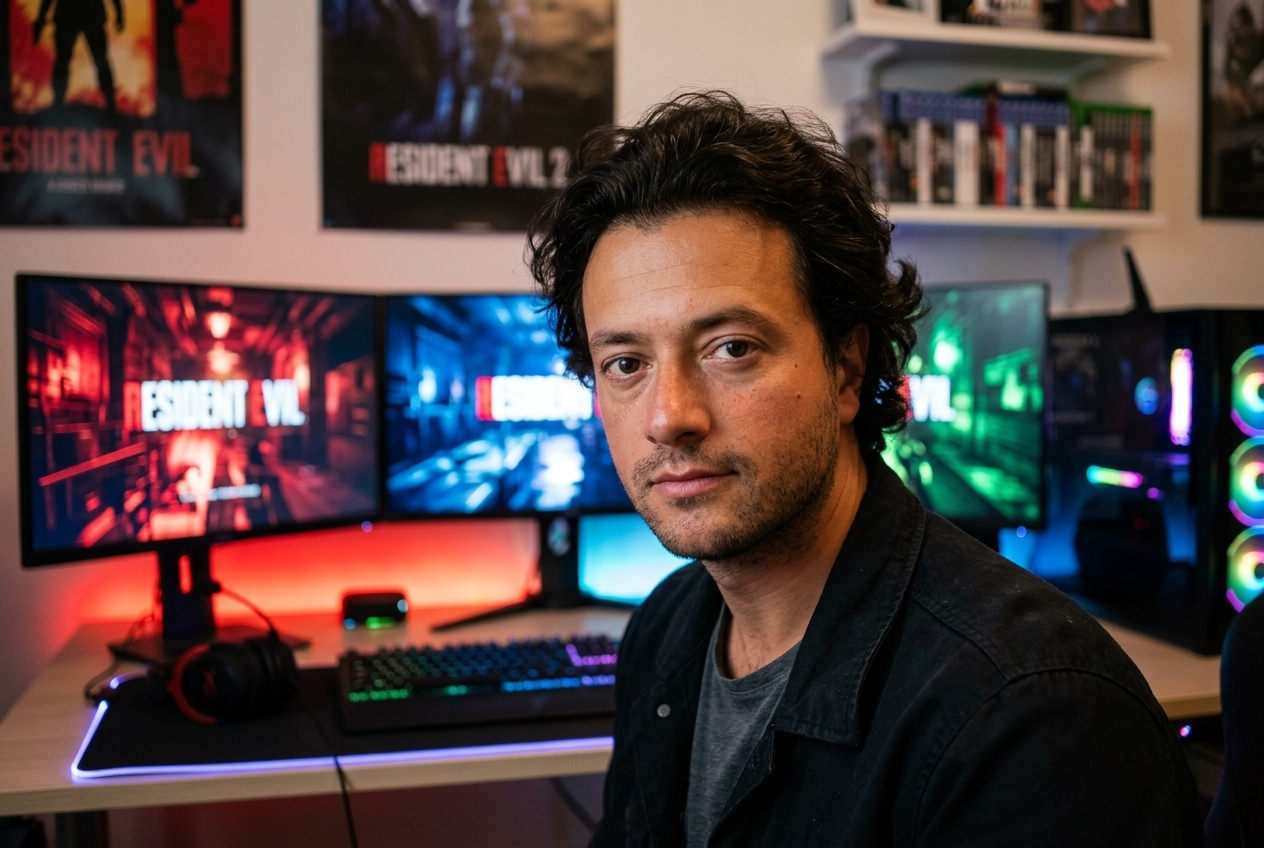
The Week in Gaming: Resident Evil 2 Remake Crowned Capcom’s New Horror King, Warhammer 40K Universe Expands, and Zelda Movie Wraps Filming
July 29, 2026 — From a historic sales milestone in survival horror to major moves in the Warhammer cinematic universe and the long-awaited return of a Capcom sci-fi franchise, here’s everything you need to know from the gaming world today.
Resident Evil 2 Remake Dethrones RE5 After 15-Year Reign
For fifteen years, Resident Evil 5 stood as the undisputed best-selling entry in Capcom’s legendary survival horror franchise. That reign is officially over. According to Capcom’s latest financial report, the Resident Evil 2 remake has now shipped 19.75 million copies, narrowly surpassing Resident Evil 5’s lifetime total of 19.01 million.
It’s a milestone worth dissecting. Resident Evil 5 launched in 2009 on the enormous hype wave generated by the beloved Resident Evil 4, and despite receiving a more mixed critical reception than its predecessor, it went on to become an absolute commercial juggernaut. The fact that it took a decade and a half for another entry to surpass it speaks volumes about the cultural footprint of that era of Resident Evil.
But the RE2 remake’s ascent is a different kind of story. Released in January 2019, it was a lovingly crafted reimagining of the 1998 PlayStation classic — a return to the claustrophobic, resource-management-driven horror that defined the series’ roots. Its sustained sales trajectory has been bolstered by a combination of regular discounts, the enduring popularity of protagonist Leon S. Kennedy, and the positive halo effect from subsequent releases like the Resident Evil 4 remake and the recently launched Resident Evil Requiem.
And the numbers across the franchise are staggering:
- Resident Evil 2 remake — 19.75 million copies sold (new #1)
- Resident Evil 5 — 19.01 million copies (former #1, now #2)
- Resident Evil 4 remake — 16 million copies and climbing
- Resident Evil Requiem — 8 million copies (released February 2026)
Combined, the Resident Evil franchise has now surpassed 213 million copies sold across its entire catalogue — edging past Square Enix’s Final Fantasy franchise, which sits at 212 million (pending this quarter’s update). That makes Resident Evil not just Capcom’s crown jewel, but one of the best-selling video game franchises of all time.
Resident Evil Requiem, the latest mainline entry that launched this past February to critical acclaim (IGN gave it a 9/10 “Amazing”), is particularly impressive at 8 million copies in just five months. The game follows Grace Ashcroft, an FBI technical analyst, as she investigates a mysterious disease at the Wrenwood Hotel — a trail that leads her back to where it all began: Raccoon City. With a highly anticipated post-launch expansion still on the horizon, Requiem’s sales are virtually guaranteed to climb much higher.
Looking ahead, the franchise shows no signs of slowing. Zach Cregger’s Resident Evil film hits theaters on September 16, 2026, and Capcom has already confirmed Resident Evil: Veronica for a 2027 release, finally giving Claire Redfield her long-overdue spotlight.
Warhammer 40,000 Cinematic Universe: Henry Cavill and Mike Flanagan Team Up
Games Workshop just dropped a bombshell update on the long-gestating Warhammer 40,000 Cinematic Universe, and it’s loaded with exciting developments.
In a financial report published this week, GW CEO Kevin Rountree confirmed that Amazon has brought United Artists (UA) onboard alongside director Mike Flanagan, who has completed initial outlines and is “should soon be moving on to script.” Henry Cavill, the project’s most passionate champion, “remains involved as they have been for some time.”
For the uninitiated, Flanagan is the creative force behind some of the most acclaimed horror series of the streaming era: The Haunting of Hill House, The Haunting of Bly Manor, Midnight Mass, and the upcoming Amazon Prime Video adaptation of Stephen King’s Carrie. He also wrote the first draft of the DC Universe film Clayface. His involvement signals something fascinating: whatever this Warhammer 40K project becomes, it’s going to lean hard into horror.
And honestly, that’s the perfect instinct. The grimdark 41st Millennium is often associated with bombastic Space Marine battles, but the setting is drenched in horror — body horror with the rotting Death Guard, cosmic horror with the daemons of the Warp, psychological horror with the Inquisition’s endless machinations. Flanagan’s sensibility could bring a genuinely unsettling dimension to the franchise that no one expected.
Cavill himself addressed the adaptation’s challenges in a recent interview with Esquire:
“It is a tricky IP, and a very complex IP, and that’s what I love about it. The challenges that come with putting this on the page in a way that is doing justice to that complexity, that trickiness, and that nuance, is a challenge I’m enjoying enormously.”
When asked about his potential role, Cavill has previously expressed interest in playing one of the Primarchs — the demigod sons of the Emperor of Mankind — or a Captain-General. Whatever the character, the combination of Cavill’s fanboy devotion and Flanagan’s horror expertise makes this one of the most exciting adaptations in development today.
But the announcements didn’t stop there. Games Workshop revealed three separate animated projects:
- Secret Level Season 2 — A new episode is nearly complete, set in the Warhammer: Age of Sigmar fantasy universe (not 40K), following the success of Season 1’s Warhammer 40K episode centered on Space Marine Titus.
- New Deathwatch Animated Series — A full animated Warhammer 40,000 series focused on the Deathwatch, the elite Ordo Xenos Space Marines. Written by John Orloff, animated by Blur Studio, and distributed through Amazon.
- Space Marine 3 — Teased as coming, though details remain under wraps.
The Legend of Zelda Movie Wraps Filming in New Zealand
Nintendo’s live-action Legend of Zelda film has officially wrapped production in New Zealand, and we’re finally getting bits and pieces of information about the adaptation.
The movie stars Benjamin Evan Ainsworth (17 years old) as Link and Bo Bragason as Princess Zelda. Ainsworth, best known for Netflix’s The Haunting of Bly Manor and HBO’s House of the Dragon, recently spoke to GamesRadar about preparing for the iconic role — and offered a reminder of just how young the franchise’s new leading man is.
“I remember vividly when Breath of the Wild came out,” Ainsworth said. “And it might show my age — but I remember being quite young at the time when it came out, and so I didn’t have a Switch at the time. And so, I was watching gamers play it, and watching playthroughs, essentially.”
For context: Breath of the Wild launched in 2017. Ainsworth was eight years old. He’s now caught up on the series’ 40-year history in preparation for the role:
“Upon being fortunate enough to play this role, such an iconic character, going back and realizing the 40 years of legacy and history, and the varied tones, the varied stories, the varied renditions and vocal performances of this character as well. Yeah, I’m a big fan, and just really excited, because it was an awesome thing to shoot.”
The film is directed by Wes Ball (Kingdom of the Planet of the Apes), who has described the project as a “serious” and “grounded” adaptation that aims to feel “real” to audiences. Some fans have already spotted what they believe to be Succession actress Dichen Lachman in costume as Impa, Zelda’s loyal aide.
The Legend of Zelda movie is set for an April 30, 2027 release. With less than a year to go, a trailer or official first look is expected soon — possibly timed to the Zelda franchise’s 40th anniversary this fall, which Nintendo is celebrating with an Ocarina of Time remaster for Switch 2.
Monster Hunter: World Hits 30.45 Million — Capcom’s Undisputed Crown Jewel
While Resident Evil’s milestone stole the headlines, another Capcom number deserves attention: Monster Hunter: World has now sold an astonishing 30.45 million copies. That makes it not just Capcom’s best-selling game of all time by a wide margin, but one of the best-selling video games period.
To put this in perspective, Monster Hunter: World alone has outsold many entire franchises. It surpassed The Elder Scrolls V: Skyrim‘s lifetime sales. It’s within striking distance of Grand Theft Auto V‘s numbers on individual platforms. And it did so as a franchise that, before 2018, was considered a niche Japanese series with a dedicated but relatively small Western audience.
The Monster Hunter franchise’s transformation from handheld cult favorite to global blockbuster is one of the most remarkable success stories in modern gaming. World’s accessible design changes — streamlined crafting, more generous hitboxes, online multiplayer that actually worked on consoles — opened the series to a massive new audience, and Capcom has been riding that wave ever since with Iceborne, Rise, and the upcoming Monster Hunter Wilds.
Pragmata: Capcom’s New Sci-Fi IP Reaches 2.5 Million Sales
Remember Pragmata? The mysterious sci-fi action game that Capcom announced, delayed, re-announced, and finally released? After years of development turbulence and uncertainty, the game has quietly carved out a respectable niche for itself, reaching 2.51 million copies sold.
That number may seem modest compared to Resident Evil’s tens of millions, but for a brand-new IP in an increasingly risk-averse industry, clearing two and a half million units is a genuine achievement — especially for a game that many had written off as vaporware during its extended silence. Capcom’s willingness to invest in original IP alongside its established franchises is a strategy that continues to pay dividends.
Call of Duty: Black Ops Fans Uncover Cut Zombies Tower Defense Mode After 15 Years
In a delightful piece of gaming archaeology, Call of Duty fans have discovered a cut Zombies tower defense mode hidden within the original Call of Duty: Black Ops (2010), more than fifteen years after the game’s release.
YouTuber JTAG uncovered the mode in the recent PS4 port of Black Ops 1 and uploaded gameplay footage. The mode is clearly unfinished, but its concept is fascinating: players would have been able to place turrets to stop hordes of the undead from advancing through a maze-like map, viewing the action from a bird’s-eye perspective — think Bloons Tower Defense meets Call of Duty. Crucially, players could also drop down to ground level and fight the undead firsthand in traditional FPS fashion.
It’s entirely possible this concept was scrapped in favor of Dead Ops Arcade, the hidden twin-stick arcade shooter accessible via a secret computer terminal in Black Ops’s main menu. Dead Ops Arcade went on to become a cult classic and appeared in multiple subsequent Black Ops titles.
The discovery is a testament to the experimental spirit of Treyarch’s Zombies team. The original Zombies mode itself was famously built in secret by a small team of passionate developers using recycled assets from Call of Duty: World at War, without official Activision sanction. There was no guarantee it would ship — but when the team presented it to executives, they recognized something special. A decade and a half later, Zombies is one of the most beloved components of the entire Call of Duty franchise, and it all started with a clandestine experiment.
The Bigger Picture: Gaming’s Franchise-Driven Future
Looking at today’s news cycle, one theme becomes overwhelmingly clear: the biggest stories in gaming aren’t about new mechanics, new technologies, or new business models. They’re about franchises. Long-running, culturally embedded, cross-media franchises.
Resident Evil isn’t just selling games — it’s selling movies, merchandise, and an entire aesthetic identity that transcends any single release. The RE2 remake didn’t outsell RE5 on the strength of being a great game (though it certainly is one); it did so because it tapped into a legacy that spans nearly three decades, multiple console generations, and a film series that introduced the franchise to millions of non-gamers.
Warhammer 40,000 is making the jump from tabletop to screen with the full weight of forty years of lore behind it. The involvement of Henry Cavill — a genuine A-list actor who is also a die-hard fan — and a horror auteur like Mike Flanagan suggests Amazon is investing serious creative capital, not just licensing money.
The Legend of Zelda movie is perhaps the most high-stakes adaptation of them all. Nintendo, after the catastrophe that was the 1993 Super Mario Bros. film and the surprising success of 2023’s animated Mario movie, is approaching live-action Zelda with the kind of meticulous care usually reserved for prestige dramas. They’ve hired a serious director, cast young talent with legitimate acting credentials, and filmed in a location (New Zealand) that practically guarantees breathtaking fantasy landscapes.
Even Capcom’s sales numbers tell a franchise story. Monster Hunter: World didn’t just sell well — it transformed an entire franchise’s trajectory. Pragmata’s modest but solid numbers show that Capcom is still willing to bet on new IP, even as its established franchises print money.
The lesson here isn’t that new IP can’t succeed — games like Helldivers 2, Palworld, and others have proven otherwise in recent years. But the lesson from today’s news is that the industry’s biggest players are doubling down on franchise investment: cross-media expansion, long-tail sales strategies, and brand loyalty that spans decades.
What’s Next: Mark Your Calendars
For those tracking the biggest upcoming releases and events mentioned in today’s news:
- September 16, 2026 — Resident Evil live-action film hits theaters, directed by Zach Cregger.
- Fall 2026 — The Legend of Zelda 40th anniversary celebrations, including the Ocarina of Time remaster for Switch 2. Expect a possible Zelda movie trailer drop here.
- 2027 (Spring) — The Legend of Zelda live-action movie releases on April 30.
- 2027 — Resident Evil: Veronica, finally giving Claire Redfield her due.
- TBA — Warhammer 40,000 Cinematic Universe (script stage, Mike Flanagan attached).
- TBA — Warhammer 40K Deathwatch animated series on Amazon.
- TBA — Secret Level Season 2 (Age of Sigmar episode nearly complete).
- TBA — Resident Evil Requiem post-launch expansion.
Final Thoughts
Today’s gaming news landscape is a study in contrasts. On one hand, you have the raw sales numbers — Resident Evil’s 213 million, Monster Hunter’s 30 million — that demonstrate the sheer commercial power of video game franchises in 2026. On the other hand, you have the creative expansions: a horror auteur reinventing Warhammer for the screen, a young actor discovering a 40-year-old franchise for the first time, and fans still finding hidden secrets in games released fifteen years ago.
That’s what makes gaming such a uniquely vibrant medium. It’s simultaneously a multi-billion-dollar industry capable of moving more units than Hollywood sells movie tickets, and a deeply personal art form where a teenager can discover an entire world of stories through playthroughs on YouTube, and then grow up to embody one of those stories on the silver screen.
The games industry has been declared “dying” more times than we can count. But with franchises that grow stronger with each passing year, new IPs still finding audiences, and cross-media adaptations that respect their source material, gaming’s cultural footprint has never been larger. Today’s news proves it.
Stay tuned for more daily gaming coverage. For the latest updates, keep it locked right here.