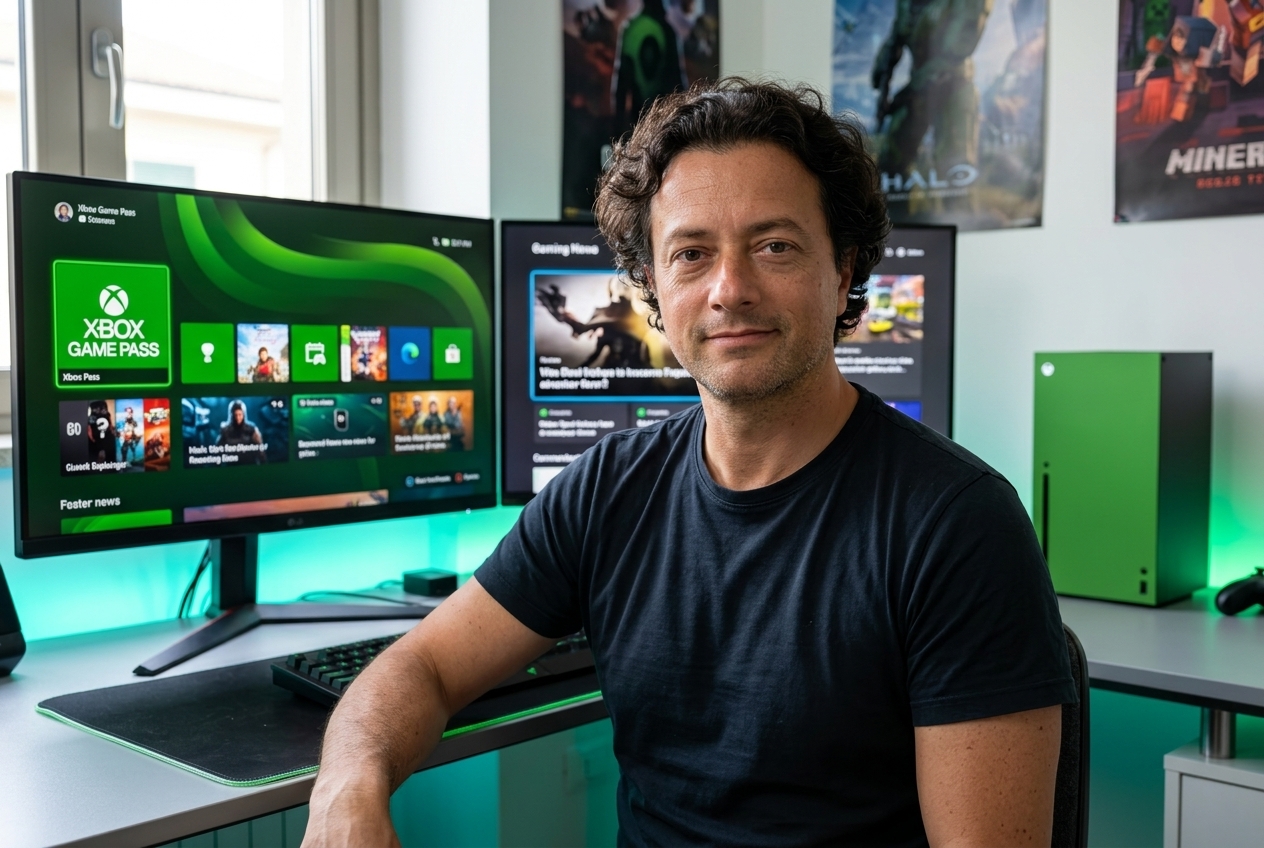
Xbox Game Pass at a Crossroads: Day-One Games Under Threat as Microsoft Stares Down a $20 Billion Subscription Reckoning
By Vito Ruocco — September 17, 2026
Introduction: The End of an Era?
For years, Xbox Game Pass has been the undisputed king of gaming subscriptions. The promise was simple and powerful: pay a monthly fee, get access to hundreds of games, and — crucially — play brand-new, first-party titles on day one at no additional cost. It was the Netflix-for-games pitch that Microsoft bet its entire Xbox strategy on, backing it with multi-billion-dollar studio acquisitions and a promise that “every game we make will be on Game Pass day one.”
But that promise may be about to shatter.
According to a bombshell leak circulating through ResetEra and corroborated by respected industry insider NateTheHate, Microsoft is reportedly planning the most radical restructuring of Game Pass since its inception — and at the heart of it lies a change that would fundamentally alter the value proposition of the service: the removal of day-one game releases from all subscription tiers.
Microsoft’s response? Tellingly, they haven’t denied it. “We don’t have any changes to announce today,” the company told Forbes. In the language of corporate non-denials, that’s about as close to a confirmation as you’re going to get before the official announcement lands.
The Rumour: What’s Reportedly Changing
The leak, first posted by ResetEra user Slayven — who correctly predicted Microsoft’s 2025 Game Pass price hikes — paints a dramatic picture of where Xbox’s subscription service is heading in 2027. The proposed restructuring reportedly includes:
- Three new tiers: One ad-supported, two ad-free, with a family plan option for $6 extra per month.
- Ad-supported tier at $13/month with limited access to the Game Pass library.
- Ad-free tier at $20/month (or $240 annually) for full library access.
- A $15/month tier for Game Pass library access plus online multiplayer.
- Day-one games completely removed from every single tier.
- Cloud streaming severed from all tiers, becoming a $6/month add-on bundle that grants just 25 hours of playtime.
- Online multiplayer still requiring a separate $11/month subscription.
The proposed changes are scheduled to take effect between February and April 2027 — meaning Xbox subscribers have roughly six months before the landscape shifts permanently.
Let that sink in: the feature that made Game Pass revolutionary — playing Starfield, Halo Infinite, Forza Motorsport, and every new first-party Xbox title on launch day at no extra charge — would simply disappear. The crown jewel of Xbox’s entire ecosystem strategy, gone.
Microsoft’s Carefully Worded Non-Denial
When Forbes reporter Paul Tassi reached out to Microsoft for comment, the company’s response was parsed like a diplomatic communique. “We regularly test different Game Pass offerings and look at what works best for players in different markets,” a Microsoft spokesperson said. “We don’t have any changes to announce today or plans that have been finalised. There are no changes to previously announced games coming to Game Pass Ultimate on day one.”
Notice what they didn’t say. They didn’t call the rumour false. They didn’t say “we have no plans to remove day-one games.” They said they have “no changes to announce today” — a classic corporate hedge that leaves every door wide open.
NateTheHate, a leaker with a strong track record on Xbox matters, vouched for Slayven’s information on ResetEra, stating: “The individual giving them information clearly has knowledge of some matters. Whether the intended timeline stays true or slides about, we’ll learn in due time.”
This isn’t Microsoft’s first step away from day-one generosity, either. In April 2026, the company cut Game Pass prices but simultaneously removed Call of Duty: Black Ops 6 from the day-one lineup — a quiet but devastating signal that the era of unlimited first-party access was already beginning to close.
Why Now? The Economics of Game Pass
The fundamental tension at the heart of Game Pass has always been simple: it costs an enormous amount of money to run, and Microsoft’s investors are increasingly impatient with billion-dollar content budgets that don’t show a clear path to profitability.
Microsoft spent over $80 billion acquiring Activision Blizzard, Bethesda, and a constellation of smaller studios. Every new first-party game that launches on Game Pass day one represents hundreds of millions of dollars in potential lost sales. When Starfield launched, it was estimated that Game Pass cannibalized 30-40% of potential full-price sales. At $70 per copy, that’s a massive hit to revenue.
Xbox’s new CEO, Asha Sharma, has been signaling change since taking the helm. In an interview earlier this year, Sharma said she’s “interested in offering new ways for players to obtain Xbox hardware and access its services.” On Game Pass specifically, she noted: “We will evolve Game Pass into a more flexible system which will take time to test and learn around.”
The subtext is clear: Microsoft believes Game Pass has reached its ceiling at current pricing and needs to be restructured to extract more revenue per user. Removing day-one games and charging separately for cloud streaming are the two biggest levers they can pull.
What This Means for Gamers
If the rumoured changes go through, the calculus for Xbox gamers changes dramatically. Let’s break down what a typical all-in subscription would cost under the proposed model:
- Game Pass ad-free tier: $20/month
- Online multiplayer: $11/month
- Cloud streaming (25h): $6/month
- Family plan add-on: $6/month
Total: $37/month ($43 with family) — without day-one games.
Compare that to the current $19.99/month Game Pass Ultimate, which includes everything: day-one games, cloud streaming, online multiplayer, and family sharing. The new pricing would represent an 85% price increase for essentially less value.
For PC Game Pass subscribers, the situation is even murkier. The leak doesn’t clarify whether PC Game Pass would survive the restructuring, and Slayven’s previous claim that PC Game Pass would be eliminated in 2025 turned out to be incorrect — but the uncertainty is unsettling.
The removal of cloud streaming is particularly painful. Microsoft has been heavily marketing Xbox Cloud Gaming as a way to play console games on phones, tablets, and low-end PCs. Capping it at 25 hours per month with a $6 add-on feels like a reversal of the entire cloud gaming vision Microsoft has been selling.
The Irony: Game Pass Has Never Been Stronger
Here’s the strangest part of this story: Game Pass has arguably never been healthier. In September 2026 alone, the service is adding an absolutely stacked lineup of games. The second wave announced for this month includes:
- Gears of War: E-Day (October 6) — the massive prologue to the original Gears story, following Marcus Fenix during the Locust invasion. This is arguably Xbox’s most important exclusive of the year.
- Dune: Awakening (September 22) — the console debut of the survival MMO, complete with a new single-player mode.
- Minecraft Dungeons 2 (September 29) — the surprise sequel to the Diablo-like dungeon crawler.
- Ninja Gaiden 4 — the long-awaited return of Team Ninja’s punishing action series.
- Call of Duty: Black Ops 6 (September 25, Premium tier) — though notably no longer a day-one title for all tiers.
- Marvel Cosmic Invasion, Planet of Lana 2, Kernel Hearts, and more.
This is arguably the strongest single month in Game Pass history. And yet, Microsoft is reportedly planning to dismantle the very feature that makes it attractive. It’s a fascinating paradox: the service is firing on all cylinders, but the business model that powers it may be unsustainable.
Fable: A 10-Year Journey to the Finish Line
While Game Pass’s future hangs in the balance, one of Xbox’s most anticipated games is finally nearing the finish line after a development cycle that spans nearly a decade. Playground Games’ Fable reboot — set for release on February 23, 2027 — has been in development since 2016, and the studio is opening up about why Microsoft allowed such an unusually long and “protected” development.
“I genuinely think Fable is an important game,” said Ralph Fulton, director of the Fable reboot, in an interview with The Guardian. “What has protected us over a long development cycle is that so many people within Xbox view Fable as vital to the DNA of the platform. I would go a step further and say it’s important to video games as a whole. It offers a combination of elements that simply doesn’t exist anywhere else.”
Fulton revealed that the game features an impressive lineup of British comedic talent, including It Crowd‘s Richard Ayoade and What We Do in the Shadows‘ Natasia Demetriou. “Richard Ayoade virtually improvised a new script for his scenes on the spot,” Fulton said. “Listening to him conjure that dialogue was one of my favourite days on this project. Natasia Demetriou brought a level of British swearing to her character that honestly shocked us, but it’s brilliant and we let her run with it.”
The game will be the first Fable title to launch on PlayStation, marking another step in Microsoft’s multiplatform publishing strategy. It arrives on February 23rd for PC, PS5, and Xbox Series X/S — and, if the rumoured Game Pass changes don’t materialize before then, it will also be the last major Xbox exclusive to hit the service on day one.
Capcom Relents: Monster Hunter Wilds Kills Its Worst Microtransaction
In a rare victory for consumer-friendly gaming policy, Capcom has announced it’s scrapping Monster Hunter Wilds’ most controversial microtransaction: the Character Edit Vouchers. Starting December 3, 2026, the paid vouchers will be pulled from all digital storefronts, and players will receive 10 free Character Edit Vouchers and 10 Palico Edit Vouchers as compensation.
Better yet, when the Monster Hunter Wilds: Ascendance expansion launches next year, “all players will be able to re-edit the appearance of their hunter and Palico as many times as they like, free of charge and without the need for a Character Edit Voucher.” Even players who don’t purchase the expansion will retain unlimited edit access.
For players who already spent real money on vouchers, Capcom is offering an in-game “Special Thank-You Pendant Set” that includes the Heavenly Hog and Beelzeboar pendants. It’s not a refund, but it’s something.
The move comes as Monster Hunter Wilds struggles to maintain the momentum of its launch. The game has been consistently outsold by its predecessors — Monster Hunter Rise and the legendary Monster Hunter: World — partly due to persistent PC performance issues. Capcom is hoping that a price drop, the generous demo, the Switch 2 port in December, and the Ascendance expansion next year will help Wilds catch up to its predecessors’ enormous success.
Valve’s Hardware Gambit: Steam Deck 2 on Track, Steam Frame Arrives
Valve has been in the headlines this week for two very different hardware stories. First, the company finally opened pre-order registration for its long-awaited standalone VR headset, Steam Frame — priced at £889 / $1,059. The device, which has been delayed multiple times due to the ongoing global memory and component shortage, is described as impressive in its hardware design but facing an uphill battle in a market dominated by the far cheaper Meta Quest 3.
In Eurogamer’s review, Matt Wales noted that Steam Frame “isn’t a machine for high-end enthusiasts” and “doesn’t offer a dramatically different in-headset experience to the far cheaper, more intuitive Quest 3.” At more than double the price of the Quest 3, Valve’s VR gambit faces an existential question: who is this for?
Meanwhile, on the handheld front, Valve confirmed that the ongoing component crisis has not derailed plans for a Steam Deck 2. “Not really,” said Valve developer Pierre-Loup Griffais when asked whether the memory shortage had affected next-generation plans. “We’ve talked before about how we want to make sure there’s a very delineated performance improvement for something like a future Steam Deck. I think we’re still looking at it in the same way.”
Valve has previously stated that a Steam Deck 2 needs to offer a genuine generational leap in performance to justify its existence — a bar that current mobile chips haven’t yet cleared. But with the company now confirmed to be working on the device, it’s a question of when, not if.
Sega Goes All-In on Netflix: Sonic, Crazy Taxi, and Stranger Than Heaven Get the Streamer Treatment
Netflix continues its aggressive expansion into video game adaptations, announcing a multi-project partnership with Sega that spans three major franchises. The deal includes an animated Sonic the Hedgehog TV series, a feature film adaptation of the beloved arcade racing game Crazy Taxi, and a film based on the upcoming crime-action game Stranger Than Heaven.
The Sonic series, described by Sega as “high-voltage, comedic, yet emotionally grounded,” is “built for kids who want to feel a little edge, a little attitude, and a lot of ‘that’s my crew’ wish fulfillment.” Animation director Carlos Stevens and Sega’s Toru Nakahara are attached to the project, promising fans a fresh take on the Blue Blur’s animated adventures.
The Crazy Taxi film will be penned by Dan Gregor and Doug Mand — the screenwriting duo behind last year’s The Naked Gun reboot — with producers from the live-action Sonic films involved. Whether it will be animated or live-action remains unconfirmed.
And Stranger Than Heaven — RGG Studio’s crime-drama that isn’t even out yet (it launches January 15, 2027) — is already getting the film treatment, described by Nakahara as a “badass action drama.” It’s a testament to Sega’s confidence in the property and Netflix’s willingness to bet early on game adaptations before they’ve proven themselves commercially.
Netflix’s gaming adaptation slate is now staggering: Castlevania, Cyberpunk, Devil May Cry, Arcane, Gears of War, Assassin’s Creed, Crash Bandicoot, Persona, and now three more Sega properties. The streaming giant is betting billions on the thesis that gamers are the next great underserved audience for premium streaming content.
GTA 6 Cast Grows: Stephen Root Confirmed
In casting news that has fans buzzing, the first confirmed actor for Grand Theft Auto VI has been identified: Stephen Root, best known for his iconic roles as Bill Dauterive in King of the Hill and Milton Waddams in Office Space. Root himself confirmed the involvement, telling Eurogamer: “It’s an amazing thing to look at.”
While Root’s specific role remains under wraps, the casting suggests Rockstar is leaning into its tradition of pulling character actors known for both dramatic and comedic work — a hallmark of the series since GTA: San Andreas. The confirmation of Root’s involvement adds to the mounting anticipation for what is already the most anticipated video game of all time.
Conclusion: A Week of Defining Moments for Gaming
September 2026 is shaping up to be one of the most consequential months in recent gaming history. Between the existential questions facing Xbox Game Pass, the triumphant return of Fable after a decade-long journey, Valve’s VR gamble, Capcom’s microtransaction reversal, and Sega’s cross-medium expansion, it’s clear that the industry is in a period of profound transition.
The subscription model that promised to change everything is itself facing change. Microsoft’s wrestling match with Game Pass profitability will determine the direction of console gaming for the next decade. If day-one games disappear, the entire value proposition of Xbox as a platform shifts — and PlayStation, Nintendo, and PC gaming will all feel the ripple effects.
For now, subscribers can still enjoy the best month Game Pass has ever had. Gears of War E-Day launches on October 6, and the full September slate is rolling out daily. But the clock may be ticking on the golden age of subscription gaming — and the decisions made in Redmond over the next six months will determine whether that golden age ends with a bang or a whimper.
Stay tuned to Ruocco.it for continued coverage as this story develops. We’ll be monitoring Microsoft’s official communications and reporting on every twist in the Game Pass saga as it unfolds.