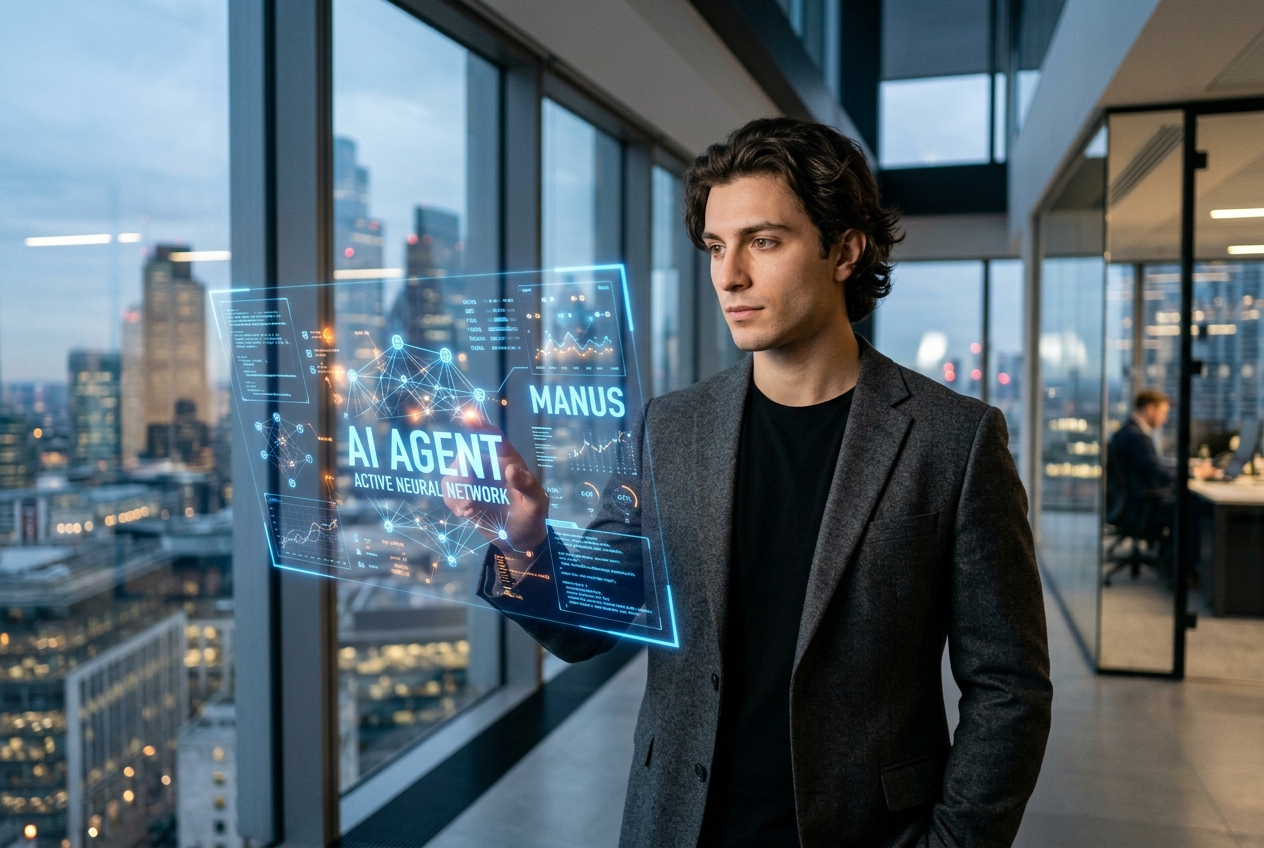
The Manus Reversal: Inside the Collapse of Meta’s $2 Billion AI Acquisition and What It Means for the Future of Agentic AI
Published: August 12, 2026 | By Vito Ruocco
In the fast-moving world of artificial intelligence, few stories have been as dramatic—or as unexpected—as the rise, fall, and resurrection of Manus. The Chinese AI agent startup, once hailed as the future of autonomous digital labor, was acquired by Meta in a blockbuster $2 billion deal in December 2025. The acquisition was supposed to be the crowning achievement of Mark Zuckerberg’s AI spending spree, a signal that Meta was serious about building the next generation of AI agents that could autonomously research, automate, and execute complex tasks across the web.
But on August 11, 2026, the script flipped entirely. Manus announced it would “return to operating as an independent company,” effectively reversing the largest AI agent acquisition in history. The reason? China’s economic watchdog had blocked the deal months earlier, in April 2026, sending shockwaves through the tech industry and leaving both companies in a state of unprecedented limbo.
This is the story of how a $2 billion AI acquisition unraveled, why an independent Manus is now positioned to reshape the agentic AI landscape, and what this saga reveals about the growing geopolitical fault lines in the world of artificial intelligence.
The Rise of Manus: From Obscurity to $2 Billion
Manus burst onto the global AI scene in early 2025 with a bold vision: build a general-purpose AI agent that could autonomously perform end-to-end work in real-world settings. Unlike traditional AI chatbots that respond to queries, Manus was designed to act—browsing websites, filling out forms, conducting research, generating reports, and even spinning up virtual computers to complete tasks.
The results were nothing short of staggering. Within months of its public launch, Manus’s agent had processed over 147 trillion tokens and powered the creation of more than 80 million virtual computers. The company’s technology was being used by millions of users worldwide for everything from market research and data analysis to automated customer support and software testing.
“We believe in the potential of autonomous agents,” Manus CEO Xiao Hong wrote in December 2025, announcing the Meta acquisition. “This development reinforces Manus’s role as an execution layer—turning advanced AI capabilities into scalable, reliable systems that can carry out end-to-end work in real-world settings.”
For Meta, the acquisition was a strategic masterstroke—or so it seemed. Zuckerberg had been on a hiring and acquisition spree throughout 2025, pouring tens of billions into AI infrastructure, research, and talent. Manus offered Meta a ready-made AI agent platform with millions of active users, cutting-edge technology, and a team that had proven it could deliver at the frontier of what was possible.
The deal was valued at $2 billion, a price that reflected both the promise of the technology and the intense competition for AI talent and products. Meta planned to integrate Manus’s capabilities across its platforms, bringing AI-powered automation to Facebook, Instagram, WhatsApp, and its business tools.
China Strikes Back: The Block That Shook Silicon Valley
On April 27, 2026, the deal hit a wall. China’s economic watchdog blocked Meta’s $2 billion acquisition of Manus, citing what analysts described as concerns over national security and the transfer of critical AI technology to a foreign entity. The decision came after months of scrutiny from Beijing, which had been examining the deal since it was first announced in December 2025.
The Chinese government did not provide a detailed explanation for its decision, but the move was widely seen as part of a broader pattern of tightening restrictions on AI-related outbound investments and technology transfers. China had been increasingly assertive in protecting its domestic AI ecosystem, particularly as the US-China tech rivalry intensified.
The timing was particularly awkward. By the time the block was announced, the acquisition was largely complete. Manus had been integrated into some of Meta’s tools, and the two companies’ engineering teams had been working together for months. Untangling the deal was not going to be a simple matter of returning money and walking away.
According to the Financial Times, the block was unprecedented in its scope. Never before had China intervened to reverse a completed acquisition of this magnitude in the AI sector. The decision raised immediate questions about the security of cross-border AI investments and the future of US-China tech cooperation.
The Long Goodbye: Four Months of Limbo
For nearly four months after the block, the fate of Manus remained uncertain. Meta and Manus were in uncharted territory. The acquisition had been structured as a standard deal, with no contingency plan for government intervention after completion. Legal teams on both sides scrambled to find a path forward, while engineers worked to disentangle the technical integrations that had already been made.
During this period, the broader AI industry watched with bated breath. The Manus situation became a case study in the risks of cross-border AI acquisitions, and many companies began reassessing their own international expansion strategies. Venture capital firms that had been investing heavily in Chinese AI startups began to pull back, fearing regulatory uncertainty.
For Meta, the situation was particularly painful. The company had already invested significant resources in integrating Manus’s technology. The $2 billion price tag was now effectively a sunk cost, and Meta was left without the AI agent platform it had bet its future on. To make matters worse, the company had to divert engineering resources to extricate itself from the deal, slowing down other AI initiatives.
“The Manus situation is a nightmare scenario for any acquirer,” said one Silicon Valley M&A lawyer who spoke on condition of anonymity. “You’ve completed the deal, you’ve integrated the teams, and then a government steps in and says ‘actually, no.’ There’s no playbook for this.”
Independence Day: Manus Returns
On August 11, 2026, the waiting ended. Manus formally announced that it would “return to operating as an independent company,” effectively reversing the acquisition. The announcement, made via Meta’s own platforms, stated that Manus would resume its operations as a standalone entity, headquartered in Singapore as before.
The announcement was brief but significant. Manus confirmed that it would continue to operate its product subscription service through its app and website, and that the company would remain based in Singapore. It also signaled that Manus would continue to serve its existing user base while exploring new opportunities as an independent company.
The response from the industry was immediate. AI researchers, investors, and competitors scrambled to understand the implications. For Manus, independence meant the freedom to chart its own course—but also the loss of Meta’s vast resources, distribution channels, and financial backing. The company would now have to compete in an increasingly crowded AI agent market without the safety net of a $2 billion parent.
For Meta, the reversal was a major setback. The company had bet heavily on Manus as a cornerstone of its AI agent strategy. With Manus gone, Meta would need to either rebuild its agent capabilities from scratch or find another acquisition target—assuming the regulatory environment would allow it.
What Manus Means for the Agentic AI Revolution
The Manus saga is more than just a corporate drama. It offers a window into the broader transformation underway in the AI industry, as the focus shifts from chatbots and language models to autonomous agents that can take real action in the digital world.
Agentic AI—systems that can autonomously plan, execute, and iterate on complex tasks—is widely seen as the next frontier of artificial intelligence. While chatbots like ChatGPT and Claude can answer questions and generate content, agents can do things like book flights, manage calendars, conduct research, and execute code. They represent a shift from AI as a tool to AI as a worker.
Manus was at the forefront of this shift. Its technology was designed to be a “general-purpose” agent, capable of handling a wide range of tasks without task-specific training. The company’s numbers were impressive: 147 trillion tokens processed, 80 million virtual computers created, millions of users served.
But the agentic AI space is getting crowded. OpenAI has been developing its own agent capabilities, with reports suggesting that the company’s “Operator” and “Codex” products are moving toward full agent autonomy. Google has been integrating agent-like features into its Gemini platform. Microsoft’s Copilot is evolving from a coding assistant into a broader agentic system. And a host of startups, from Adept to Cognition to Imbue, are building their own agent platforms.
“The agentic AI market is going to be one of the most competitive spaces in tech over the next few years,” said Sarah Chen, an AI analyst at Forrester. “Manus has a head start, but they’re going to need significant capital to stay competitive. Losing Meta’s backing is a real blow.”
The Geopolitics of AI: A New Era of Tech Nationalism
Perhaps the most significant implication of the Manus story is what it reveals about the changing geopolitics of AI. China’s decision to block the Meta acquisition was not an isolated incident—it was part of a broader pattern of tech nationalism that is reshaping the global AI landscape.
On the same day Manus announced its independence, China was also making headlines for its aggressive open-weight AI strategy. Chinese companies like Alibaba, Moonshot AI, and DeepSeek have been releasing increasingly capable open-weight models, challenging the dominance of US-based proprietary systems. Alibaba’s Qwen3.8-Max boasts 2.4 trillion parameters, while Moonshot’s Kimi K3 reaches 2.8 trillion—both dwarfing Meta’s newly released Muse Glimmer at “just” 30 billion parameters.
China’s strategy appears to be twofold: protect its domestic AI industry from foreign acquisition while simultaneously flooding the global market with capable, low-cost open-weight models. This approach, analysts say, is designed to make Chinese AI the “de facto standard” for developers worldwide, shifting the center of gravity away from Silicon Valley.
“A free set of weights is not a free AI service,” said Fordham Law School professor Chinmayi Sharma, explaining the economics of open-weight models. “A company can give away the model weights while making money elsewhere in the stack.”
For the United States, the Manus situation represents a new kind of challenge. American companies can no longer assume they can simply acquire their way into Chinese AI markets. And with Chinese open-weight models getting better and cheaper, US companies may find themselves competing not just against Chinese AI companies, but against Chinese AI models that are free to use and modify.
Nvidia’s Nemotron: A Lightweight Counterpunch
Adding to the day’s AI news, Nvidia released its own “lightweight” open AI model, Nemotron 3.5 Lightning, on August 11. The model is designed to work alongside other models in AI agent systems, targeting specific jobs like code review, answering billing questions, and security alert monitoring.
Nemotron 3.5 Lightning is the latest release in Nvidia’s Nemotron family of “truly open source” AI models. The chipmaker has been championing open AI even as its rivals—including OpenAI, which recently revealed its first AI processor, codenamed “Jalapeno”—develop their own silicon.
The timing of Nvidia’s announcement is notable. With the Manus-Meta saga dominating headlines, Nvidia is positioning itself as a neutral player in the AI ecosystem, providing open models that can run on its hardware regardless of which company’s platform they’re serving. It’s a smart play for a company that wants to sell chips to everyone, regardless of the geopolitical landscape.
Nvidia’s Nemotron family includes models optimized for reasoning, visual understanding, speech, retrieval-augmented generation, and safety. The models are available on Hugging Face and can be deployed from edge devices to the cloud, making them accessible to a wide range of developers and enterprises.
OpenAI’s Ethics Exodus and the ChatGPT Commerce Revolution
In other AI news, OpenAI’s ethics chief Chloé Bakalar reportedly left the company last month, according to the Financial Times. Bakalar, who previously served as the chief ethicist at Meta for over three years, joined OpenAI less than a year ago as its head of ethics. Sources indicate that there is currently no replacement for Bakalar, raising questions about OpenAI’s commitment to ethical AI governance.
The departure comes at a critical time for OpenAI. The company is expanding its commercial footprint rapidly, with a new partnership with Yelp that allows ChatGPT to incorporate reviews, photos, and business information into its local recommendations. Users can now also book tables through OpenTable and Resy directly within ChatGPT, marking a significant step toward ChatGPT becoming a commerce platform rather than just a chatbot.
On the product front, OpenAI also released a native ChatGPT desktop app for Linux, available in preview on Ubuntu, Debian, and Fedora. The app includes ChatGPT along with Work and Codex features, bringing OpenAI’s full suite of tools to the Linux ecosystem.
Meanwhile, Meta has released Muse Glimmer, a 30 billion parameter open-weight model that can run on a Mac or PC with a single graphics card. While small compared to the trillion-parameter models from Chinese rivals, Muse Glimmer is designed to be practical and accessible, allowing developers to generate code, text, and images without requiring massive cloud infrastructure.
What’s Next for Manus and the AI Agent Economy
As the dust settles on the Manus-Meta saga, the big question is: what happens next? For Manus, the path forward is clear but challenging. The company has a proven product, a loyal user base, and a team that has demonstrated it can build at the frontier of AI agent technology. But it no longer has the backing of one of the world’s largest technology companies.
Manus will need to raise capital quickly to maintain its competitive position. The company’s decision to remain headquartered in Singapore positions it well for both Asian and Western markets, but it also places it in a regulatory gray zone that could complicate future partnerships or acquisitions.
For Meta, the loss of Manus is a significant setback, but not a fatal one. The company has deep pockets, world-class AI research capabilities, and a massive user base. Meta’s own AI models, including the newly released Muse Glimmer, continue to improve. The company may also explore acquiring other AI agent startups, or it may double down on building its own agent capabilities in-house.
For the broader AI industry, the Manus saga serves as a warning. The era of frictionless global AI deals is over. Governments on both sides of the Pacific are increasingly asserting control over AI technology transfers, and companies that fail to account for geopolitical risk may find themselves in a Manus-like situation.
But for users of AI agents, the future looks bright. Whether Manus remains independent, gets acquired by another company, or pivots its strategy, the underlying technology is too valuable to disappear. The race to build truly autonomous AI agents is only accelerating, and the winners will reshape how we work, shop, and interact with the digital world.
Conclusion: The AI Landscape Is Shifting Faster Than Ever
August 11-12, 2026, will be remembered as a watershed moment in the history of artificial intelligence. The collapse of the Meta-Manus deal, the rise of Chinese open-weight models, Nvidia’s push into lightweight open AI, and the expansion of ChatGPT into commerce all point to a single conclusion: the AI landscape is shifting faster than ever, and no company—no matter how large or well-funded—can afford to take its position for granted.
For Manus, the journey from $2 billion acquisition target to independent company in less than a year is a testament to the volatility of the AI industry. For Meta, it’s a reminder that even the deepest pockets can’t buy their way out of geopolitical complexity. And for the rest of us, it’s a preview of the strange, fast-moving, and increasingly unpredictable world of AI that we’re all going to be living in.
The only certainty is that the story isn’t over. The AI agent revolution is just beginning, and the players—large and small, American and Chinese, open and proprietary—are all racing to define what comes next.