
Published: October 9, 2026 | By Vito Ruocco
Gemini 4 Argon is moving toward longer, more demanding work. Claude Motion makes animations editable. Step-5 Preview adds another coding model to test. GPT-6.1 Sol Ultrafast offers a faster processing tier, with a price detail that matters: six times Standard pricing. This week’s VitoMind roundup connects the announcements to six original demos you can actually use.
The episode also covers Claude Dashboards, the Gemini agent, Mistral Large 4, Claude Haiku 5.5, ChatGPT Intelligent UI and the unconfirmed Fable 5.5 claims. Some are available products, some are previews, and one is still a rumor. Here is what the sources say, what I tested myself, and where you can try the results.
Try the projects: open all six browser demos. The exact prompts and full source package are available to Ruocco Academy members.
Claude Motion and Dashboards: outputs you can edit and inspect
According to the Claude Motion guide, the feature is in beta for Team and Enterprise customers. It creates code-based animations from text, charts, shapes and images. The useful part is being able to change a phrase, a number or the timing without rebuilding the whole piece.
You can select Motion from the chat’s Output menu or begin with a template in Artifacts, refine the result and export an MP4. Enterprise owners may need to enable the feature first.
In the video I demonstrate that editing idea using our own Motion Workshop. It is an independent browser application: edit the headline, scrub the timeline and export a WebM. It illustrates the workflow without pretending to be a recording of Claude Motion itself.
Claude Dashboards is the companion data story. Its guide describes a beta on Pro, Max, Team and Enterprise, with supported data connections, generated charts, inspectable queries and refresh information. Our separate CSV dashboard lets you load the measured generation data from this episode and inspect the totals yourself.
Gemini 4 Argon: longer work, with a phased rollout
Google’s Gemini 4 Argon announcement focuses on sustained work across software engineering, professional knowledge tasks and cybersecurity defense. Access begins with trusted cyber defenders and testers, with a phased expansion planned for developers, enterprises and consumers.
The striking figure is an output limit of up to one million tokens, increased from 64,000. That is room to generate an answer and reasoning over a long task, rather than simply an input-document size. Google lists introductory pricing of $2 per million input tokens and $10 per million output tokens, with discounted cached input.
Google also reports internal code-migration and optimization results. Those are the company’s findings, not benchmarks I ran. Before starting a project, check whether Argon is actually available on your chosen account and route.
The separate Gemini agent announcement describes a system that plans work, connects to business tools, selects models and returns finished deliverables inside existing applications. Argon is a model; the agent supplies the surrounding workflow, context and controls.
Fable 5.5: keep the rumor label attached
A circulating developer post attributes a detailed voxel game to Fable 5.5 and claims it was generated in under an hour. That remains the developer’s claim. An impressive game does not, by itself, establish a model identifier, generation time or editing history.
The official documentation reviewed for this episode identifies Fable 5.1. I could not verify a Fable 5.5 release from those sources, so the title, video and description keep it explicitly marked as unconfirmed. Our playable demos are independent experiments and do not reproduce the claimed game.
Step-5 Preview: what happened on the same racer and garden briefs
The Step-5 Preview listing dates the release to October 8. It describes a mixture-of-experts model with 600 billion total parameters, 27 billion active parameters and a one-million-token context. The listed route costs $1 per million input tokens and $2.70 per million output tokens.
I gave Step-5 Preview and GPT-6.1 Sol identical task text within two pairs: a racer and an interactive garden. Step-5 needed retries and changed output and reasoning settings; browser testing also led to disclosed fixes. These runs give you working projects to inspect, rather than a controlled ranking of the models.
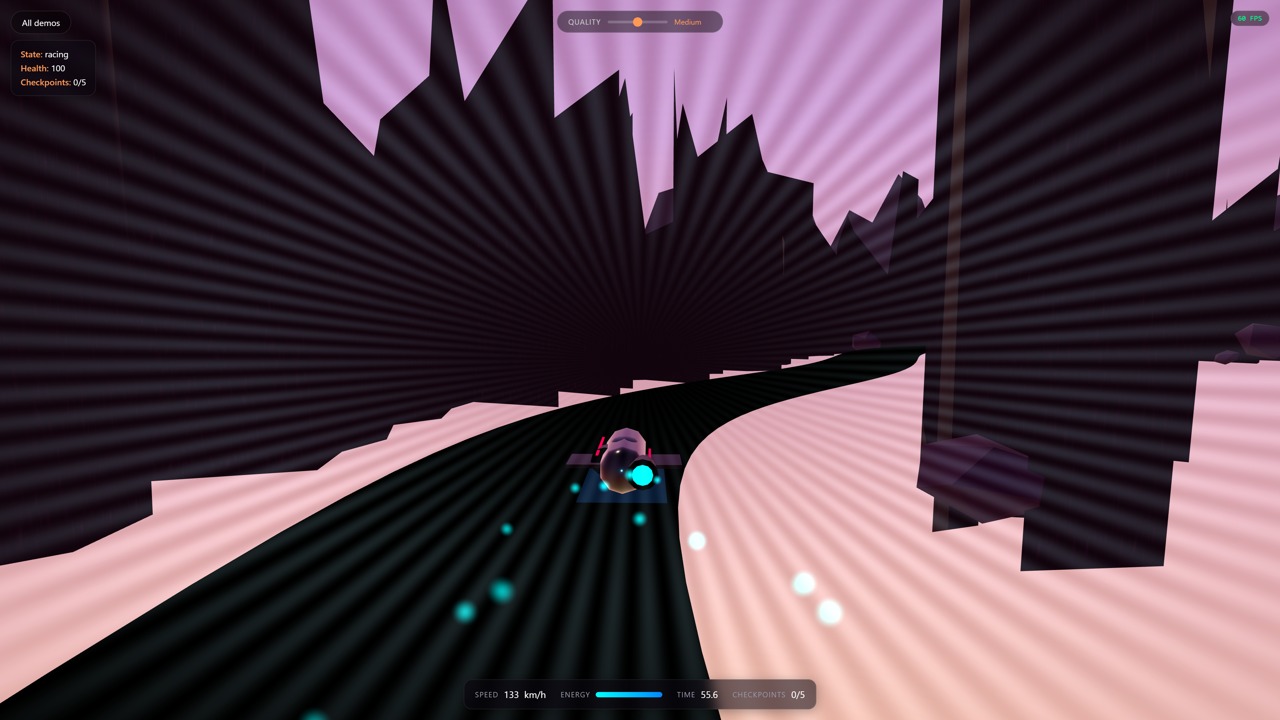
The racers let you accelerate, steer and check how the control loop responds. The gardens let you move the camera and explore a complete scene; the Sol version also offers different lighting presets. I kept the failures and production corrections in the project notes because getting a page to run is part of evaluating a coding result.

The video also shows a replay of a real OpenCode review of our racer. The review suggested checks that were then exercised in the browser. Generation, review and testing all contribute to the final result.
Two more releases: Mistral Large 4 and Claude Haiku 5.5
Mistral announced Large 4 on October 6, opening a public API preview in Mistral Studio and saying that weights would follow by the end of October. The company describes a natively multimodal model with one trillion total parameters and 52 billion active parameters. API preview access and downloadable weights are separate milestones. I cover the announcement here; the six demos in this collection were generated by the models identified on their cards.
Claude Haiku 5.5 arrived on October 7, aimed at quick, repeated tasks and high-volume workflows, with adjustable effort. Anthropic lists $0.10 per million input tokens and $0.50 per million output tokens for prompts up to 100,000 tokens. Above that threshold, the corresponding rates are $0.50 and $2.50. The announcement also lowers Sonnet 5.5 cache-read pricing. Prompt length, caching and task scope all matter when comparing the bill.
Intelligent UI: an answer you can explore
OpenAI’s Intelligent UI announcement describes responses that can include interactive controls, charts and visual explanations. The episode uses a clearly labelled original bicycle example to illustrate the idea: selecting a component changes the diagram and explanation. It is a recreation made for the video, rather than footage from a ChatGPT account.
There is also a useful Google guide to eligible AI-plan credits in AI Studio. Check your account’s eligibility, balance and terms before relying on an allowance for a batch of API requests.
GPT-6.1 Sol Ultrafast: the 6x price detail
The Ultrafast guide describes a faster processing tier. For Sol, requests use the same model with service_tier: "ultrafast". The model page lists prices at six times Standard.
At identical billable token usage, a request that costs $1 on Standard would cost roughly $6 on Ultrafast. That illustrates the price ratio; it is not a measured run from this episode and says nothing about a sixfold speed increase.
My practical advice is to measure the whole task. A faster response can help when someone is waiting through repeated tool calls, but browser loading, testing and repairs still take time. For unattended work, compare the completed result and total cost. Our demos used the ordinary OpenRouter route and are not an Ultrafast benchmark.
Six demos, with the actual generation bill
All six projects are free to try in your browser, without an Academy account:
- Step-5 racer and GPT-6.1 Sol racer.
- Step-5 garden and GPT-6.1 Sol garden.
- Bench Studio, a CSV dashboard for inspecting costs and elapsed generation times. Import the measured CSV below; its default example rows are illustrative.
- Motion Workshop, an editable animation studio with a working WebM export.
| Model | Task | Billed generation cost (USD) | Elapsed generation time |
|---|---|---|---|
| gpt-6.1-sol | Racer | $0.135008 | 301.31 s |
| step-5-preview | Racer | $0.237854 | 1502.97 s |
| gpt-6.1-sol | Garden | $0.163440 | 286.94 s |
| step-5-preview | Garden | $0.253103 | 1810.23 s |
| gpt-6.1-sol | Dashboard | $0.094012 | 173.47 s |
| gpt-6.1-sol | Motion | $0.100394 | 174.44 s |
| Total | $0.983811 | Including recorded retries | |
The total billed generation cost was $0.983811, including failed attempts. It excludes narration, review and hosting. Elapsed times in the CSV include the recorded generation attempts; changed retry settings and production fixes are disclosed on the cards. This is a small practical sample, and the shorter elapsed times here do not establish a general performance ranking.
Download the measured run data, then open the dashboard to inspect it. Each demo card identifies its generation model, cost and relevant fixes.
Exact prompts and source code in the Ruocco Academy
The public gallery lets everyone play and inspect the browser demos. Ruocco Academy members can download the original prompts, model settings, full source ZIP and production notes for this collection.
Browser JavaScript is necessarily inspectable. The exact generation prompts and member package are stored separately and served through the Academy’s membership checks.
Jump to a section in the video
- 00:42 — Claude Motion
- 02:24 — Claude Dashboards
- 03:03 — Gemini 4 Argon
- 04:11 — Gemini agent
- 05:22 — Fable 5.5 rumors
- 06:07 — Step-5 Preview and browser tests
- 09:45 — Mistral Large 4
- 10:30 — Claude Haiku 5.5
- 11:34 — ChatGPT Intelligent UI
- 13:19 — GPT-6.1 Sol Ultrafast
- 15:15 — Actual demo costs
Which version gets your vote? Try all six demos, then leave a comment on the video with your favorite and the next update you want tested.
Sources and prices checked on October 9, 2026. Availability, provider routes and temporary offers can change. Vendor evaluations are attributed to their sources; the playable projects, measured costs and disclosed fixes are our own production evidence.