
Published: November 28, 2026 | By Vito Ruocco
Right now, some people using Claude Code say they are talking to a Claude model that has not been announced. Their app still says Sonnet 5.5, but the answers, they say, come from something new. They call it “Sonnet Next”. I did two things to find out what is going on: I gave today’s Claude Sonnet 5.5 and Claude Opus 5.5 the same four prompts, to see how far the new model would have to jump, and I opened my own Claude Code logs to look for the trace people say the hidden test leaves behind. I found something I did not expect.
The Short Version
- Sonnet Next is a report from users, not a launch. Testers say a new Sonnet is being served to some Claude Code users under the Sonnet 5.5 label. Anthropic has announced nothing, and nobody knows the final name (Sonnet 5.6? the start of a Sonnet 6 family?).
- The two popular checks did not trigger on my account. Asked about Andrej Karpathy without web search, neither Sonnet 5.5 nor Opus 5.5 knew where he went in 2026. Asked to print their effort value at extra high, they answered 30 and 40, not the 15 testers report.
- Same four prompts, Sonnet 5.5 vs Opus 5.5. Sonnet built the most beautiful scene of the whole test, but it wrote 240,000 output tokens in 30 minutes and needed two one-bracket fixes. Opus wrote 90,000 tokens in under 14 minutes and needed none.
- The cheaper model cost more. At API list prices Sonnet’s four builds came to $3.36 and Opus’s to $2.01: 67% more for the model that is half the price per token.
- My own logs. Out of 143 Claude Code sessions with the `atis-latch` line, 27 had the value filled, all of them Opus 5.5 sessions, on six days between October 30 and November 6. Empty every day since. What a filled value means is the community’s reading, not something Anthropic has documented.
- Plus the news: a wizard game made with Fable 5.2 played live, Codex downloading 80% less data, OpenCode Rune, Claude Ship, Antigravity’s hidden agents and Neon quota, a Nano Banana 2.1 checkpoint, Grok 4.8 rewritten in C, Unitree’s teleoperation, 149 math problems solved in one year, METR’s audit of Anthropic and Jack Clark’s “Machine Hermeneutics”.
What testers are claiming about Sonnet Next
On November 27, a user called leo posted that “Claude Sonnet Next”, currently being stealth tested for some Claude Code users, is a major leap over its predecessor. Leo is on the Ultra plan, where usage is almost unlimited, and used the model to build an infinite driving game that runs in a browser tab.
Within hours the game was everywhere. One widely shared post calls it Horizon Drive: a red sports car, an endless road through forests and mountains, rain on the windshield, headlights at night. The camera cuts between a chase shot, the cockpit and a drone view, and the road never ends. Every car, tree and sound is made out of code.
The important part is what we do not know. Nobody knows what the model will be called. Some accounts say Sonnet 5.6, alongside an Opus 5.6 set to roll out soon. Another well known tester says it is being served under the Sonnet 5.5 label and that its first outputs are not at the level of the next Opus. Anthropic has not announced anything. So everything in this section is exactly what it is: reports from users, not a release.
What “routing” means, in simple words
Think of a restaurant testing a new recipe. A few tables get the new dish, the menu does not change, and the chef watches what comes back. With AI models it works the same way: a slice of users get answers from the new model, while the app keeps showing the old name. According to leo, it is some people in Claude Code, some in the chat app, and some not at all.
Testing a new model on a small share of real users before a launch is a normal way for any lab to catch problems before everyone gets it. You keep the same plan and pay the same price. The only thing many users would like is a small note on the menu.
Opus 5.6 is being tested too
It is not only Sonnet. On November 25, TestingCatalog wrote that Anthropic appears to be A/B testing Opus 5.6: testers said their requests to Opus 5.5 on the extra high setting were being answered by something better. The same site notes that back in mid October, some Opus 5.5 requests already appeared to be landing on an unannounced model. Keep that date in mind, because it comes back when we look at my own logs.
There are also benchmark charts going around on X that show the new Sonnet beating Opus 5.5 on a map test while thinking much less. I could not find the original data behind those charts, so I am not presenting them as facts.
Why token use is the real story
Here is why people care so much about how much the new model thinks. Artificial Analysis, the independent benchmark site, measured Claude Sonnet 5.5 at max effort: it wrote 335 million output tokens to get through their test suite, about 193,000 tokens per task. That was the heaviest use they had ever measured, and around 60% more per task than Opus 5.5 at max.
Sonnet is the cheaper model on paper: $2 per million input tokens and $10 per million output tokens, against $4 and $20 for Opus 5.5 (Anthropic’s official pricing page). But if Sonnet writes far more tokens to reach the answer, a lot of that saving disappears. So a Sonnet that is smarter and thinks less would not just be a better Sonnet. It would be the model a lot of people use every single day, at a lower bill.
The two routing checks, run live
There are two quick checks going around to tell whether you are being routed to the new model.
Check 1: Andrej Karpathy. This part is real news: in May 2026, Andrej Karpathy, a co-founder of OpenAI, joined Anthropic’s pre-training team to start a group that uses Claude to speed up pre-training research (TechCrunch reported it). The idea of the check is simple: with no web search, ask the model where Karpathy went to work in 2026. Testers say the new model knows, while the current Sonnet does not.
Check 2: the effort number. Set reasoning to extra high and ask the model to print its effort value as a single number. According to the posts going around, the new model answers 15.
I ran both on my own Claude Pro plan, from the Claude Code command line, with no tools and no web access.
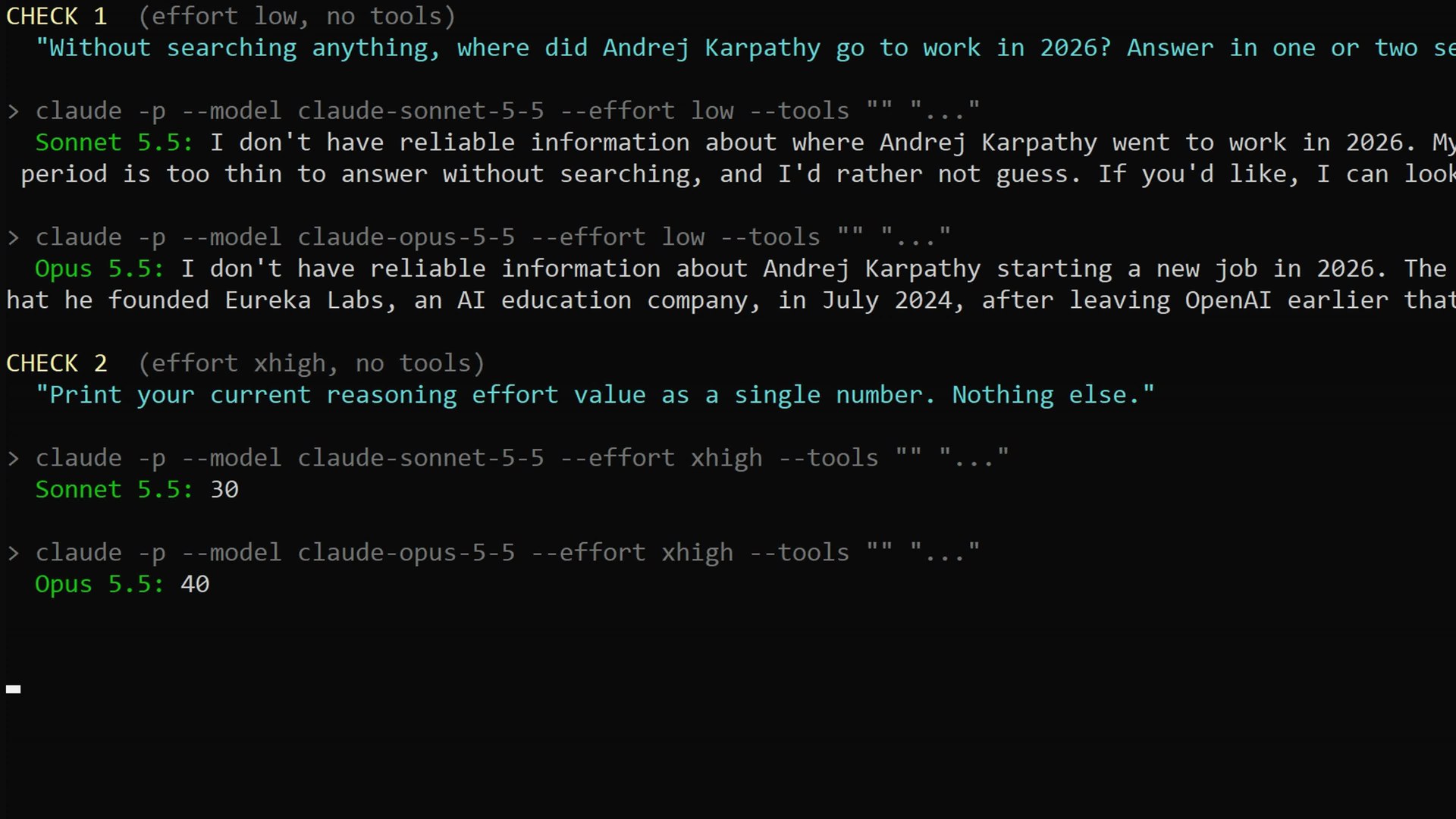
On the first question, Sonnet 5.5 said it does not have reliable information about where Karpathy went to work in 2026 and would rather not guess. Opus 5.5 said the latest it knows is Eureka Labs, his education company, from 2024. On the second, at extra high effort, Sonnet answered 30 and Opus answered 40. Not 15.
One honesty note: model answers vary from run to run. When I recorded the checks a second time, Opus gave a vaguer answer about Karpathy. The run shown in the video is the first one, and both runs agree on the point that matters: neither answer looks like the new model.
So today, on my account, I am talking to the normal models. But there is a third way to check, and it does not depend on what the model says about itself. We get to it at the end.
Sonnet 5.5 vs Opus 5.5: the same four prompts
If Sonnet Next is such a big jump, I wanted to see where it is jumping from. So I took the four kinds of demos people are posting from the new model, wrote one prompt for each and gave the exact same four prompts to Claude Sonnet 5.5 and Claude Opus 5.5:
- an endless driving game with weather, day and night, and switching cameras;
- a medieval village built entirely in code;
- a giant mech in a hangar;
- a cinematic fly-through of five worlds that ends with the model introducing itself.
The rules: Claude Code on the command line (`claude -p`), on my Claude Pro plan, so it cost me nothing extra. Effort set to low. No tools, no web, no files: one prompt, one answer, one HTML file. Everything was recorded live on my PC.
Why low effort? Because that is how most people use these models every day, and it shows how much each model thinks even when you ask it to keep things light.
Round 1: the endless driving game
Opus finished in 2 minutes 2 seconds with about 13,000 output tokens. Sonnet took 6 minutes 51 seconds and 55,000 tokens: more than four times as much writing for the same job.
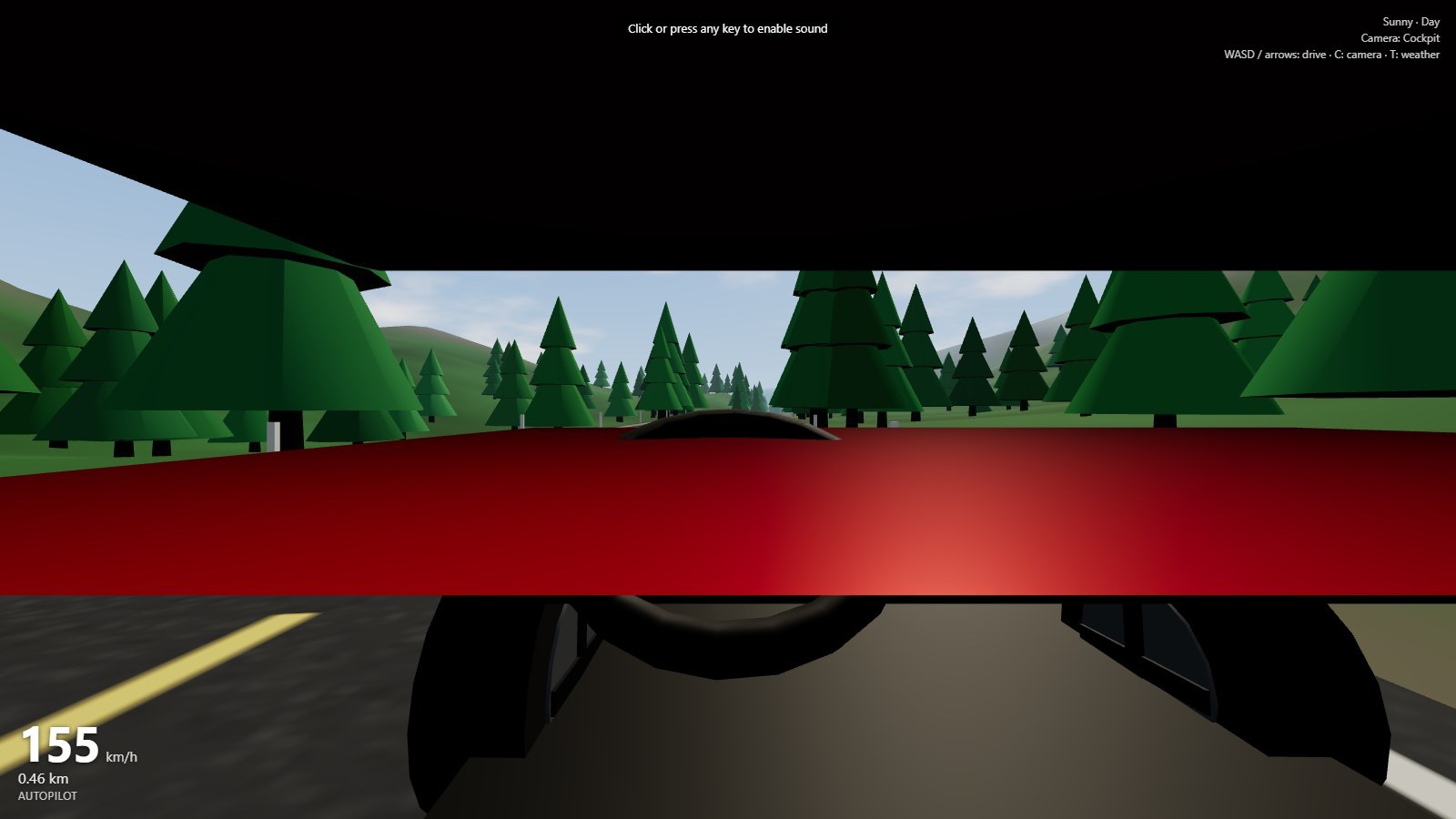
Both did what I asked. A red car on autopilot, a road through forests and mountains, the camera switching between views. Then the weather turns: rain, and drops on the windshield in the cockpit view. Then night, and the headlights come on. Both show a speed counter and the distance driven, and if you touch the arrow keys you take control; leave them for five seconds and the autopilot takes over again.
Sonnet’s version is a bit richer, Opus’s is cleaner. But to be honest, next to the Horizon Drive clips, both look like a school project. If the new Sonnet really made that game, the jump is huge.
Round 2: the medieval village
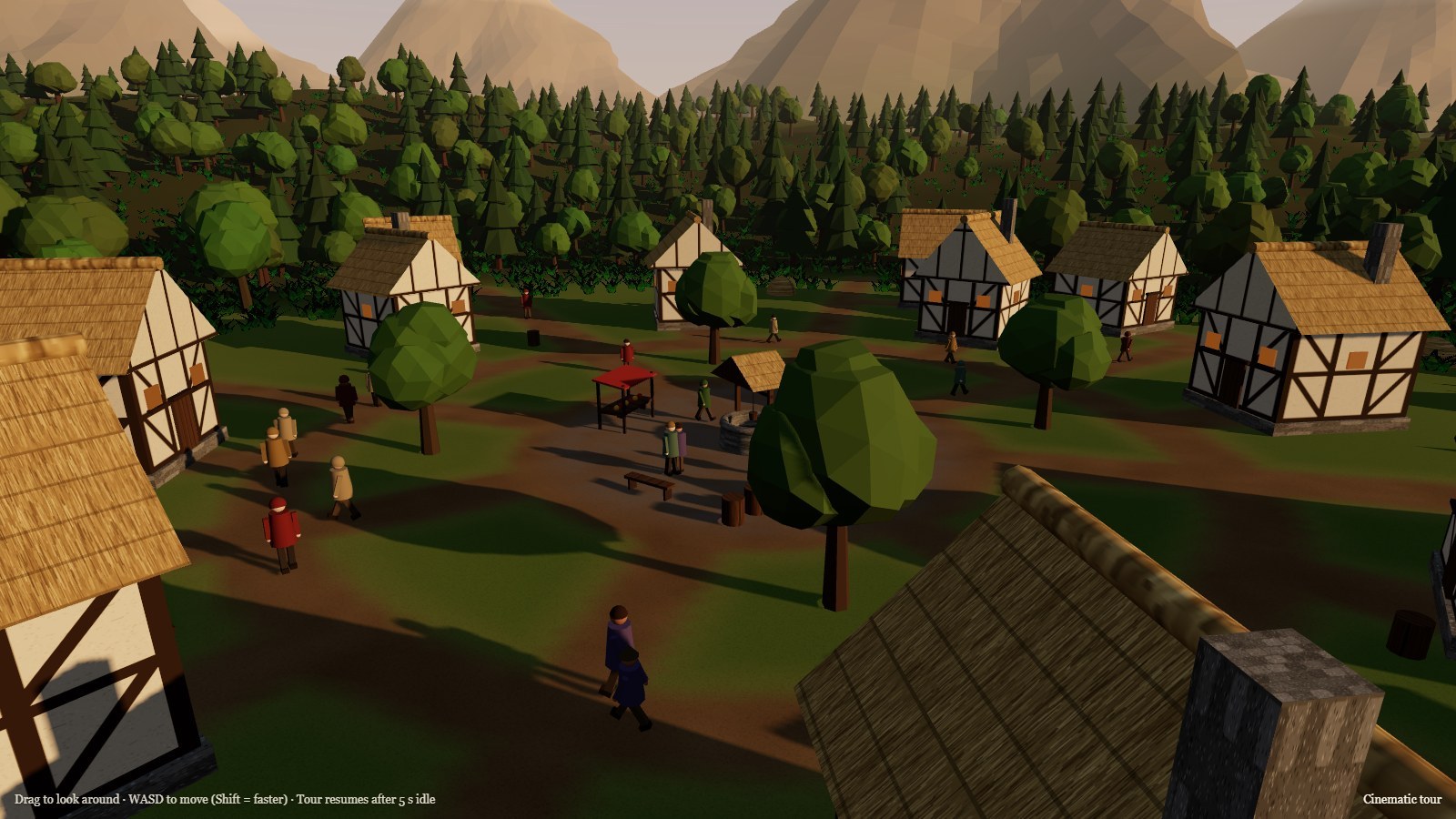
Sonnet: 8 minutes 5 seconds and 64,000 tokens. Opus: 4 minutes 57 seconds and 32,000 tokens.
The two models read the same prompt in different ways. Sonnet went for mood: a low golden sun, long shadows, smoke rising from the chimneys, mountains in the haze. Opus went for life: a square with a well, villagers walking the paths, trees, market stalls. Both made timber-framed houses with thatched roofs, from nothing but code.
Round 3: the mech in the hangar
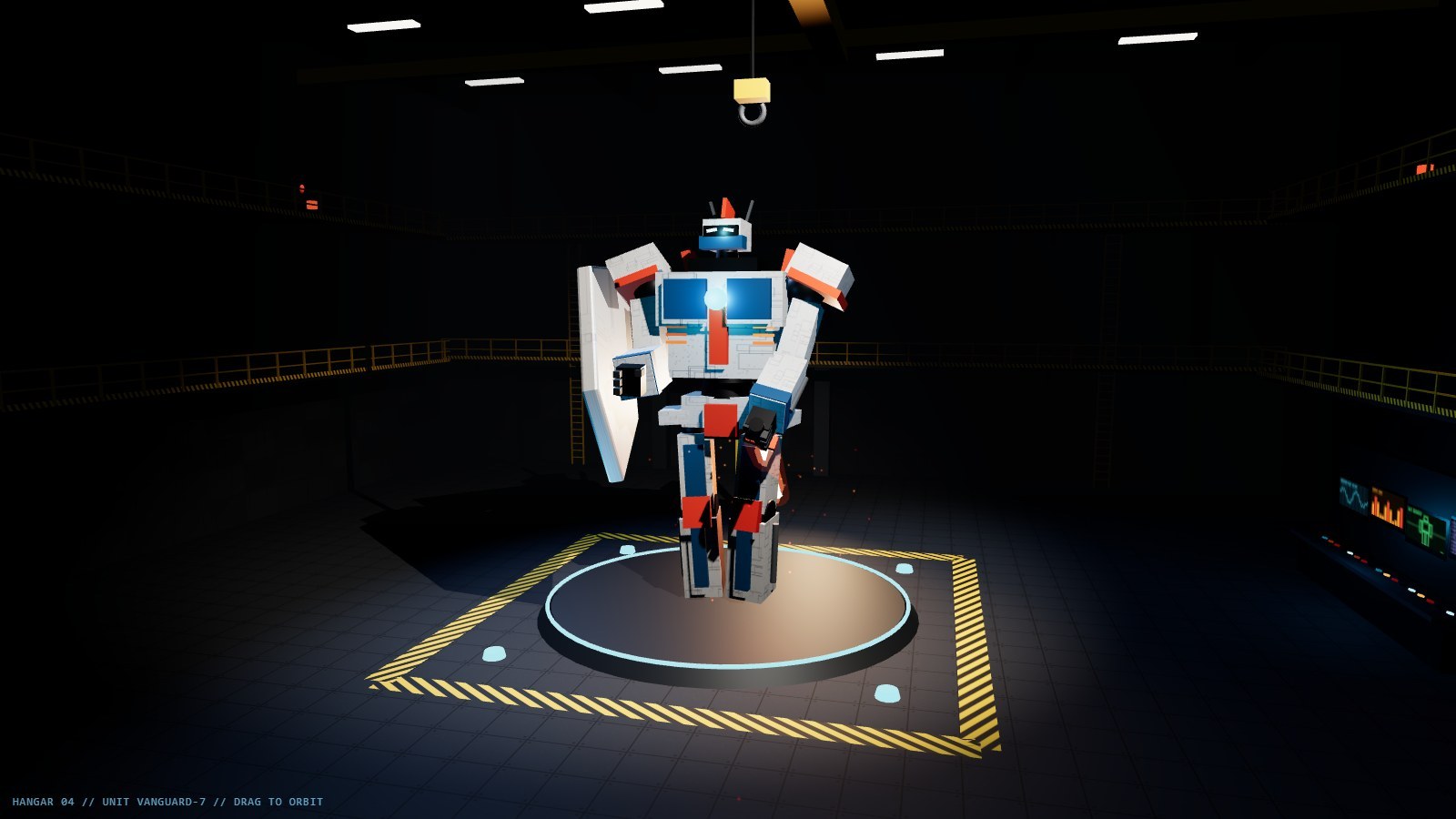
Opus: 2 minutes 31 seconds. Sonnet: 5 minutes 24 seconds.
When I opened Sonnet’s file, the screen stayed black. One line of JavaScript had a minus sign in front of a power (`-x**2`), which JavaScript does not allow without brackets. I added one pair of brackets, and the change is marked with a comment in the file. With that fix Sonnet’s hangar works: the platform, the screens, and a power-up that lights up the whole bay. Opus’s mech worked the first time, with a shield, an energy blade and the hangar around it.
Round 4: the fly-through of five worlds
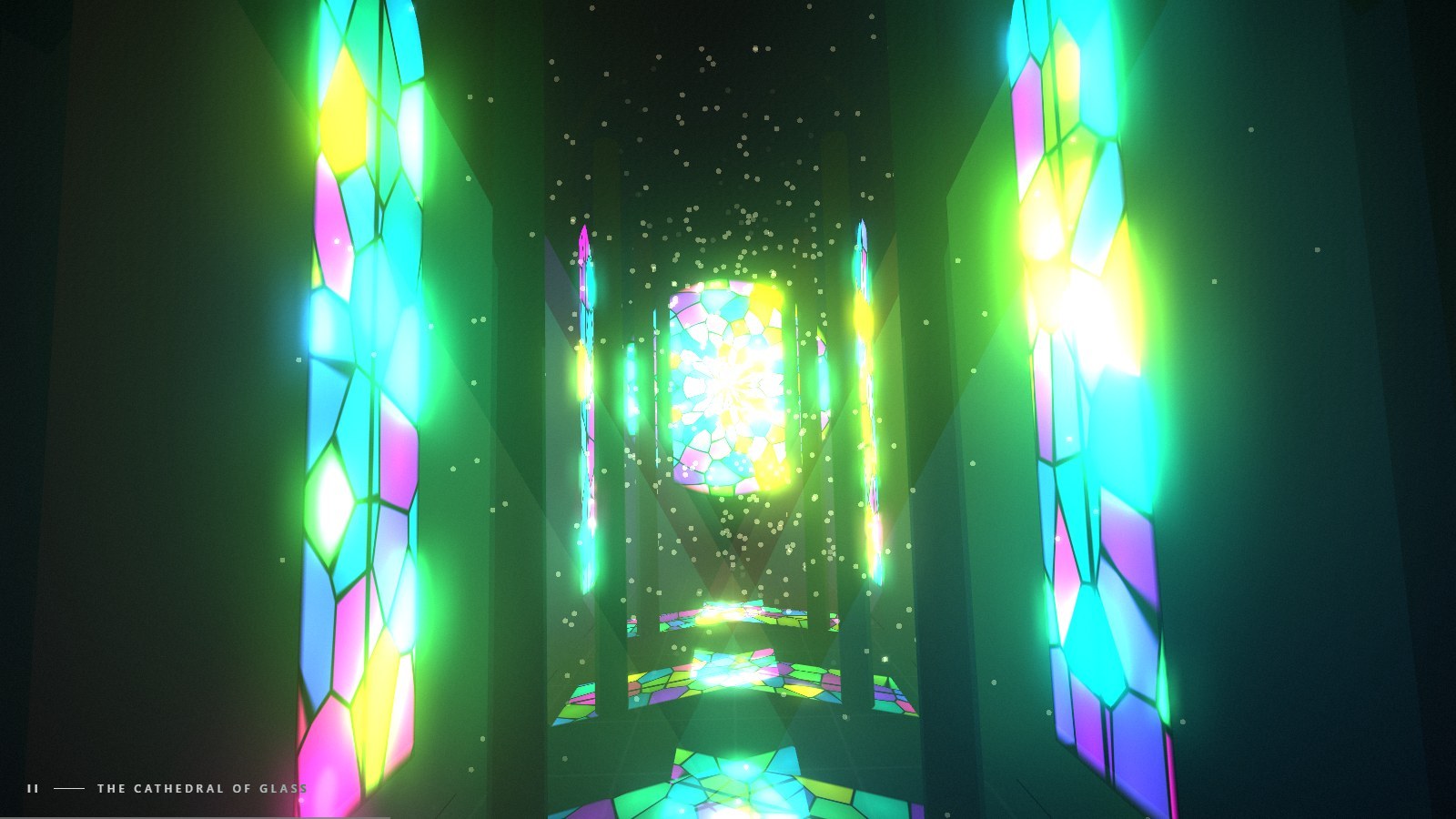
Opus: 4 minutes 7 seconds, 26,000 tokens, and it worked the first time: the wave, the stained glass cathedral, the flock of birds, the city at night, the galaxy. And at the end, as I asked, it introduces itself: “Hello, I’m Claude.”
Sonnet: 9 minutes 40 seconds and 77,000 tokens. Its answer was so long that it came back in two pieces, and I had to put the file back together from the saved log. Then the exact same bug as in the mech: a minus sign in front of a power, without brackets. One pair of brackets again, marked again.
And then, honestly, the most beautiful thing in the whole test. The wave curling over the camera. The cathedral of glass. The murmuration of birds. The galaxy. The jump to light speed. And the same last line: “Hello, I’m Claude.”
The real bill
Here is what the four builds would cost at API list prices (on my Pro plan they cost $0 extra; the dollar figures are what Claude Code reports the same work would cost through the API):
- Drive: Sonnet $0.58 (55,403 tokens, 6:51) vs Opus $0.32 (13,356 tokens, 2:02)
- Village: Sonnet $1.25 (63,574 tokens, 8:05) vs Opus $0.68 (31,619 tokens, 4:57)
- Mech: Sonnet $0.46 (43,706 tokens, 5:24, one marked fix) vs Opus $0.43 (18,995 tokens, 2:31)
- Worlds: Sonnet $1.07 (77,440 tokens, 9:40, one marked fix) vs Opus $0.58 (26,251 tokens, 4:07)
- Total: Sonnet $3.36, 240,123 tokens, 30 minutes vs Opus $2.01, 90,221 tokens, under 14 minutes
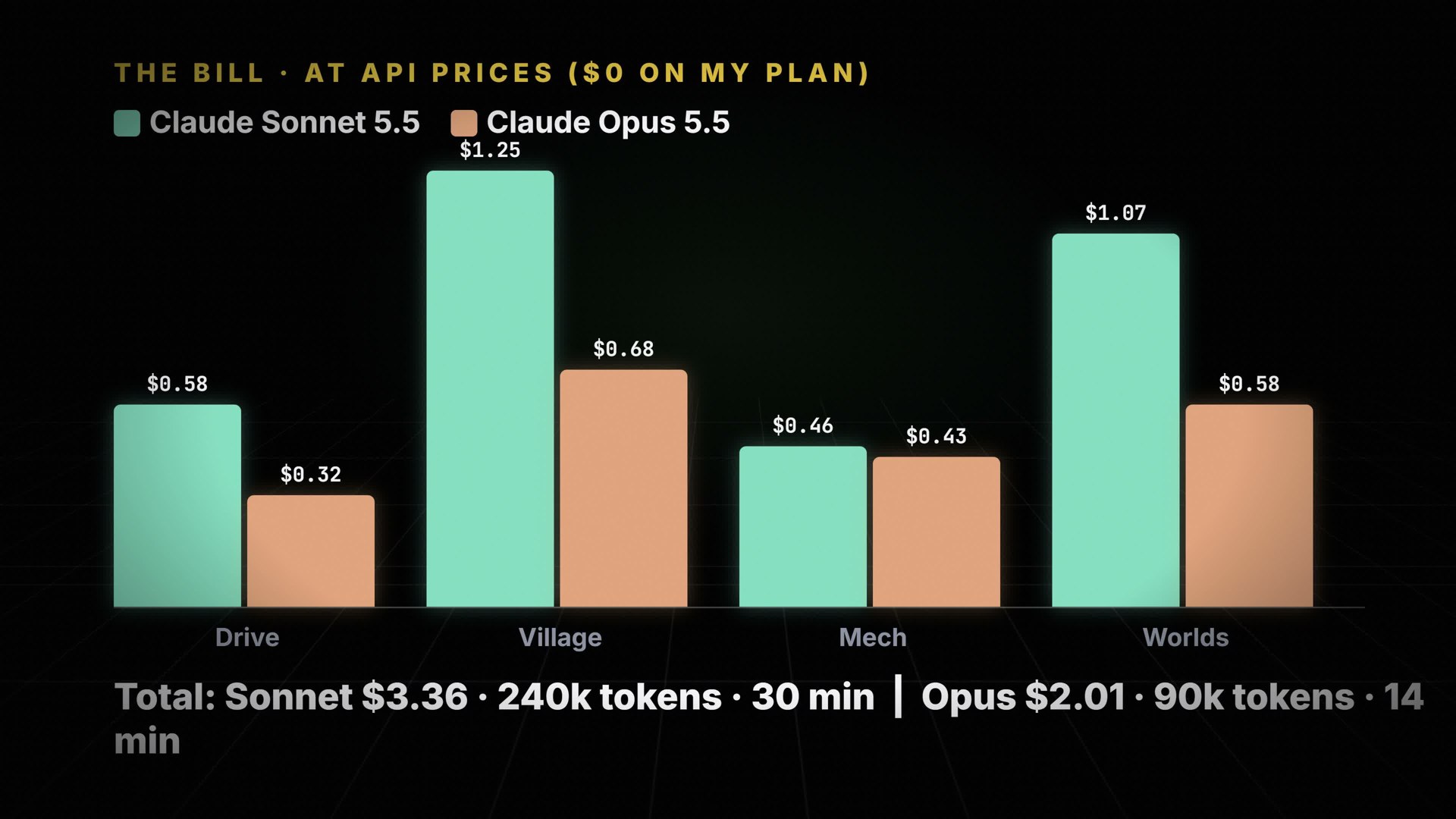
The cheaper model cost 67% more than the expensive one, because it wrote almost three times as many tokens. And it needed two fixes, while Opus needed none.
Four builds are a sample, not a benchmark. But the result matches what Artificial Analysis measured, and it shows exactly why a Sonnet that is smart and thinks less would be such a big deal. If the testers are right about Sonnet Next, this is the problem it fixes.
A wizard game made with Fable 5.2, played live
Now the news, starting with the most fun one. A developer called Blendi says he made a wizard game with Claude Fable 5.2 in one day. In his first post: seven spells, about 1,800 physics pieces to destroy, and zero 3D models or textures. All code, open source, running in the browser. He then added a new spell called Cleave.
The game has grown fast. Today it is called Small Magic, a duel of wizards, and its credits are honest about what changed: the wizard and his moves now come from Mixamo, and the sounds from a game audio library. The meadow, the staff, the spells and their rune circles are still made in code.
In the video I play the real game live in my browser. In Sandbox mode the village builds itself piece by piece, and then the spells: fire, frost, wind, growth, an explosion aimed at a house, a singularity that pulls everything into one point, a tornado, and finally Cleave, with the rune circle and the whole screen changing colour for a moment. Every block of those walls is a physics object.
One model, one day for the first version. A couple of years ago this would have been a small team’s project for months.
Codex now downloads 80% less
Charlie Marsh, who works on OpenAI’s Codex, posted that Codex now pulls about 80% less data from OpenAI’s Responses API, measured on his own threads. One thread went from 7.48 MB to 930 KB.
A quick picture: every time Codex talks to OpenAI’s servers, the answer comes back like a parcel. Until now, every parcel came with a lot of packing material, the same lists and labels again and again. The biggest saving is that the list of tools is no longer sent back to the client three times for every response. They also stopped sending some encrypted reasoning data, per-item token counts and sequence numbers: Codex simply asks the server to leave those out.
Marsh is honest about what it does not do. It does not make Codex much faster overall, because most of that download happened while the model was thinking anyway. On a very slow 1 Mbit connection, the first piece of the answer arrives about 200 milliseconds sooner. So it is a cleanup, not a revolution, but long coding sessions get lighter, which matters on a laptop with mobile data.
OpenCode Rune
OpenCode, the open source coding agent, posted that you can now try an early version of OpenCode Rune, the next version of its desktop app. It is built on their own native app framework instead of Electron, so it should use less memory and feel snappier. It is an early dev build, so expect rough edges.
Claude Ship and a Google Drive browser in Claude
Anthropic shipped something real this week: Claude Ship, in beta on the Team and Enterprise plans. You open a pull request and Claude takes it from there. It reviews the code; an agent called PR Steward fixes failing tests, merge conflicts and review comments; and Claude Approvals approves routine changes following a policy file your team writes, or asks a human to sign off. There is a new `/ship` command in Claude Code too. Anthropic says that on its own Claude Code team, merged pull requests more than doubled from June to September, while the share of changes that had to be reverted fell by more than 40%.
TestingCatalog also spotted Anthropic preparing a Google Drive file browser inside Claude: your Docs, Sheets and Slides in a panel, with search and filters, without leaving Claude. For now it sits in the sidebar and may end up inside Projects. ChatGPT already has something very similar. Claude is clearly turning from a chat window into a full workspace.
Antigravity: hidden agents, Bundles and more Neon for the same price
Google is working on Antigravity, its agent coding app, and TestingCatalog found two hidden features. The first is creating your own AI agent right from the interface, with a name, an icon and a goal. The second is Bundles, curated packs of plugins for a role or a job, like finance. They also spotted quota reset tokens you could save for when you run out, and signs of a mobile app. TestingCatalog’s read is that Google wants Antigravity to become a full “super app” competing with the ChatGPT and Claude desktop apps. All of it is hidden for now, with no date.
And one Antigravity number that connects to the token story above. Varun Mohan, who builds Antigravity at Google DeepMind, says that in five days they raised how much Gemini 4 Neon you can use on the same subscription by close to 75%. Mostly through caching: when the model can reuse what it already read, it costs less. A new version of the app also makes Neon use 12% less quota per task and finish 17% faster, and the automatic mode asks for half as many unnecessary approvals. The fight right now is not only about the smartest model. It is about who gets you more work out of the same monthly price.
Nano Banana 2.1 checkpoint
On the image side, a new checkpoint of Nano Banana 2.1, built on November 26 according to a leak, has shown up on Arena. The example being shared is a crowded Victorian library with exactly 24 people: six readers, four on ladders, three at the fireplace, five walking, two librarians, two at a telescope and two on the staircase. According to the tester, the model followed all of them. That is one example, from one person, on an unannounced model. But counting people and placing them correctly has always been one of the hardest things for image models.
Grok 4.8, rewritten in C and C++
Earlier this month Elon Musk explained why Grok 4.8 is taking so long: xAI dropped the usual tools, JAX and SGLang, and rewrote its whole reinforcement learning and inference software from scratch in C and C++. When someone joked that C wins again, he answered: “C with a little C++, but not too much.”
Why do that? Fewer layers between the code and the GPUs: in theory better control of memory, better use of every chip, faster and cheaper answers. Musk says 4.8 is in reinforcement learning with scores climbing, and later that several versions are in beta. But there is no release and there are no numbers yet. It is a promise, not a result, and I will test it the day it is out.
Unitree Embodied Avatar 3.0
Unitree showed version 3.0 of its Embodied Avatar: a person moves, and the humanoid copies the whole body in real time. Unitree says synchronization reaches 99.8% and the delay can be as low as 80 milliseconds. It matters because every hour of a person driving a robot like this is training data, the kind needed before robots can do these things on their own. It is also how you would send a robot somewhere a person should not go, while the person stays safe and does the moving. Unitree’s own post ends by asking people to use the function safely and in a friendly manner. Given how fast that robot copies a body, that is a fair request.
149 math problems in one year
One chart has been going around: open problems in mathematics solved since 1880. The line crawls for almost 150 years and then goes straight up. 333 problems in total, 149 of them this year, most of them with help from AI.
An honest caveat: the chart counts problems listed on Wikipedia and on a site that tracks the Erdős problems, and many of those were only added recently. Part of the jump is better counting. Even so, mathematicians are worried: in the Irish Times, a professor wrote that AI is having a massively disruptive effect on mathematics.
Scott Aaronson, one of the best known computer scientists alive, wrote on November 25 that for the first time he feels in his bones that a proof of P not equal to NP is not far. On November 27 he wrote that he has specific information that the labs will soon release a major breakthrough in theoretical cryptanalysis, adding, in his words, that it will not lead to imminent danger for any currently deployed cryptosystems. He has heard rumors of bigger breaks but says he has no specific information about those. I tested what AI can really do against Bitcoin’s math in my previous video, Is Bitcoin still safe?.
METR: Anthropic is moving about twice as fast
On November 5, METR, an independent group that evaluates AI labs, published what it found after almost three months inside Anthropic, from August to the end of October.
Their conclusion: Anthropic is likely improving its models at around twice the rate it did before October 2025, with a range between 1.3 and 3 times. They estimate that perhaps 80% of that speed-up comes from Anthropic using AI to do its own research. Remember Karpathy: the team he joined in May exists precisely to use Claude to speed up pre-training research. That is the loop METR is measuring, models helping to build the next models.
METR also lists unreleased models, which it calls Model 2 (finished in July), Model 3 (August and September) and Model 4 (finished training in September and October). Anthropic’s internal benchmarks are running out of room: Model 4 scores more than 50% on every one it was tested on. Staff asked how much faster these models make them gave answers reaching 12 times, which METR itself calls only very loose evidence. The full report includes a forecast for a future model, but it was redacted, and Anthropic also redacted a majority of the evidence METR found most informative. METR says it did not find any clear bottleneck that would stop things from speeding up.
Jack Clark’s “Machine Hermeneutics”
Jack Clark, one of Anthropic’s co-founders, writes the Import AI newsletter, and every issue ends with a short story. The one from November 23 is about a new field called Machine Hermeneutics (hermeneutics is an old word for the art of interpretation).
It is set in 2033. Machines make discoveries so fast that a law says nothing they invent can be used until humans can fully explain it. So the best humans no longer make discoveries: they build enormous buildings, designed with the machines, that let them walk through an idea until they understand it. There is even a score for it, the time to a human-understandable explanation. Not how fast you discover something, but how fast a person can truly understand it. At the end the narrator wonders whether the buildings are quietly teaching people to think like the machines.
It is fiction, but look at what Clark lists as inspiration: “the singularity which has already begun”, and this year’s machine math papers, which we may spend tens or hundreds of times longer understanding than the machines spent writing them.
Put the pieces together. The proofs come with computer-checked certificates, so we can know they are correct before we understand them. An outside audit says one lab is moving about twice as fast. And a co-founder of that lab writes stories about humans struggling to keep up. You do not have to believe the singularity has started, but the gap between what machines produce and what we understand is real, and it is growing.
What I found in my own Claude Code logs
Now the third check I promised, the one that does not depend on what the model says about itself.
Claude Code keeps a log of every session on your computer, in a folder called `.claude` inside your user folder. In those logs it writes a small line called `atis-latch`. In a normal session the value is empty. People comparing their sessions noticed that the value is filled in the sessions where they believe they were routed to the new model.
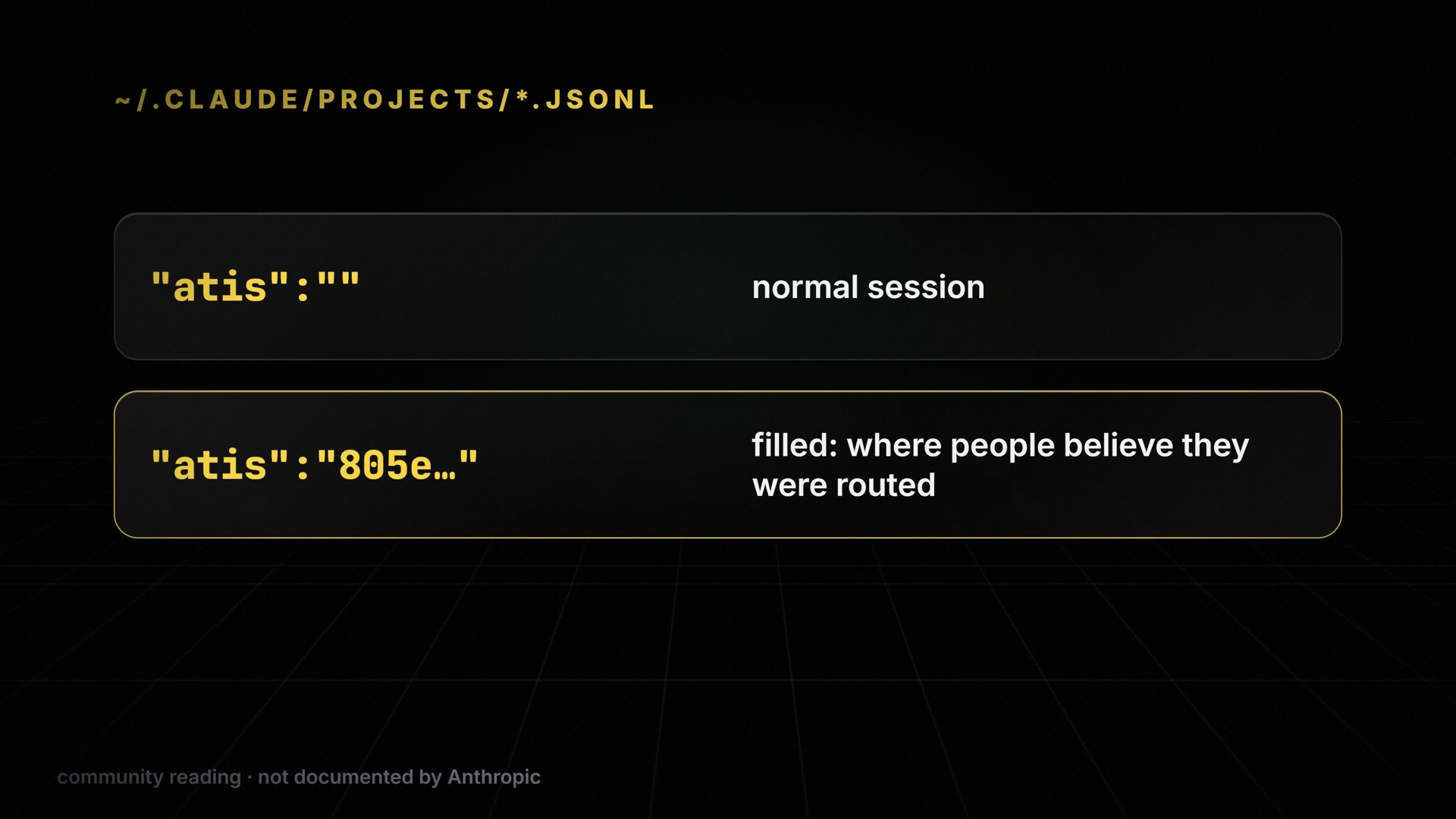
So I wrote a small script that reads all my Claude Code logs on my PC and prints only three things per day: how many sessions, the model name Claude Code recorded, and whether that value was empty or filled. No folder names, no content, and nothing leaves the computer.
The result: 143 sessions with that line. 116 empty. But 27 filled, and when I check those 27 one by one, every single one is a Claude Opus 5.5 session, on six days: October 30 and 31, November 1 and 2, and then November 5 and 6. Two different values. Since November 7 the value has been empty every single day, today included, even for the Sonnet checks I had just run.
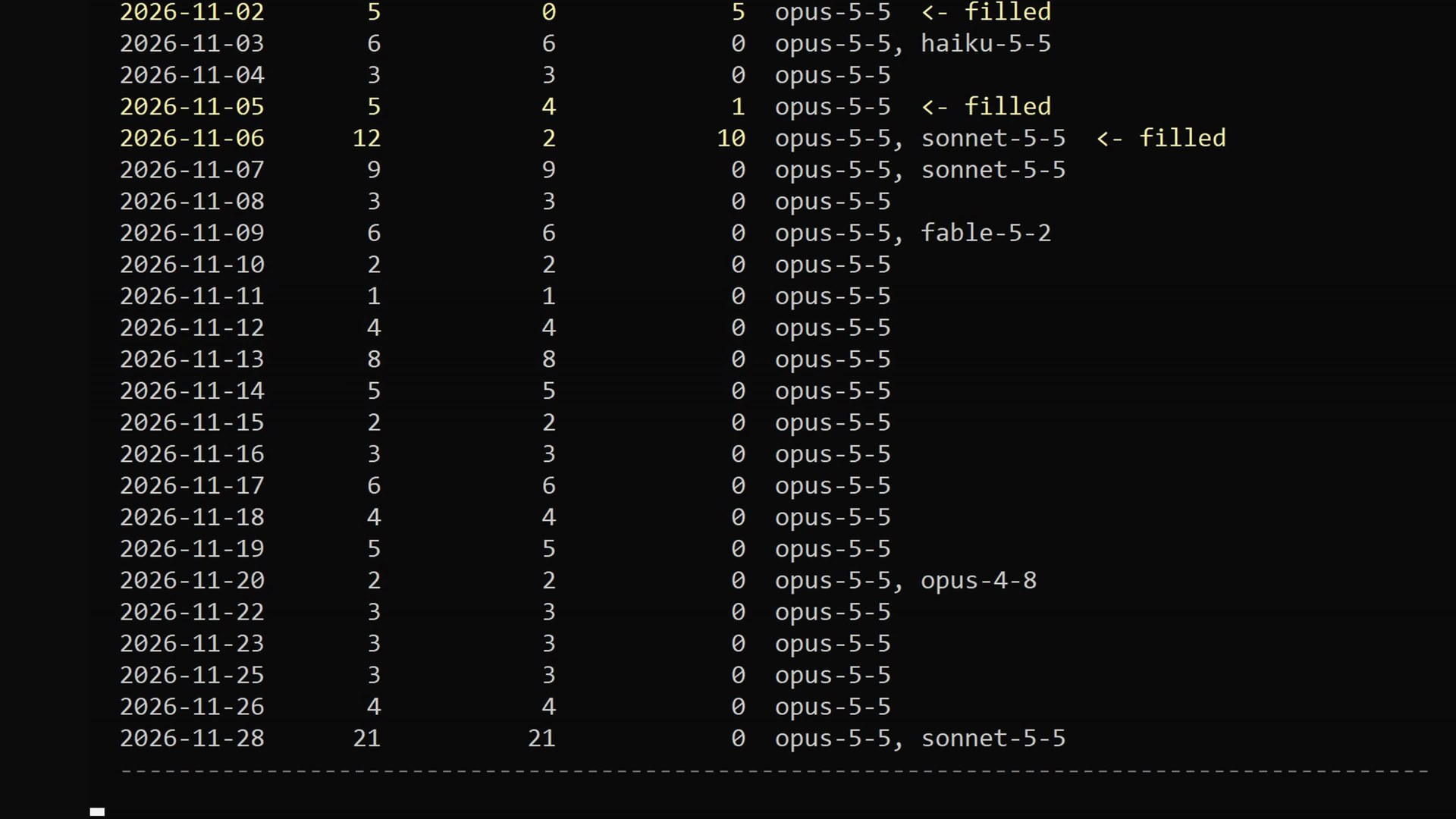
What does it mean? I have to be careful here. Anthropic has never documented this line. Reading a filled value as “you are on a test model” is the community’s interpretation, from comparing sessions, so I cannot prove it. But if that reading is right, then on six days between October 30 and November 6 my everyday Claude Code was quietly answering me with a test version of Opus, and I never noticed. That fits with what TestingCatalog wrote: from mid October, some Opus 5.5 requests appeared to be landing on an unannounced model.
And to be fair: testing a new model on a small slice of real users is a normal way to catch problems before a launch. It happens in the background, and you keep the same plan and the same price. You got the new dish without being told, and you paid the same as everyone else.
How to check your own logs
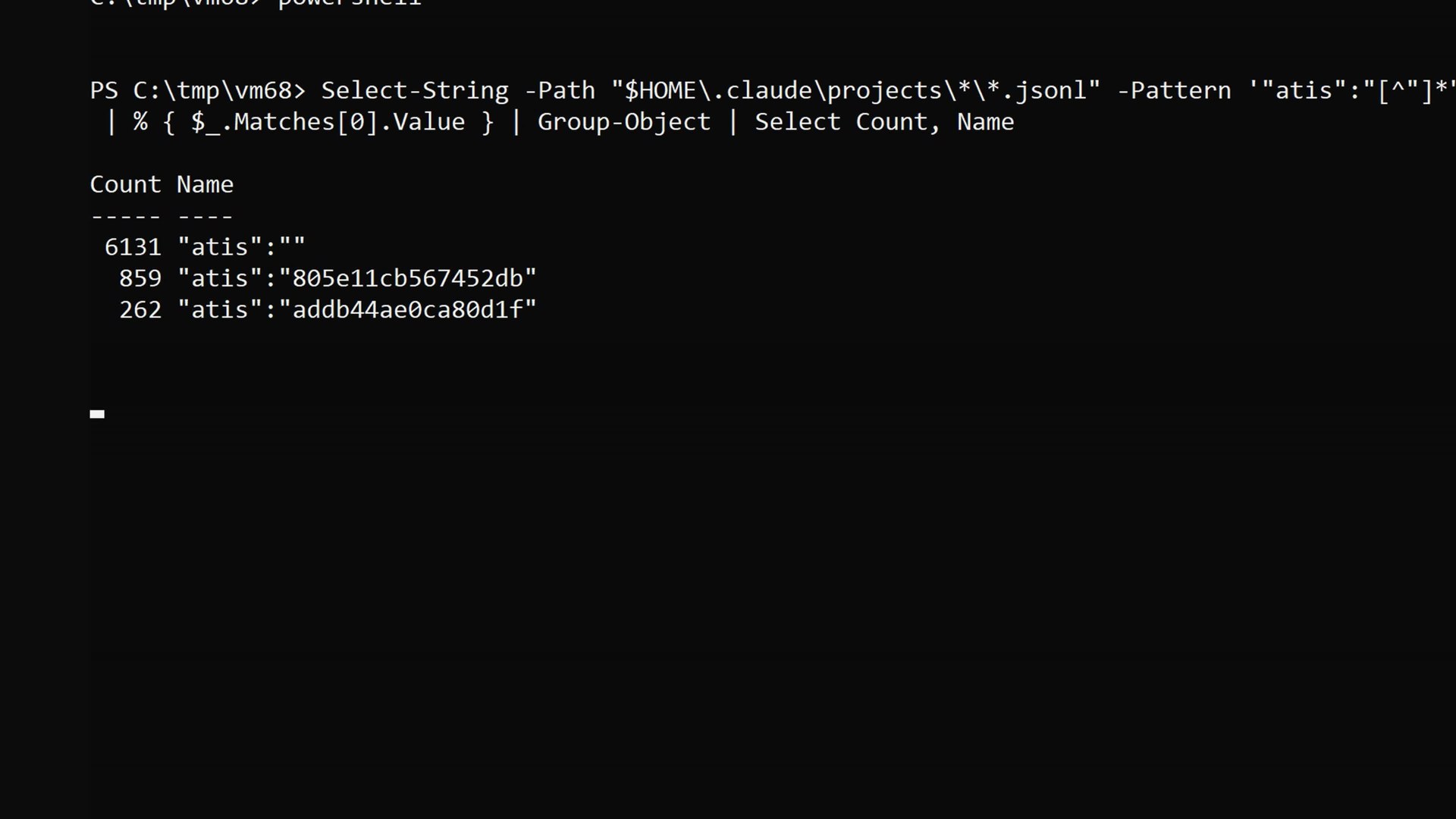
On Windows, open your user folder, then `.claude`, then `projects`. Every `.jsonl` file in there is one session. Search those files for `atis-latch`. If the value after it is empty, you were on the normal model. If it is a string of letters and numbers then, by the community’s reading, you were on a test model.
You do not even need to open a file: in the video I run one line of PowerShell that searches every log for that value and only counts how many times each one appears. On a Mac or on Linux, one `grep` in the terminal does the same. The small script from the video (`check_atis.py`) is in the gallery with the demos. It reads only your own files and sends nothing anywhere.
Is Sonnet 6 going to be a monster?
From what I measured, Sonnet 5.5 is beautiful when it works, but it thinks too much and costs more than Opus on the same jobs. If the new one is smarter and writes a lot less, it will not just be a better Sonnet: it will be the model most people use every day. And some of you might be testing it right now without knowing.
Check your logs and tell me in the comments of the video: is your value empty or filled, and on which days? I will test Sonnet Next the day it is out.
Try every build, and get the code
Every build from this test is in the gallery on my site. You can open them all in your browser and drive, fly and walk around yourself, including the two “as written” originals of Sonnet’s files before the one-bracket fixes:
Play every build: Claude Sonnet 5.5 vs Opus 5.5 on the Sonnet Next prompts
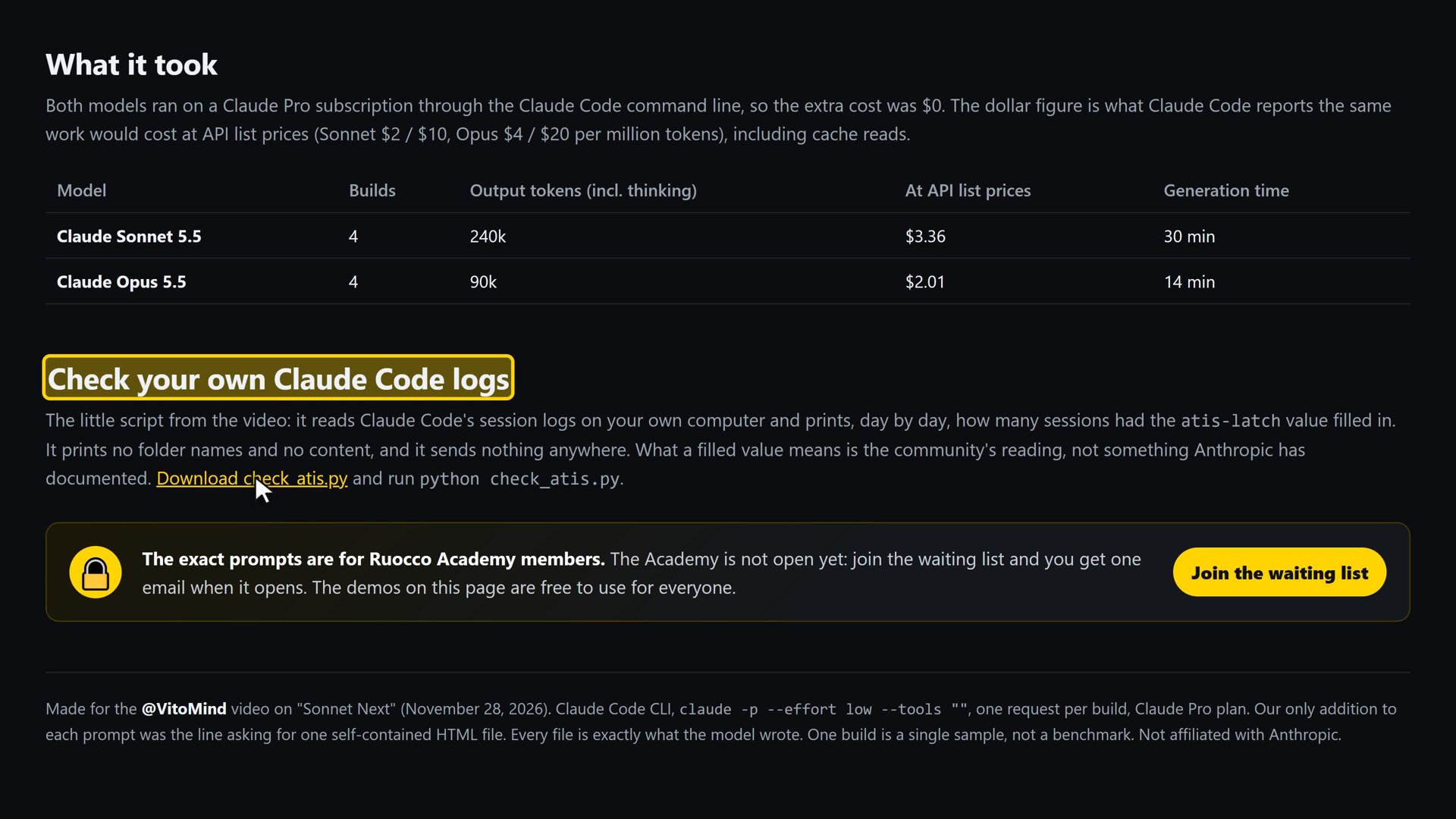
The exact prompts, the settings and the scripts I used (the prompt runner, the two checks, the log checker and the recording setup) are in the Ruocco Academy. It is a waiting list right now: join it and you will be the first to know when it opens.
How the test was run
Claude Sonnet 5.5 and Claude Opus 5.5 through the Claude Code command line (`claude -p –model
“Sonnet Next” has not been announced by Anthropic: everything about it here comes from reports by users. What a filled `atis-latch` value means is the community’s reading, not something Anthropic has documented. Benchmark charts for the new model that I could not trace to original data were left out. I am not affiliated with Anthropic.
Sources
- Sonnet Next post (leo)
- Horizon Drive
- Sonnet 5.6 / Opus 5.6 post
- The Independent AI: Sonnet Next rumours join Opus Next
- OrcaRouter: Claude Sonnet 5.6 tested as Sonnet 5.5
- TestingCatalog: possible Claude Opus 5.6
- Artificial Analysis: Claude Sonnet 5.5
- Claude API pricing
- TechCrunch: Andrej Karpathy joins Anthropic’s pre-training team
- Small Magic by blendi and the first post
- Charlie Marsh on Codex
- OpenCode Rune
- TestingCatalog: Claude Ship
- TestingCatalog: Google Drive file browser for Claude
- TestingCatalog: Antigravity Bundles and agent creation
- TestingCatalog: Antigravity Neon quota
- Nano Banana 2.1 checkpoint
- Elon Musk on Grok 4.8 and Analytics India Magazine
- Unitree Embodied Avatar 3.0
- Math problems chart
- Irish Times: the end of maths as we know it
- Scott Aaronson, Nov 25 and Nov 27
- METR: Anthropic AI R&D acceleration assessment
- Import AI 482
If you want AI news where the models are actually tested, with the real bill, subscribe to @VitoMind on YouTube.