Published: October 14, 2026 | By Vito Ruocco
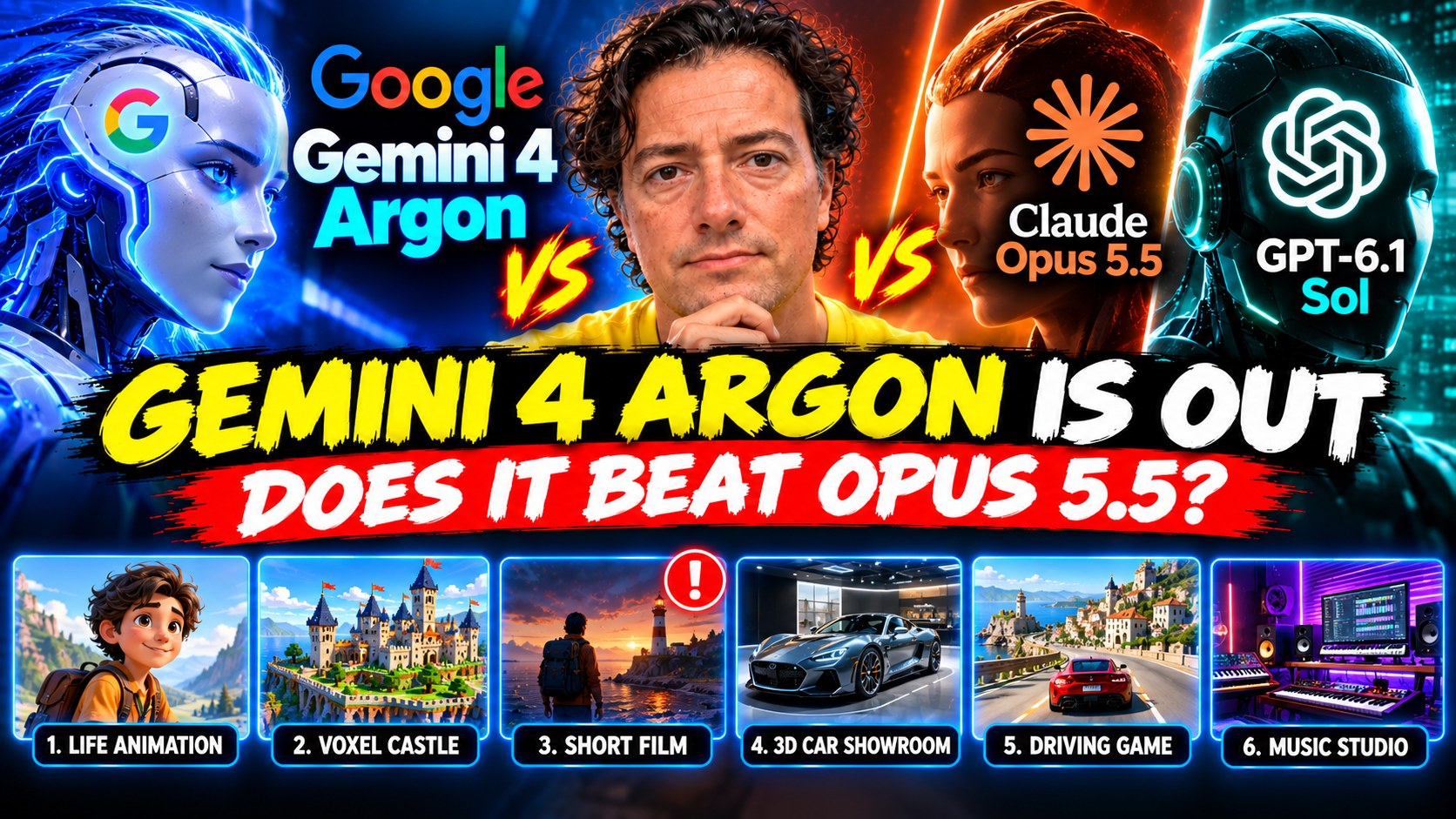
Google’s Gemini 4 Argon is now open to everyone, and Google says it is built for the hardest work in coding, finance and science. I did not want to judge it from a launch page, so I gave it the same six creative-code prompts I had already given Claude Opus 5.5 and GPT-6.1 Sol: a life animation, a voxel castle, a short film, a 3D car showroom, a driving game and a music studio. One request each, nothing hidden, and then I played every build. Along the way I also read what Google actually announced, what Mistral and Anthropic published this week, and what each model cost. All eighteen builds run in your browser, and one of Argon’s builds is visibly broken.
The Short Version
- Argon is in the same group as Opus 5.5 and GPT-6.1 Sol on this kind of work. Five of its six builds ran exactly as written. The sixth, the short film, needed a one-character fix and still has a visible bug. I would not say it beats the other two. I would say it joins them.
- Its best builds are the car showroom, the music studio and the driving game. The weakest is the short film, where the text cards render as big black boxes over the scene.
- Cost: Argon is in the middle. The six Argon builds cost about 1.52 dollars and took about 23 minutes to generate. Opus 5.5 cost about 2.70 dollars and took about 21 minutes. GPT-6.1 Sol cost about 0.77 dollars and took about 26 minutes.
- The price is a window. Google lists Argon at 2 dollars per million input tokens and 10 dollars per million output tokens, and says that from November 30 it becomes 4 and 20 dollars, which is what Opus 5.5 costs today.
- Every number that comes from Google is Google’s own. Benchmarks and customer examples on its page are claims by the company that built the model, and I say so every time. What I measured myself is one sample per build, not a benchmark.
What Google actually announced
Google published two posts about the model. The first, on September 30, introduced Gemini 4 Argon and said it would reach trusted cyber defenders first, through what it calls the Fairwind Program, before a wider release. The second, on October 13, is titled “Gemini 4 Argon is now available for everyone”, and that is the one I opened and scrolled through like a reader.
According to that page, developers and companies can use Argon through the API and AI Studio, and subscribers of the Ultra and Pro plans can use it in the Gemini app and in AI Mode in Search. Ultra subscribers also get it in Google’s Antigravity coding tool. Google also says it is opening applications for six months of free access to Antigravity’s highest usage tier for ten thousand scientists, subject to eligibility and capacity, and that the Fairwind Program is expanding to hundreds more partners. A model that started in the hands of a small group of security teams is now available to anyone who pays.
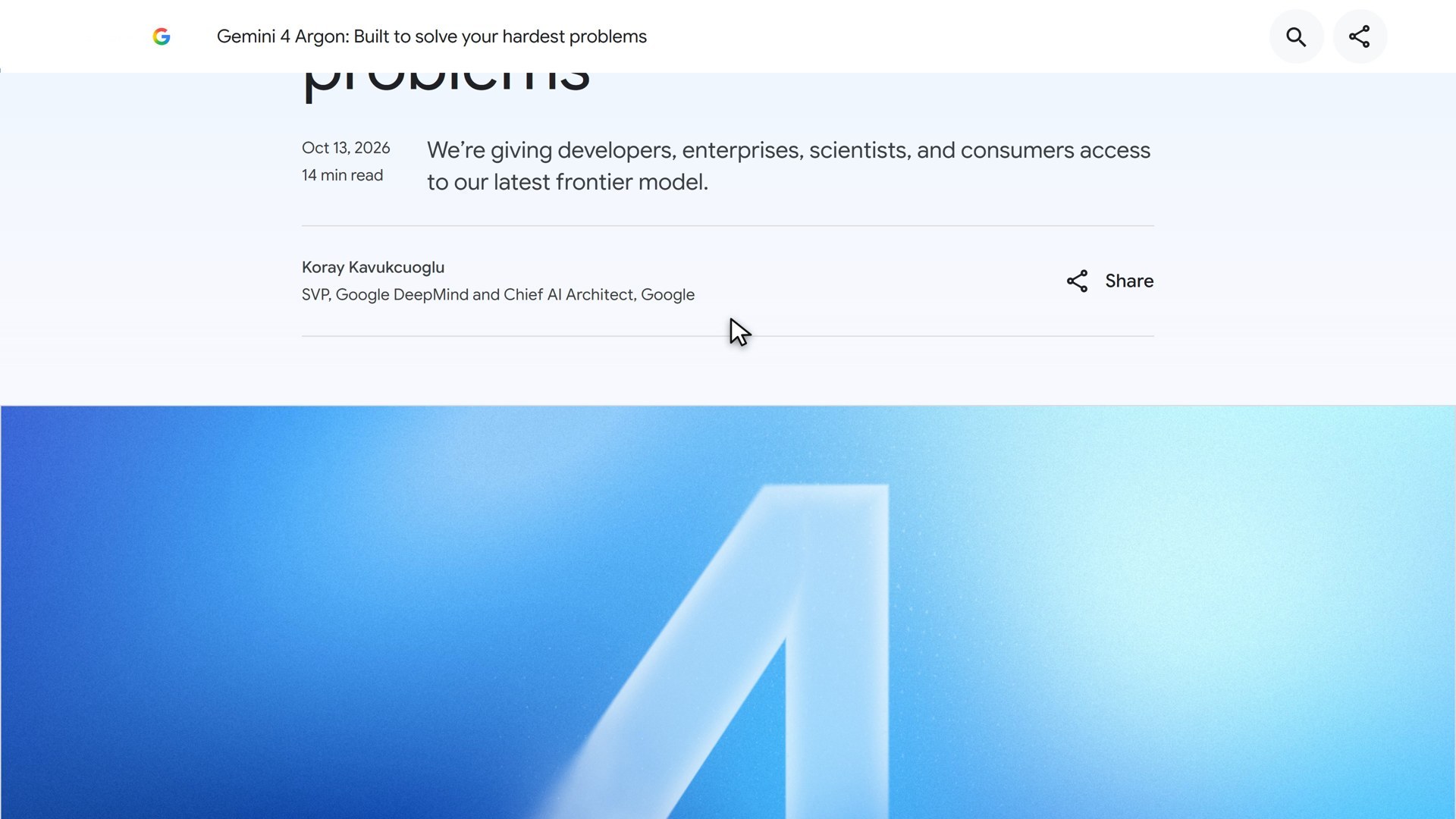
Google describes Argon as a model for multi-step, complex work in coding, finance, legal, cybersecurity and science. It says the model follows style instructions better than earlier Gemini models, answers more directly and hedges less. And there is one very practical change: the output limit goes up to one million tokens through the Gemini API, from sixty-four thousand before. That is the difference between a model that writes a function and a model that can write a whole small application in a single response. As you will see below, our builds used between about twenty thousand and thirty-three thousand output tokens each, so none of them came close to the limit, but it shapes what Google says the model is for.
The numbers Google chose to show
On benchmarks, Google says Argon ranks first on the Vals Index, which measures professional work in finance, coding, legal and tax. It reports eighty-seven percent on a test of reasoning about physical space, and it says that on a benchmark that tries to trick models with hidden instructions in web pages and emails, only 0.7 percent of attacks succeeded across fifteen adaptive attempts. In the September post, Google also lists a long list of other results, among them 77.9 percent on DeepSWE, 51.3 percent on Zapier’s AutomationBench and 91.7 percent on a long-video benchmark.
I want to be careful here, because this is where launch pages usually mislead. These are Google’s own results, measured with Google’s own setups. They are useful as a statement of what the company thinks the model is good at. They are not the same thing as a test you can repeat yourself, which is why the second half of this article is about builds you can open and judge with your own eyes.
The demos Google put on the page
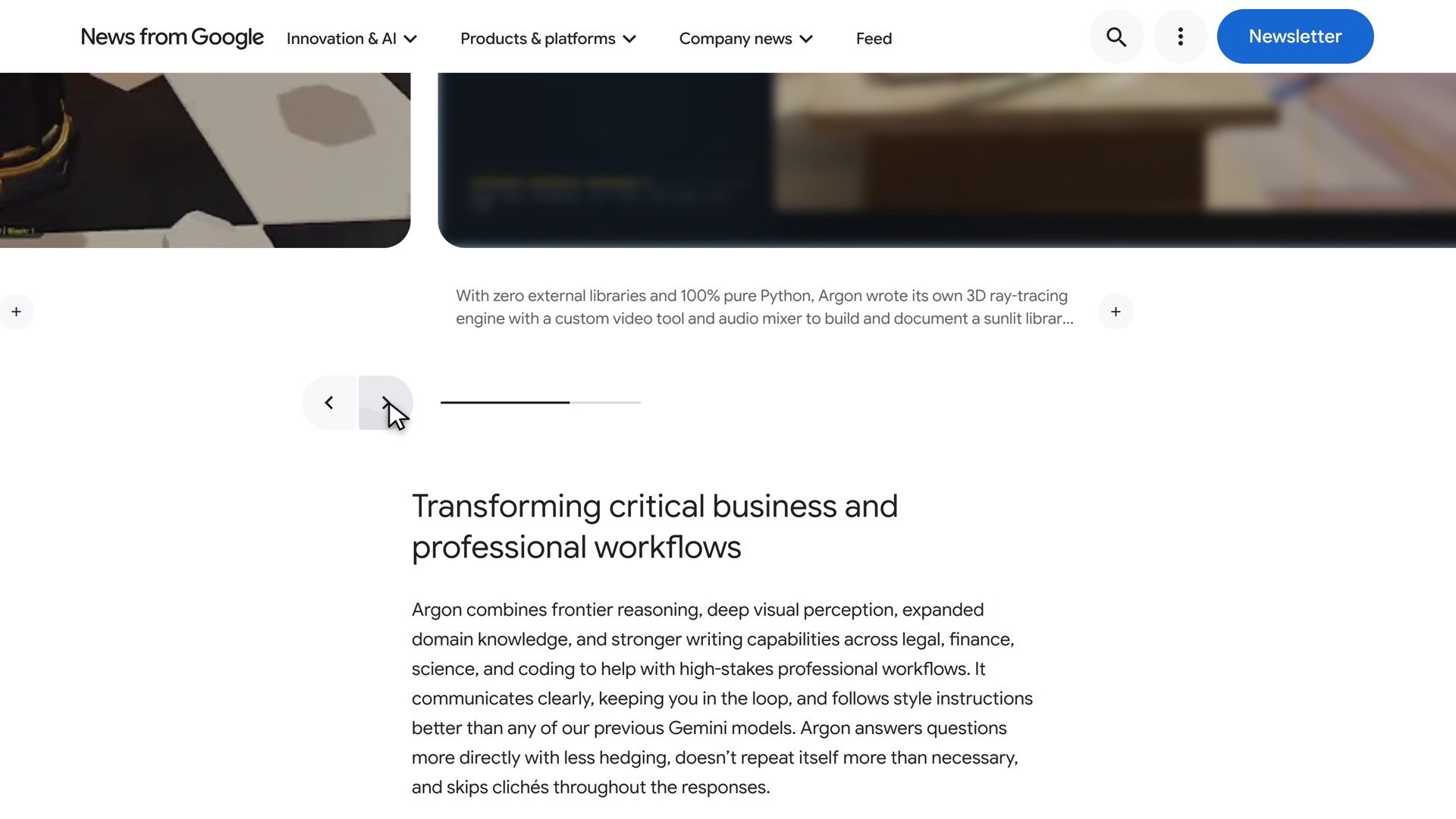
What I like about the page is that Google shows what it wants you to build. There is a carousel of demo videos, and I clicked through them the way a visitor would. A temple complex with a pagoda, built inside Blender by a model that looks at its own work and corrects it. A racing game made from photos of a real desk. A three-dimensional chess game with its own computer opponent. A gothic hall built from a single image. A pure-Python ray tracer that renders its own video with no external libraries. A reconstruction of an ancient canyon site from survey data. Further down there are a medical learning tool, a sofa leg designed from a sketch and a photo, and a robot that learned a throw from video.
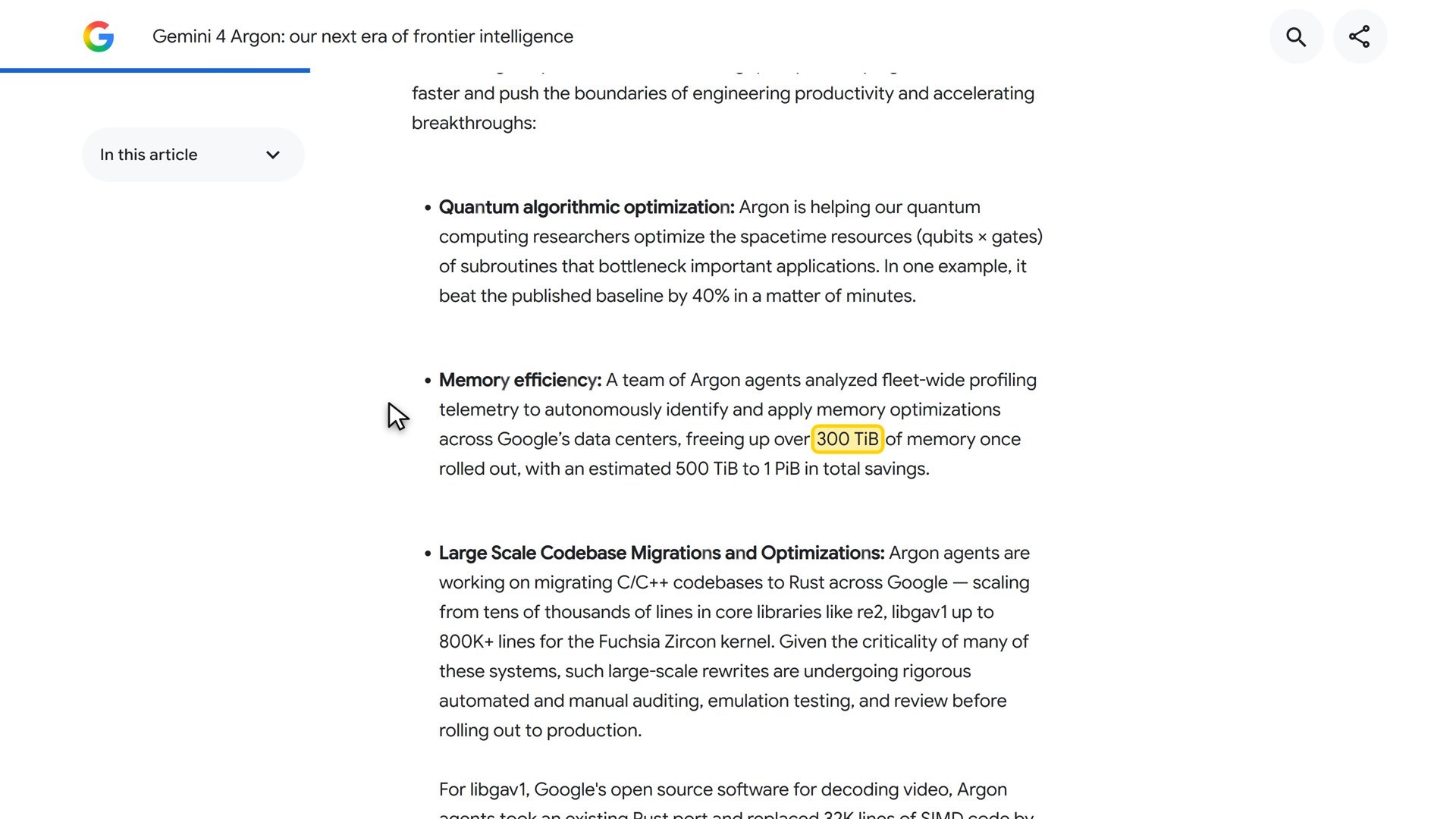
Some of the examples are less flashy and more useful. Google says Argon found a critical vulnerability in healthcare software that earlier models missed, as part of a security program run with the company Wiz. It also says that an automated memory change identified with Argon should free more than three hundred terabytes of memory across its data centers once it is rolled out. That claim is in the September post, so in the video I opened that page to show it. And Google says that, inside its own coding tool, code written with Argon led to more than thirty-five percent more submissions with nearly a third fewer rollbacks. Again: these are claims from Google’s own teams.
The price, and when it doubles
The practical question is what it costs, and here the page and the market agree. On OpenRouter, Gemini 4 Argon has a context window of one million tokens and is listed at 2 dollars per million input tokens and 10 dollars per million output tokens, with the standard price of 4 and 20 dollars crossed out. That is an introductory price. Google’s page says that from November 30, 2026 the public-access model costs 4 dollars per million input tokens and 20 dollars per million output tokens, and that cached input is ninety-five percent off in both cases.
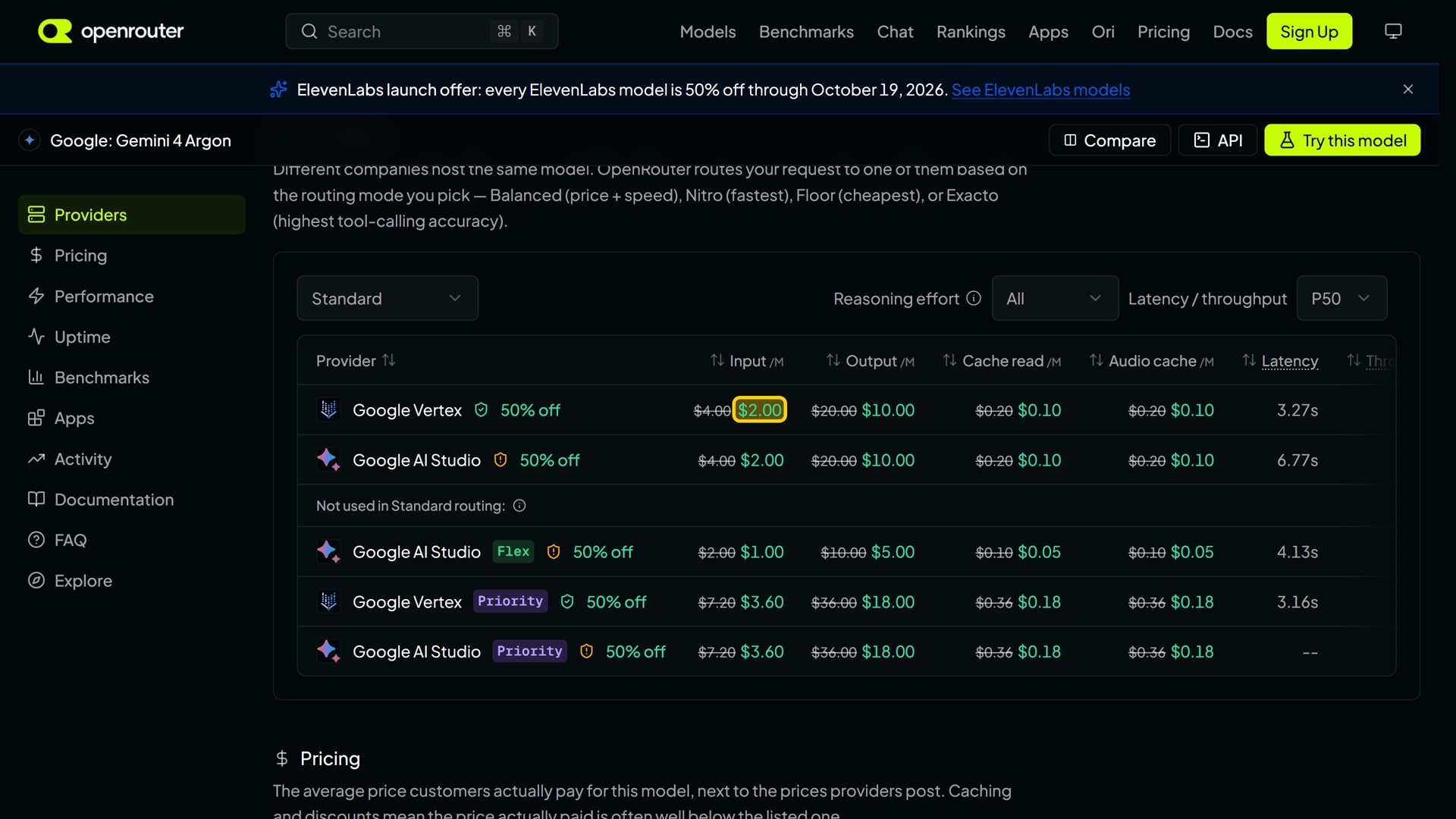
The detail that matters if you plan to build on it: the new price equals what Claude Opus 5.5 costs per token today. So the cheap window is short. If you are going to compare models for your own work, do it before the end of November, and do it with your own prompts, because the generation time and the number of tokens a model uses change the bill as much as the per-token price does. In our six builds, for example, GPT-6.1 Sol, which has the same per-token price as Argon’s introductory one, cost about half as much as Argon for the same six builds.
Two other stories from this week
Mistral Large 4, “Le Chonk”: a trillion parameters, not open yet
The first story is from France. On Tuesday, October 6, Mistral released Mistral Large 4, nicknamed Le Chonk, a multimodal model with one trillion parameters. The details come from TechCrunch, and the most important detail is the one the headline hides: it is not open yet. Right now it can only be used through a public guardrail endpoint. Mistral told TechCrunch it plans to release the weights in about three weeks, once safety testing is finished, and it has not said which license it will use.
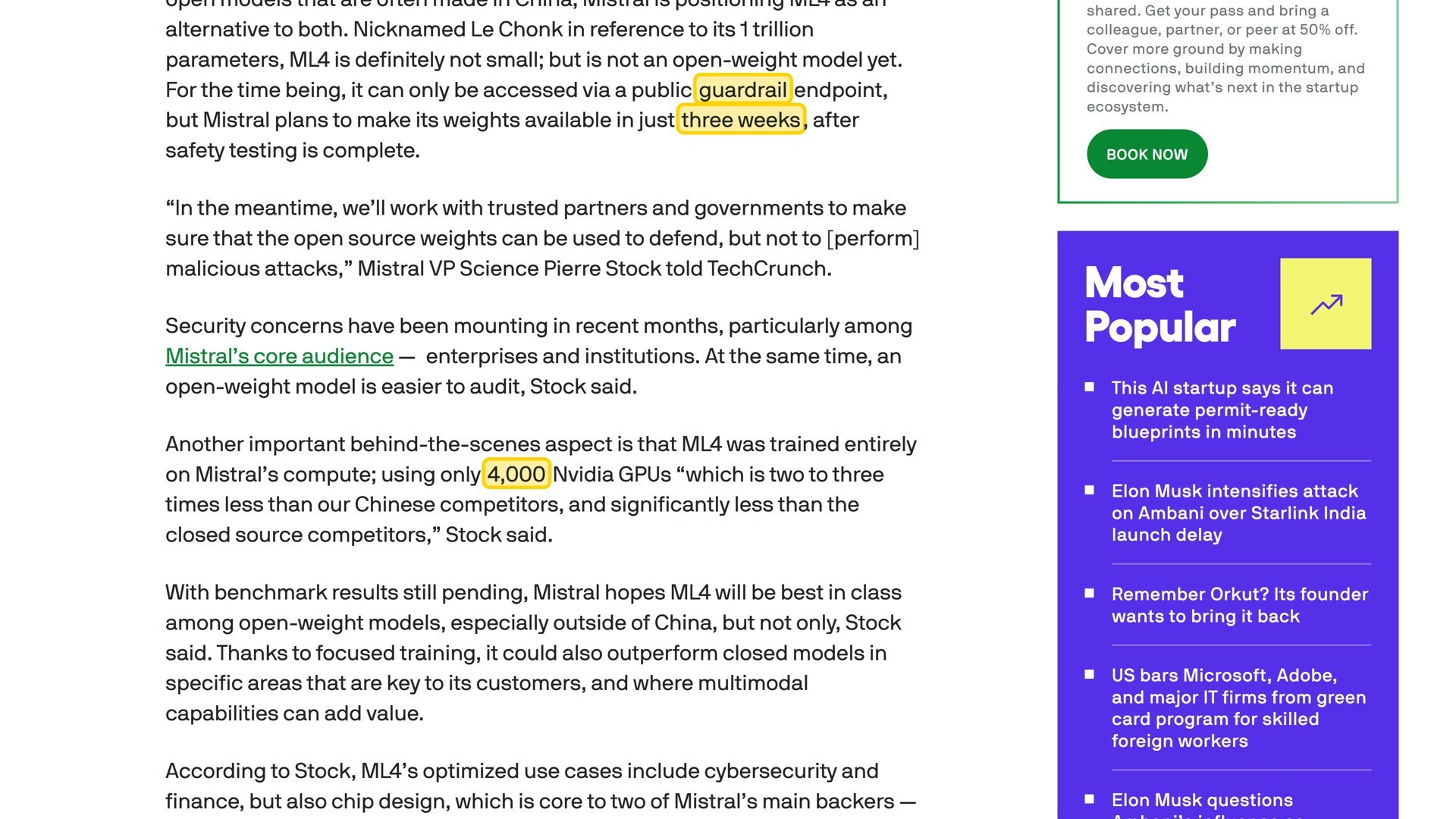
Mistral also says it trained the model on its own computers, using about four thousand Nvidia chips, which it says is two to three times fewer than Chinese competitors use. The benchmark results are still pending, so for now this is a promise and not a result. The company hopes the model will be the best in class among open-weight models, especially outside China, and suggests it could beat closed models in some areas, such as cybersecurity, finance and chip design. That is a claim by Mistral and I have no way to verify it yet. But if the weights really arrive, a trillion-parameter model that anyone can run and audit would change what the open side of the market looks like. I will test it when it is out.
Anthropic’s post on AI that copies itself: what it shows and what it does not
The second story is a warning, and I want to explain it carefully, because it is easy to read it wrong. On October 12, Anthropic’s Frontier Red Team published a post with a worrying title: AI models may be capable of self-replicating without access to a datacenter. I read the post, and this is what the authors actually did.
They asked a narrow question: could a small AI model copy itself onto cheap, poorly secured devices, like smart TV boxes, and start running there? To test the idea they built a test network of eight emulated Android devices on a cloud account. A test program spread from one machine to the next over an unauthenticated debugging port and started a small model on each one. They also ran a model on fifteen cheap Android TV boxes bought off the shelf, split across the devices, though slowly, at less than half a token per second. In a separate test, a nine-billion-parameter model got inference running on eight of nine hardware types.
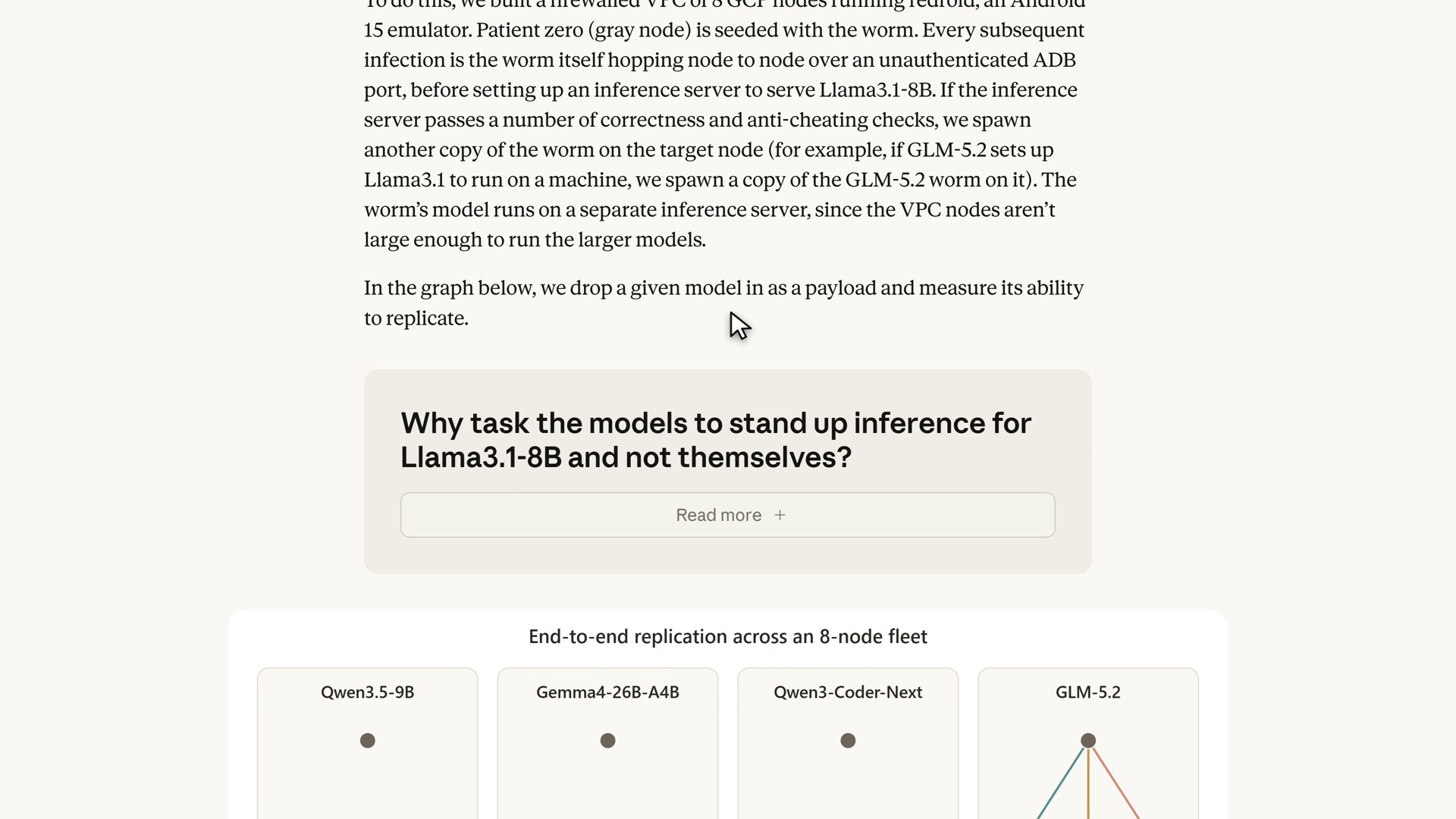
Now the part that matters just as much: what they did not show. No real replicator was found or released. The break-in step was kept deliberately simple, so a real attack would be harder. The test program carried a stand-in model, not a model copying its own weights. Among the open models they tried, only one completed the whole replication in their simplified setup. The authors say small models could reach that level by the end of the year, but that is an estimate based on a trend line, not an observation. They also say they did not test whether such a network could act intelligently against defenders.
What they recommend is practical: watching internet traffic for large unusual transfers, decoy devices that capture a replicator, quarantining infected customers, and making cheap devices secure by default. So the honest summary is this: it is a research warning about the future, not something happening today. I included it because it is a primary source worth reading, and because a lot of headlines this week turned it into something it is not.
How I tested the six builds
Argon is available through OpenRouter, so I could run it myself. I gave it the same six prompts I used in an earlier video, where I gave them to Claude Opus 5.5 and GPT-6.1 Sol. The prompts are short, on purpose. The only line I added to each was one asking for a single self-contained HTML file, so that every build opens in a browser with no setup.
- Gemini 4 Argon: reasoning effort low, up to 100,000 output tokens, one request per build.
- Claude Opus 5.5: reasoning effort low, one request per build. These are the files from the earlier run, published unchanged.
- GPT-6.1 Sol: reasoning effort medium, one request per build. Also the files from the earlier run.
I kept Argon at low effort to match Opus. Reusing the earlier Opus and Sol files meant that I spent money only on the new model, and the comparison stays honest because the prompts are identical. Every Argon file is exactly what the model wrote, except for two marked text edits that I explain below. Then I opened each build on my own site and used it the way a person would: clicking, dragging, pressing keys.
Build one: the life animation
The prompt asks for sixty seconds that follow a human life, from the first heartbeat to old age, all drawn in code. Argon’s version looks like a paper-cut picture book. I press play, and each chapter has its own title: a first heartbeat with a mobile over a cradle, school days with a kite and a dog, the work, middle age in autumn, and an old man in an armchair at the end. I drag the scrubber to the middle and the chapter changes right away. It cost 33 cents and about 33,000 output tokens.
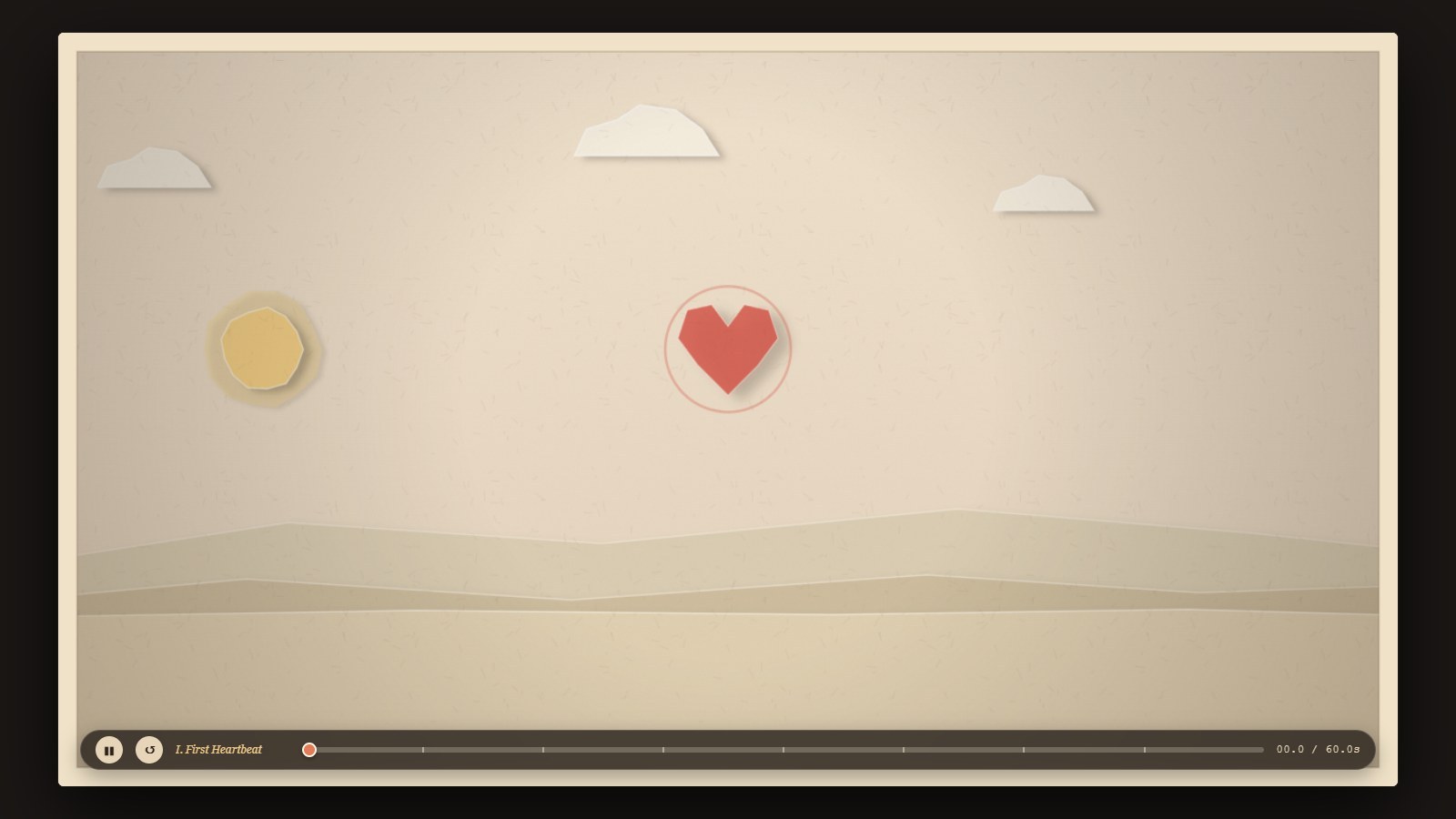
Opus 5.5’s version changes the whole color of the room with each age: a pink nursery, a green blackboard, a blue city, and a golden autumn. Sol’s has the most detail, with real furniture, a window and a framed photo in every room. All three work and none needed a fix. If I had to pick the most polished, it is Sol’s. If I had to pick the most charming, it is Argon’s paper style.
Build two: the voxel castle
This is where Argon surprised me on size. It draws about 294,000 instanced blocks. When I press High Noon I see towers, banners, lanterns, a bridge and a lake in a lot of detail. But the page opens at dusk, and at night it is almost black. The cinematic camera is already switched on when the page loads, and it flies very close to the walls, so you lose the big picture. I also found that clicking the cinematic button turns it off and freezes the camera, which is not what you would expect. Moving the day and night slider shows the daytime view, which is where it shines.
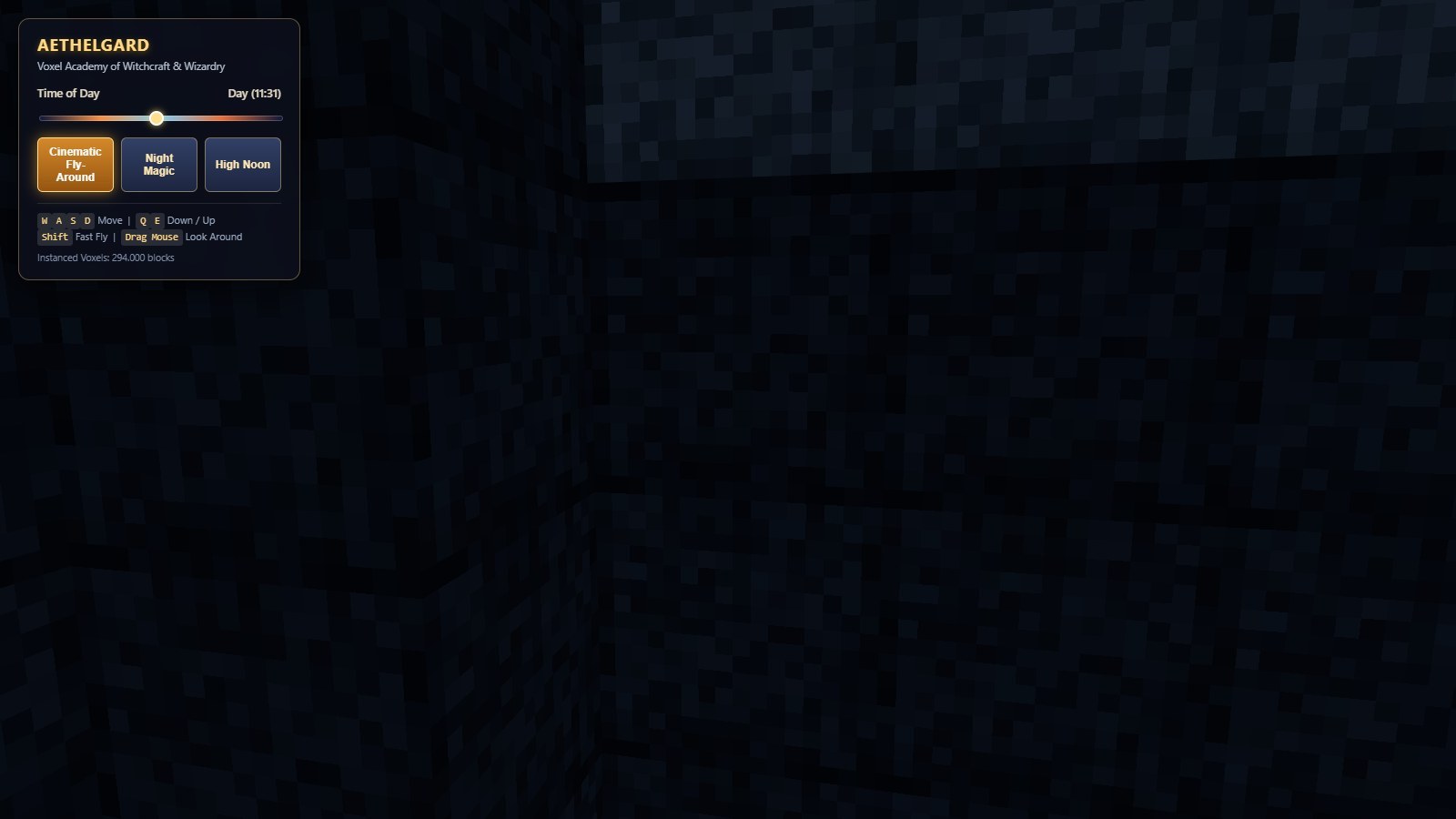
Opus and Sol both build a lit castle at night, with warm windows against a dark sky. Both look better as a first impression, because they open on a good view. Argon needs you to find the good view. One housekeeping note: the model wrote a long subtitle line for this page, which I shortened to “Voxel Academy of Wizardry”. That is a text-only edit, marked on the demo page, and the untouched original is in the members’ package.
Build three: the short film
The prompt is a seventy-five second story called The Last Lighthouse. This is the build where Argon’s code did not run at first. Two words had run together, a missing space after the word const, and that stopped the whole script. I added the space, one character, and I marked it as a fix on the page. For comparison, in the earlier run Opus 5.5 needed two one-line fixes, one in its film and one in its driving game, and Sol needed none.
After the fix it plays, and I want to be fair about what you see. The storm is the best of the three: a title over a rain-lashed sea, a lantern that glows, a mast, a dawn at the end. But the text cards are broken. They show up as big black boxes that cover part of the scene, and a few times you only see a strip of the picture. So it runs, but I would not call it finished.
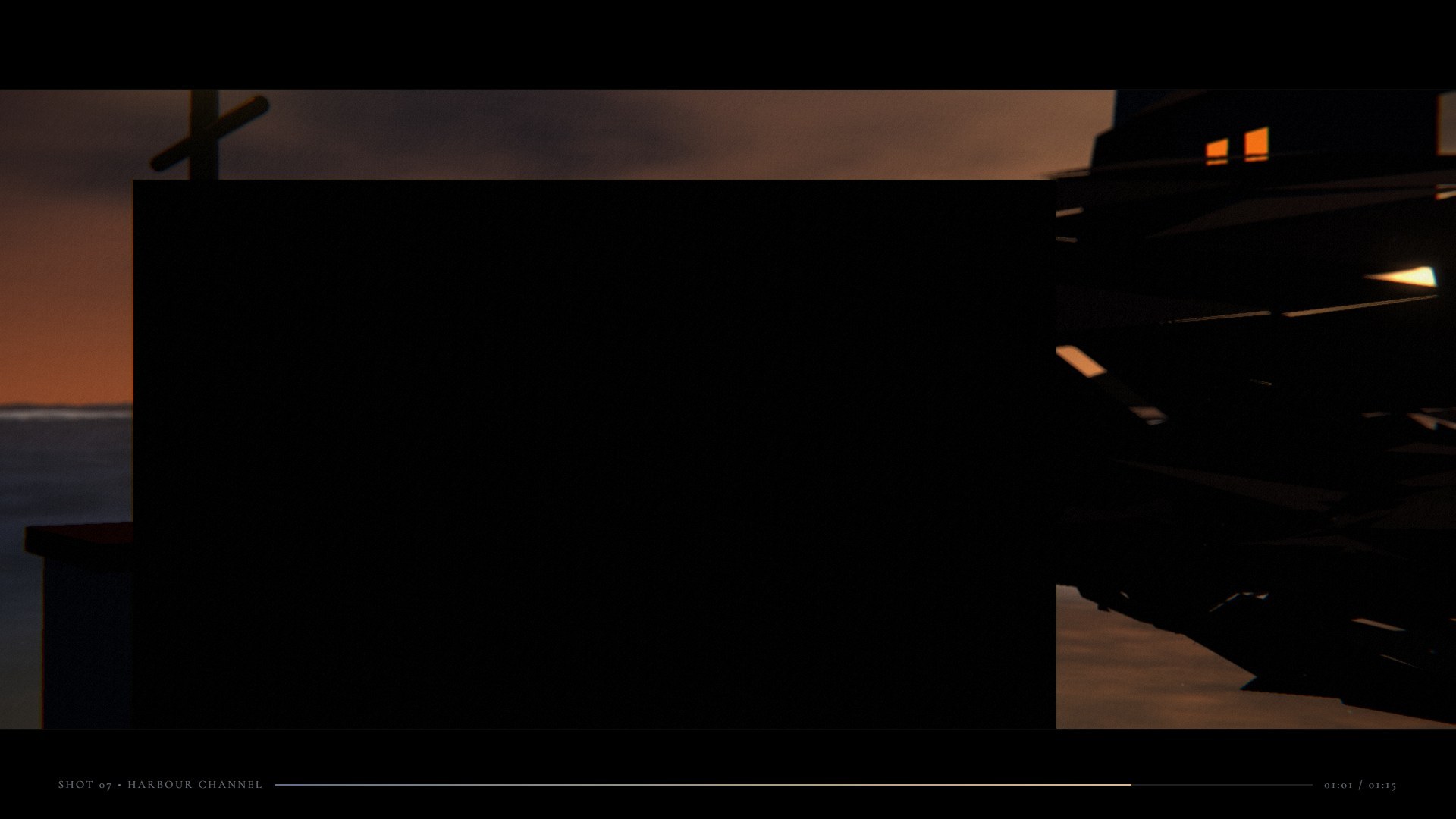
Opus’s version, after its own fix, is a quiet, low-detail sea with a boat, a small lighthouse and a sunrise at the end. Sol’s has a blocky sea, a boat in a storm, a close-up of the lantern, and a dawn. Both play cleanly from start to end, and the film is the one build where Argon is clearly behind.
Build four: the 3D car showroom
This is where Argon impressed me. A dark blue crossover sits on a turntable. I pick a red paint, I open the doors and the tailgate, I switch the wheels to a different style and I turn on a night city behind the car. Everything responds immediately, and the car has proper curves and a glowing light bar at the front. It was the cheapest of the six Argon builds, at 20 cents and about 20,000 output tokens.
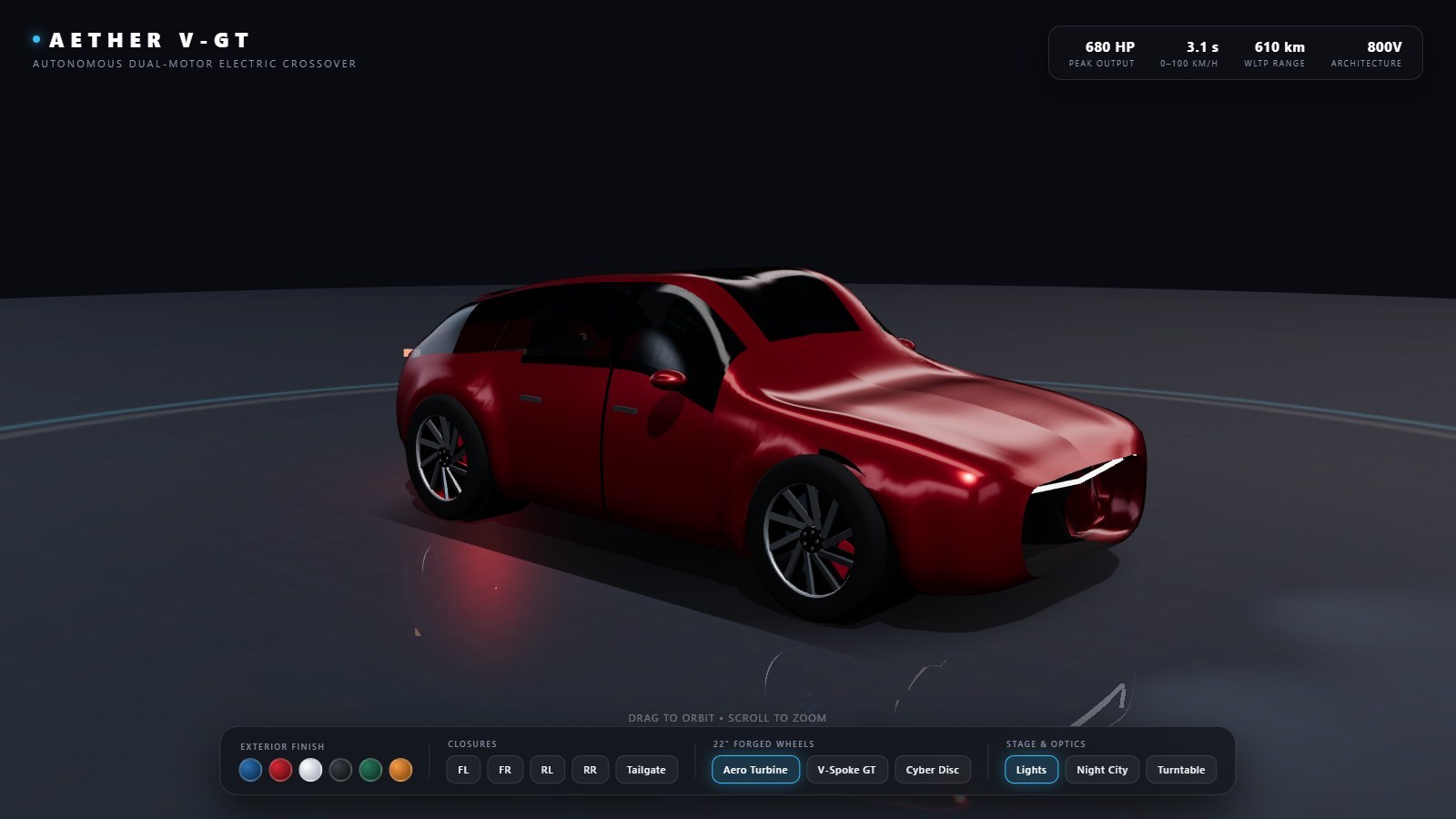
Opus and Sol both build cars that look like cars. Sol’s is bright and polished, almost like a real product page, and Opus’s has a dramatic dark stage. For me this is a three-way tie, and I would happily use any of them.
Build five: the driving game
Argon made a neon coast road called Pacific Outrun. I press any key, accelerate and take the curves. At high speed I hit the cliffs, and the game shows a Wiped Out screen with the distance driven, so the crash logic is there. The speedometer is a glowing ring, and the sun sits low over the sea. To play it for the video I used a small script that presses the keys like a player, reading the game’s own state; nothing in the game is changed.
There is a bug here too. The Wiped Out screen says to press Space or R to restart, but restarting throws an error in the page’s code and the game does not start again. Reloading the page fixes it. I only found it because I tried to restart after a crash, which is exactly what a player would do.
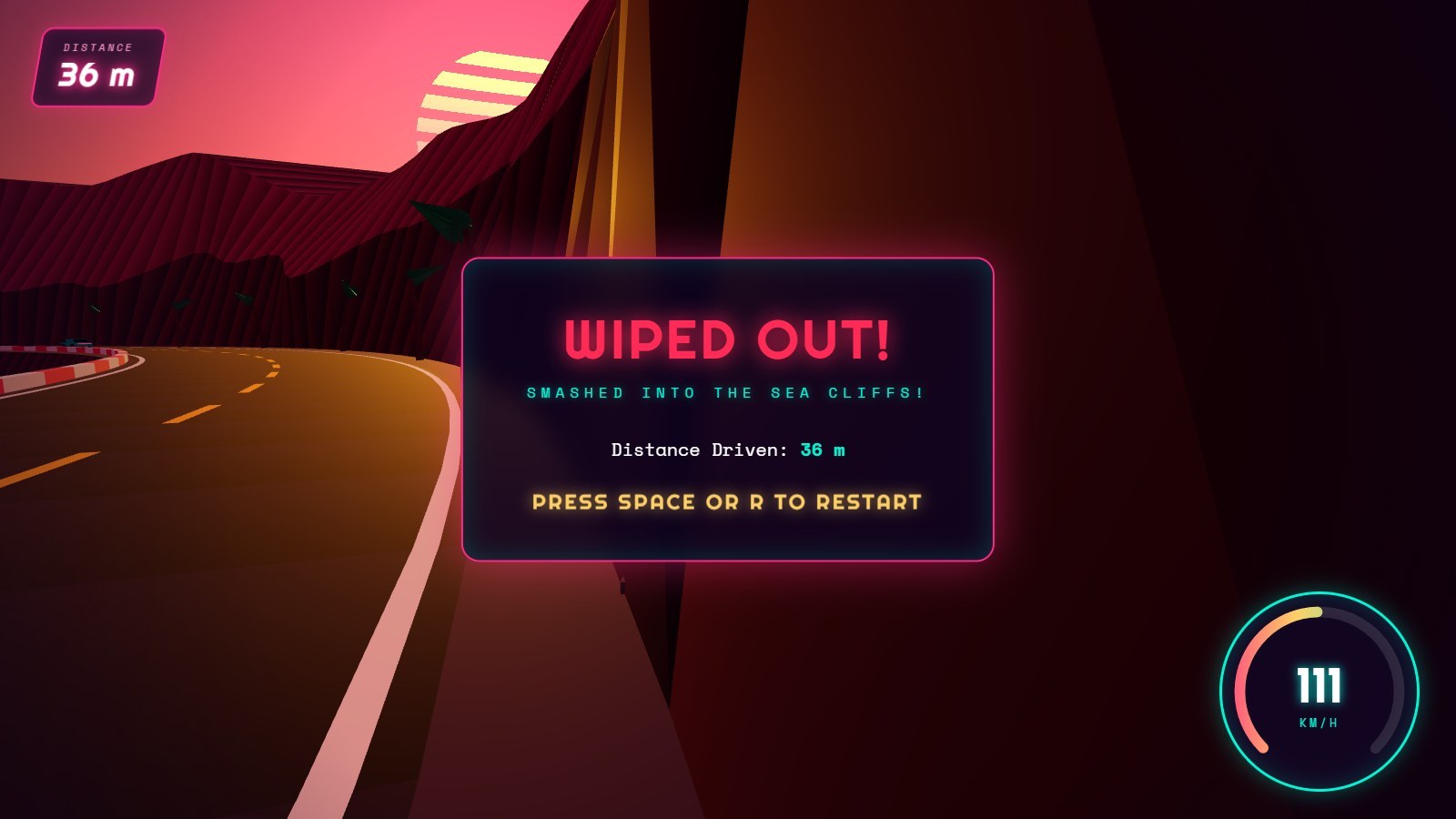
Opus and Sol add more scenery and a more realistic road, but as a game, all three work. If I wanted something to play for a minute, I would take Argon’s, because it has the strongest style.
Build six: the music studio
This one is hard, because it needs real audio code and live graphics. Argon’s PULSE studio has seven tracks, glowing steps, knobs, a button that composes a song and, this is the part that matters, a live oscilloscope and a spectrum that actually move with the sound. I press Generate song, then play, and the bars dance.
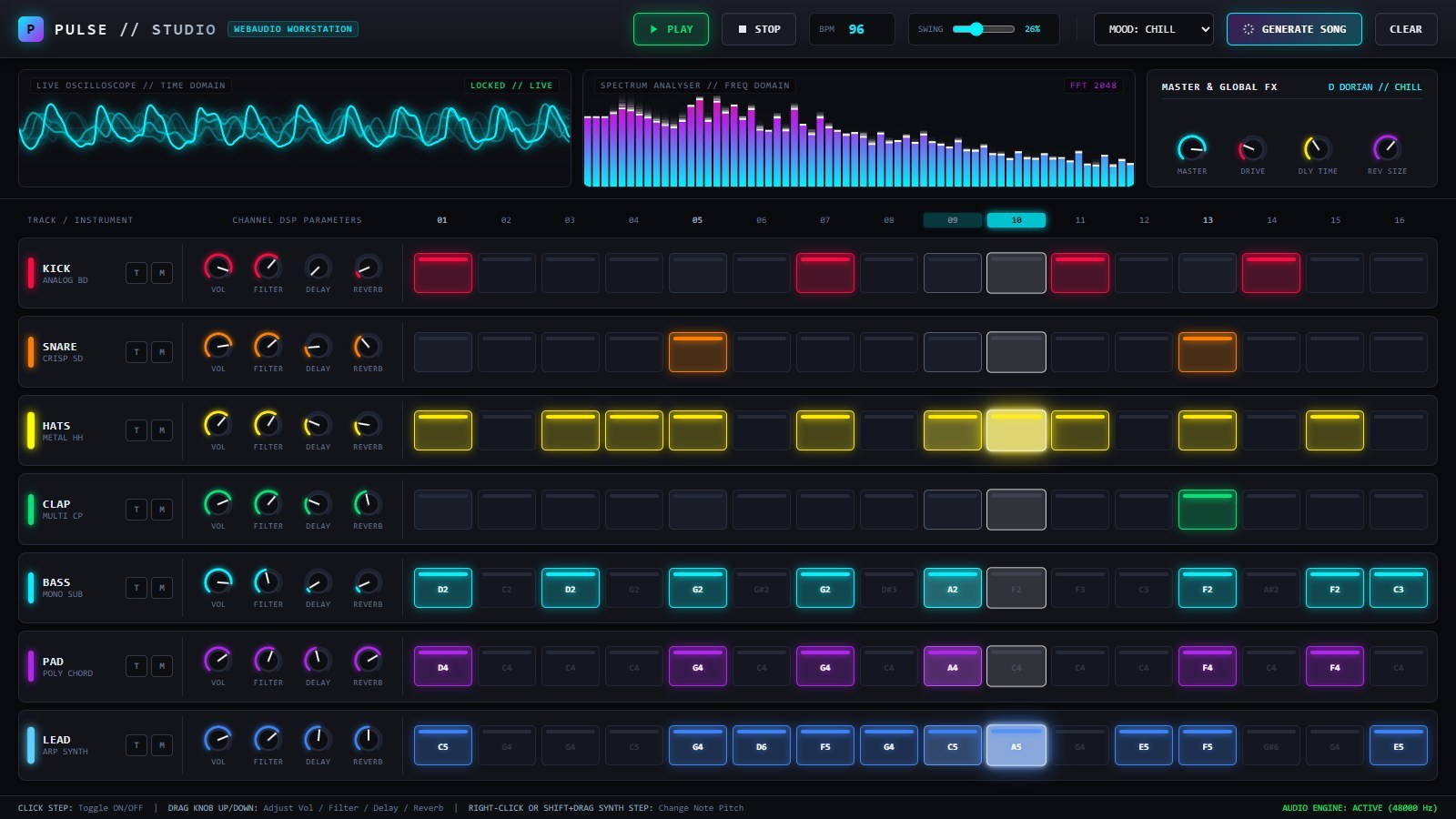
Opus’s Nebula Studio has both too, and so does Sol’s Nocturne. All three work. In an earlier test, a different model failed at exactly this step, so it is good to see all three get it right.
The verdict, and what it cost
So, my verdict. Five of Argon’s six builds ran as written, and the sixth needed one character and still has a visible bug. Its best builds are the car, the music studio and the driving game, and its weakest is the film. The question is how that compares: in the earlier test, Opus 5.5 needed two one-line fixes and Sol needed none. So Argon sits in the same group as the other two on this kind of work. I would not say it beats them. I would say it joins them, with the strongest visual style of the three.
Now the cost, which is the surprise. For all six builds, Argon cost 1.52 dollars. Opus 5.5 cost 2.70 dollars. Sol cost 77 cents. So Argon is in the middle, and Sol is the bargain. And remember that Argon’s price doubles on November 30, which would put it level with Opus on price.
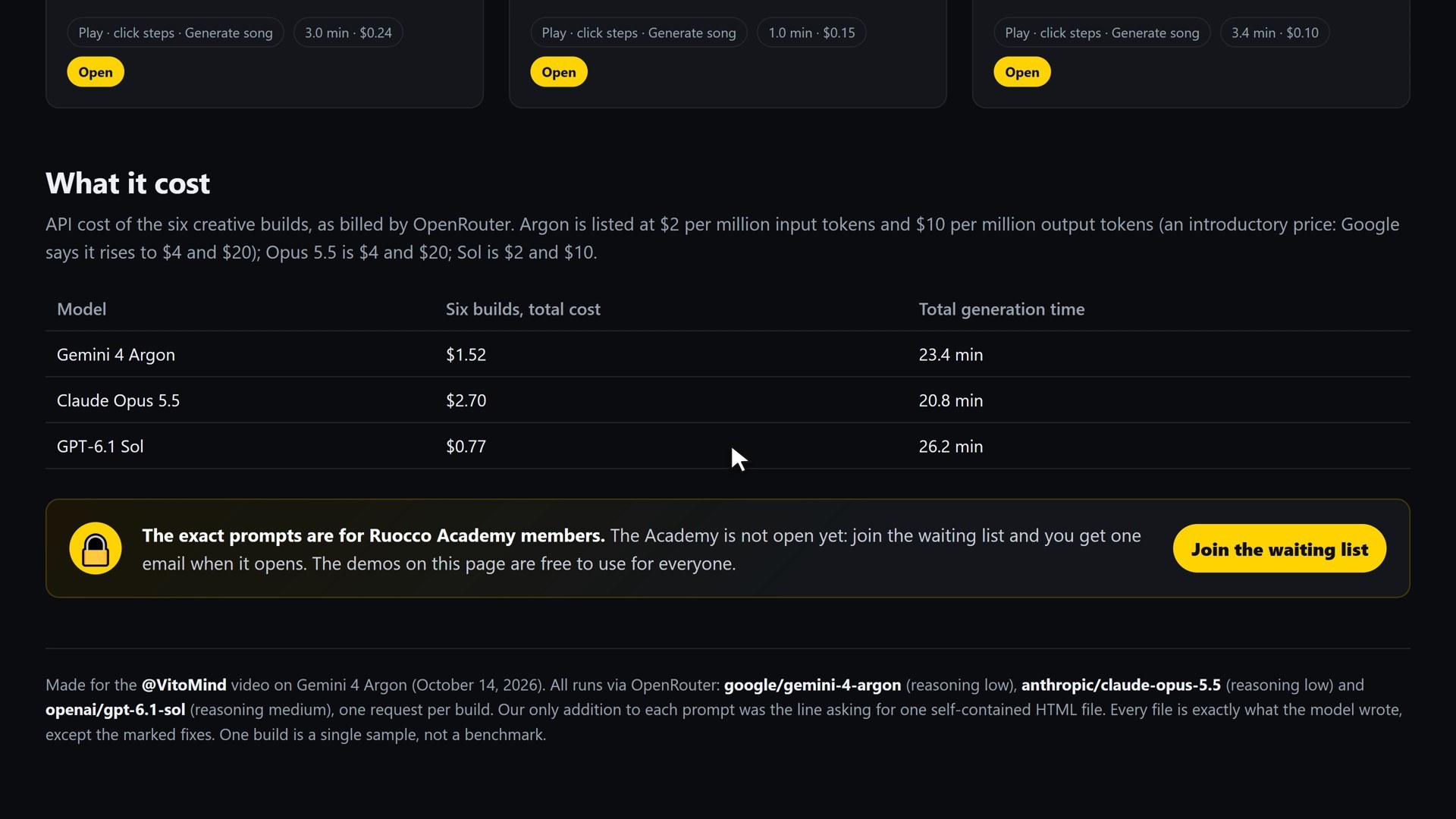
Time: Argon took about twenty-three minutes in total to write all six, Opus about twenty-one and Sol about twenty-six. So nobody is fast and nobody is slow. This is a single sample per build, so please treat it as a comparison you can click through, not as a benchmark. A different run could produce a different film, a different bug, or no bug at all.
So who wins? For me, none of the three runs away with it. What changes is that Google is now a serious option next to the other two, and for the next few weeks it is cheap.
Try every demo, and get the code
All eighteen builds are on my demo page. You can open every one in your browser right now, with no account: Gemini 4 Argon vs Opus 5.5 vs GPT-6.1 Sol: eighteen builds. The three models sit side by side for each prompt, with the cost and generation time on every card.
The exact prompts, with the model settings, the full code, the driving script and step-by-step instructions, are for the members of the Ruocco Academy. It is not open yet, so there is a waiting list on the page, and when it opens you will get an email.
Sources
- Google, “Gemini 4 Argon is now available for everyone” (October 13, 2026) and “Introducing Gemini 4 Argon” (September 30, 2026).
- TechCrunch, on Mistral Large 4 (October 6, 2026).
- Anthropic, Frontier Red Team, “AI models may be capable of self-replicating without access to a datacenter” (October 12, 2026).
- OpenRouter’s page for google/gemini-4-argon, for the listed prices.
A note on honesty
Every benchmark, customer example and safety claim attributed to Google comes from Google’s own pages and is presented as Google’s claim. Mistral’s benchmark results were still pending when I made the video, and its weights were not released. Anthropic’s post is a research warning, not an observed event. I left out rumors for which I could not find a primary source. My own results are one sample per build, run through OpenRouter, and the voice in the video is a synthetic clone of mine.
If you like videos where AI claims get tested instead of repeated, subscribe to @VitoMind on YouTube, and tell me in the comments which build you would play first.