Published: October 14, 2026 | By Vito Ruocco
This week artificial intelligence designed enzymes that do not exist in nature, found a single mutation among more than two thousand candidates in melon DNA, and OpenAI published a repository of 719 math manuscripts. I opened the real page behind every story, so you can see what is actually written there and what is not. Then I did the part I care about most: I gave three free models from OpenRouter and Claude Haiku 5.5 the same six creative-coding prompts and played all 24 builds. The cheap paid model won clearly, the free ones were rougher, and nobody managed the castle.
The Short Version
- Biology: AlphaProtein Novo is a real, downloadable pipeline for designing enzymes, but its page reports predictions, not lab results. BOTANIC-1 is the stronger story: a small specialized model that put the true melon mutation in first place out of 2,494 candidates.
- Open tools you can run: WorldPlay 2 (an interactive world model with compressed memory), Kandinsky 6.0 (open video with synchronized sound, MIT license), Iris-3B (a pixel-space image model), Qwen-Image 2.1 Turbo (fast, but research-license only), MSFlow and TERRA (human motion).
- Math, read carefully: OpenAI’s repository holds 719 manuscripts in 372 families. About 42 percent of the top-line results are formalized in Lean. The README itself says some of the rest could have issues.
- The test: Claude Haiku 5.5 got five of six builds to run for about 18 cents. Dots3-Note Preview also got five of six, one only after a repair. Laguna S 2.1 got four. Nemotron 3.5 Lightning produced almost nothing usable.
- Free is not zero: the free endpoints cost no money, but they took longer, hit rate limits and needed repair attempts. And they may keep and train on your prompts.
How I Wrote This
Every number in this article was re-read on the project’s own page. I started from a long weekly AI roundup published a few days ago, used it only as a list of things to look at, and checked each item. Several figures that circulate in summaries did not survive that check, and I say where. I also dropped items I could not verify, and added three the roundup did not cover. Where a number comes from a company about its own model, I say so, because a company grading its own work is not the same as a test you can repeat.
Biology: Two Tools From Google DeepMind
AlphaProtein Novo: designing enzymes from scratch
An enzyme is a protein that speeds up one specific chemical reaction. When a company needs an enzyme for a reaction nature never bothered to optimize, the usual route is to start from a natural enzyme and modify it through many rounds of experiments. AlphaProtein Novo tries a different route. You describe the small cluster of atoms that performs the chemistry, called a catalytic motif, and a diffusion model builds a whole protein structure and amino-acid sequence around it. The pipeline can then redesign the sequence with LigandMPNN and fold it with AlphaFold 3 to check whether the shape comes out right.
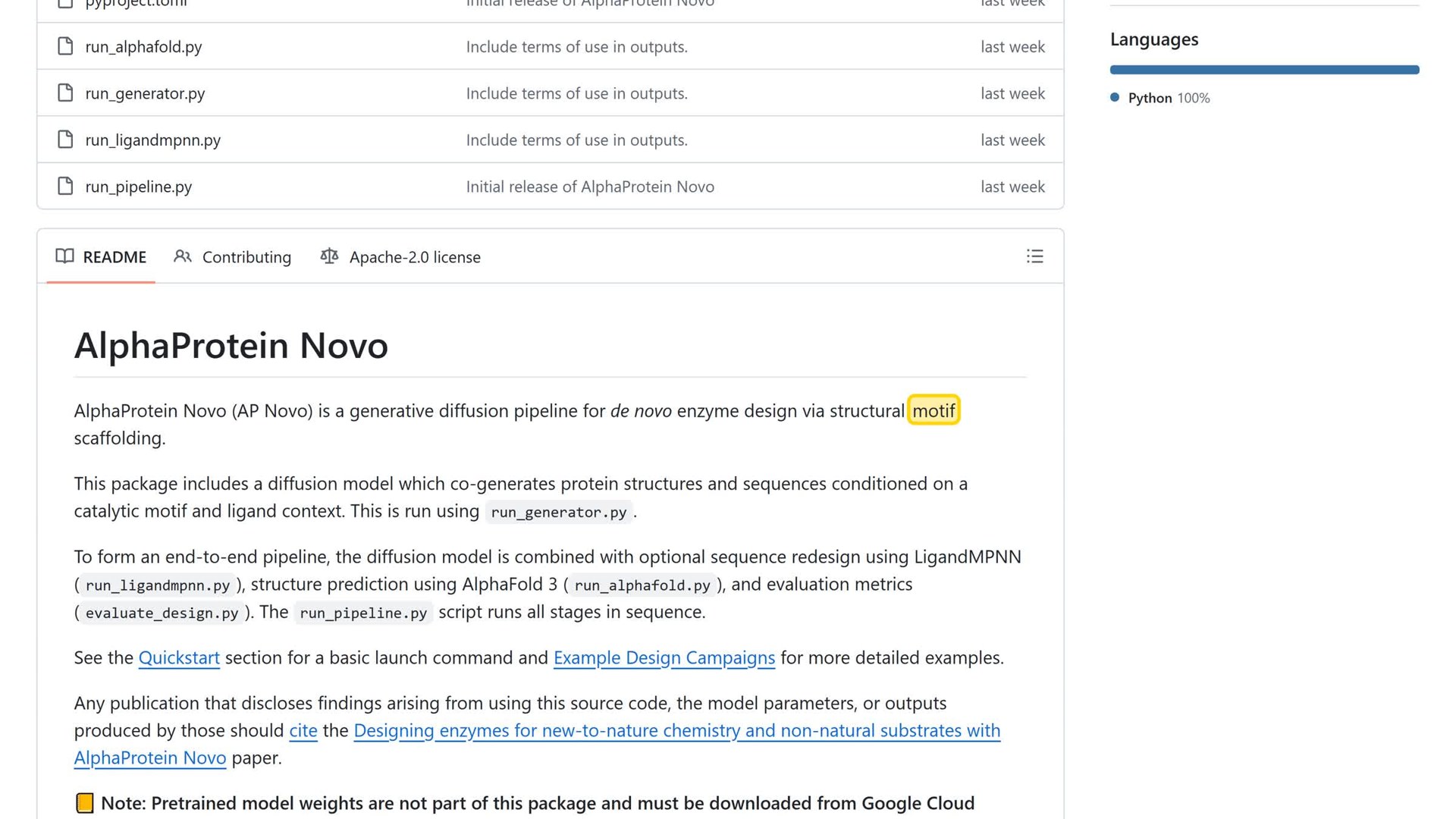
The README names example designs for two jobs: a nitrene-transfer reaction and the breakdown of DEHP, a plastic additive. Here is the careful part. The page reports no wet-lab results. It says the outputs are predictions that should be interpreted carefully, and the paper is a bioRxiv preprint, so it has not been peer reviewed. The code is licensed under Apache 2.0, the model weights are under separate terms of use, and the page states it is not an official Google product. So this is a real tool you can read and run, and the proof that these enzymes work in a test tube is still to come.
BOTANIC-1: a short list instead of a haystack
The second DeepMind release is the one I find more convincing, because it comes with an example you can follow. A melon plant carries a mutation that changes its flowers from female to hermaphrodite. Classic genetic mapping narrowed the search to 3,061 candidate variations on one chromosome. An agent built on a small Gemma 4 model, running on a single NVIDIA L4 graphics card, filtered out 567 insertions, deletions and rearrangements and scored the remaining 2,494 single-letter changes with BOTANIC-1, a model pre-trained on the DNA of 320 plant species. The validated mutation, in a gene called CmEIN3, came out ranked first of 2,494.
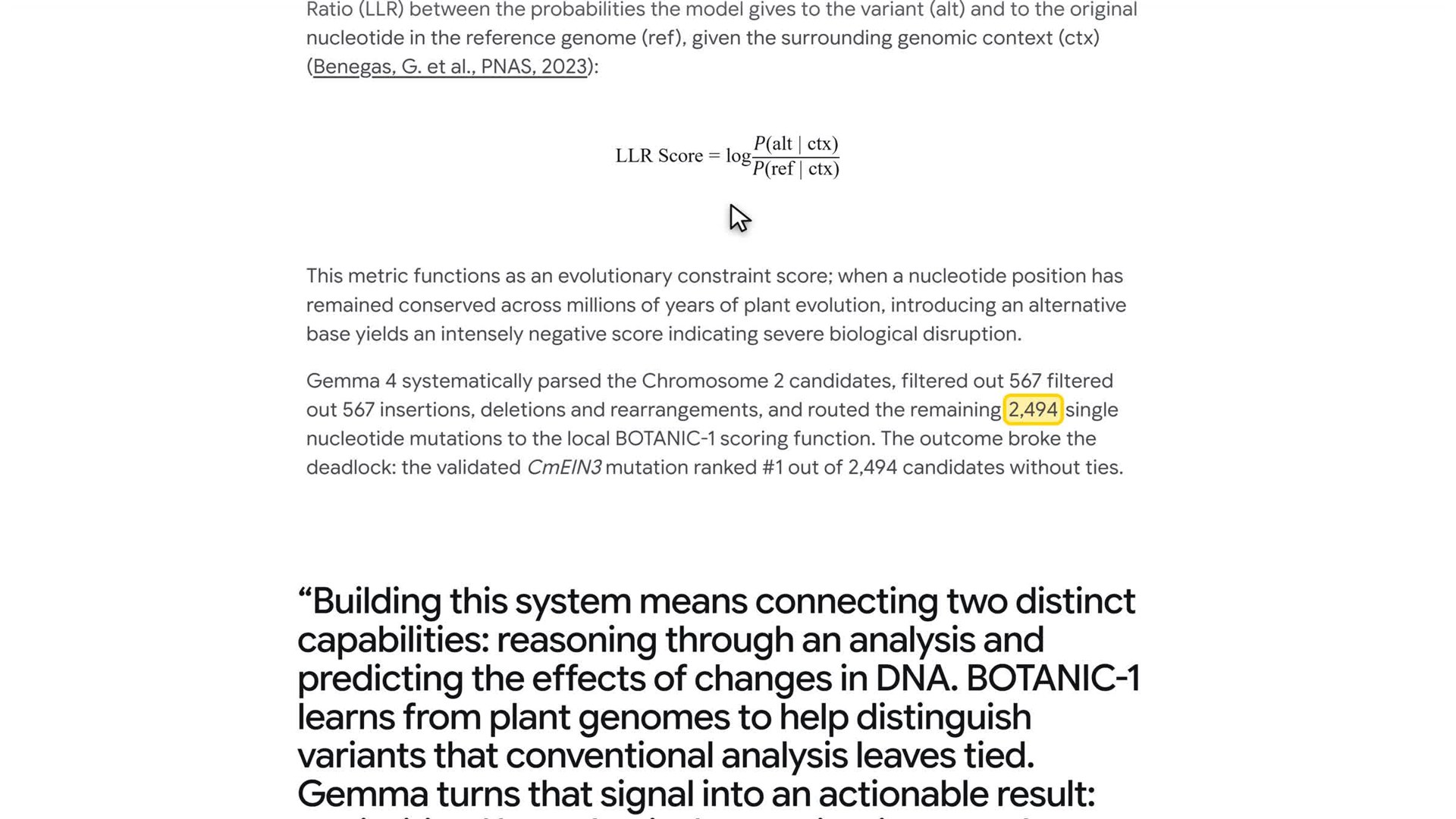
The page reports a first-place hit rate of 0.90 across 20 runs for the Gemma 4 plus BOTANIC-1 setup, against 0.00 for Gemma 4 on its own and 0.15 when an expert guided it. Across more than 500 experimentally validated plant mutations, BOTANIC-1 placed the causal one in the top 0.1 percent of the ranking 15.9 percent of the time, against 4.6 percent for the best baseline, and in the top 1 percent 48.8 percent of the time, against 33.9 percent for classical pipelines. All of that is DeepMind measuring its own model, but the idea is sound: a small model that has learned which parts of plant DNA stay constant through evolution turns a needle-in-a-haystack search into a ranked short list.
Open Tools You Can Run Yourself
WorldPlay 2: a world that remembers
WorldPlay 2 is an interactive world model: it generates a place you can move around in, in real time, and reacts to controls. Two things set it apart on its project page. First, a compressed memory: it folds past frames into much shorter sequences, about 32 times shorter, so that when you walk away and come back, the world is still the same. The page shows a snail that wanders off and returns to the same garden. Second, you can add events and characters by text description while you explore.
What the page does not give is numbers. There are demo videos but no metrics, and it does not state the model size, the base model or the license. The code link points to a GitHub repository, so check that before you plan anything serious.
Kandinsky 6.0: open video with sound
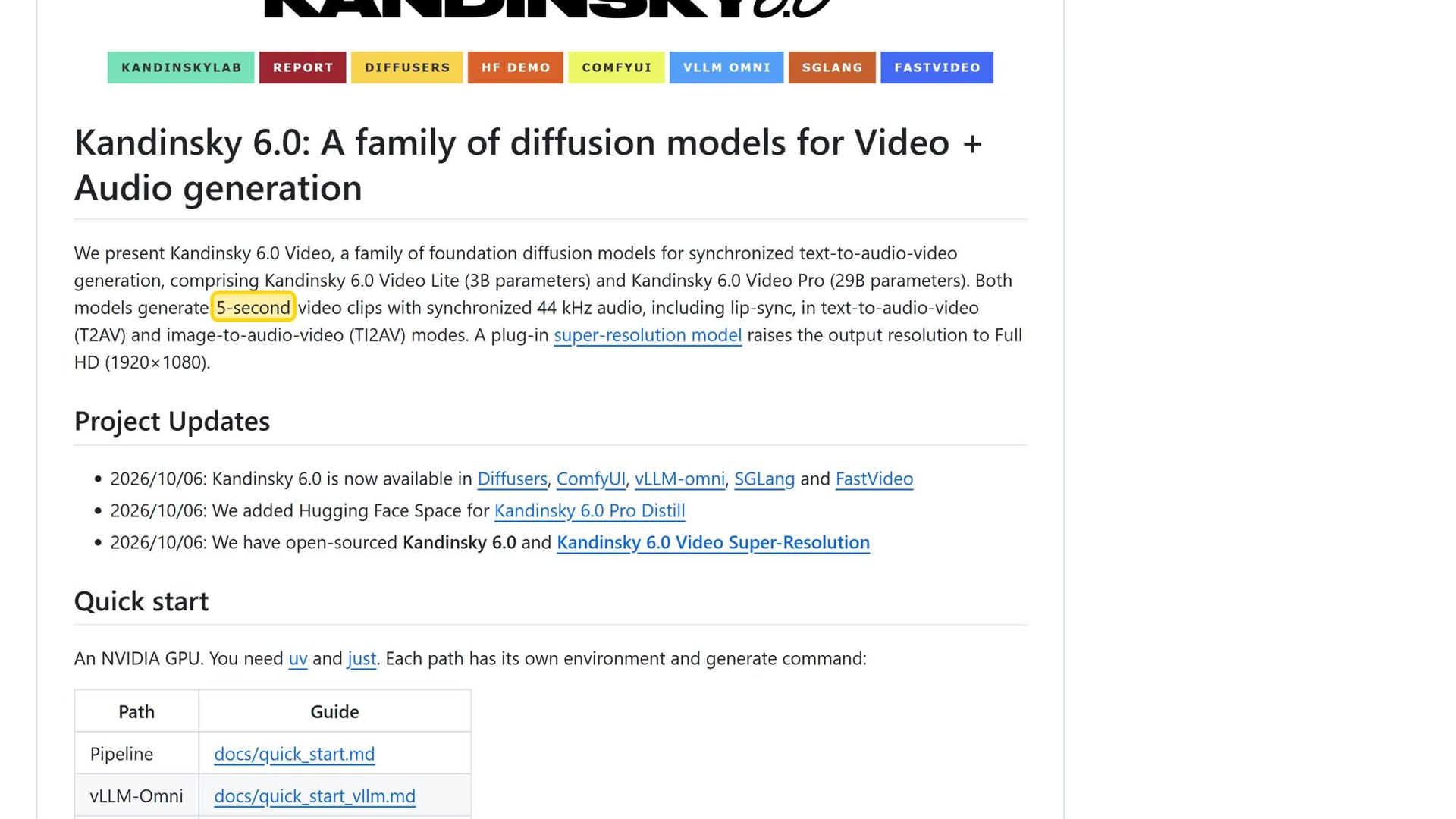
Kandinsky 6.0 comes in two sizes, a 3-billion-parameter Lite and a 29-billion-parameter Pro, with a distilled Pro variant as well. Both generate five-second clips, and both generate synchronized 44 kHz audio including lip-synced speech, from text or from an image. A separate plug-in model upscales the result to Full HD. The repository is MIT-licensed, which is as permissive as it gets.
The most honest part of the page is the speed table. A five-second Lite clip takes about 203 seconds on an H100 data-center card, while the Pro model at Full HD takes about 1,247 seconds, more than 20 minutes, on an RTX 4090. Open video is getting good, but on consumer hardware it is still a patient workflow.
Two image models
Iris-3B is a 3-billion-parameter flow-matching transformer that skips the compression step most image models rely on: instead of working in a compressed latent space with a VAE, it draws the pixels directly, in 16 by 16 patches. Its text encoder is a frozen Qwen3-VL-4B, and there is a 4-step Turbo version. On the project’s own benchmark table it sits behind much larger models such as a 20-billion-parameter Qwen-Image, for example 0.798 against 0.87 on GenEval. That is the honest trade for a small model, and it is trainable on modest hardware.
Qwen-Image 2.1 Turbo is a 7-billion-parameter model that generates an image in 8 denoising steps instead of around 40. Here is the catch most headlines skip: its license is the Qwen Research License, not Apache. Free to try, not free to sell.
MSFlow and TERRA: human motion
MSFlow turns a text description into human movement, and the useful trick is control: it supports pinning any joint at any frame through projection sampling, with no control-specific training, so you can say where a hand must be and it builds the rest of the motion around that. TERRA from EPFL goes a level deeper. Instead of driving a character’s joints directly, it simulates muscles pulling on bones and trains one muscle-actuated policy on about 9.4 hours of a locomotion library, to walk across ramps, stairs, stepping stones and beams, with separate fine-tuned policies for four parkour motions.
The Math Story, Read Carefully
OpenAI’s math repository is the story that got the most attention this week, so it deserves a slow read. The repository contains 719 manuscripts, grouped into 372 families, produced by an unreleased internal model. The model was given about 4,000 problems, and on average each result used about three hours of ChatGPT Pro compute.
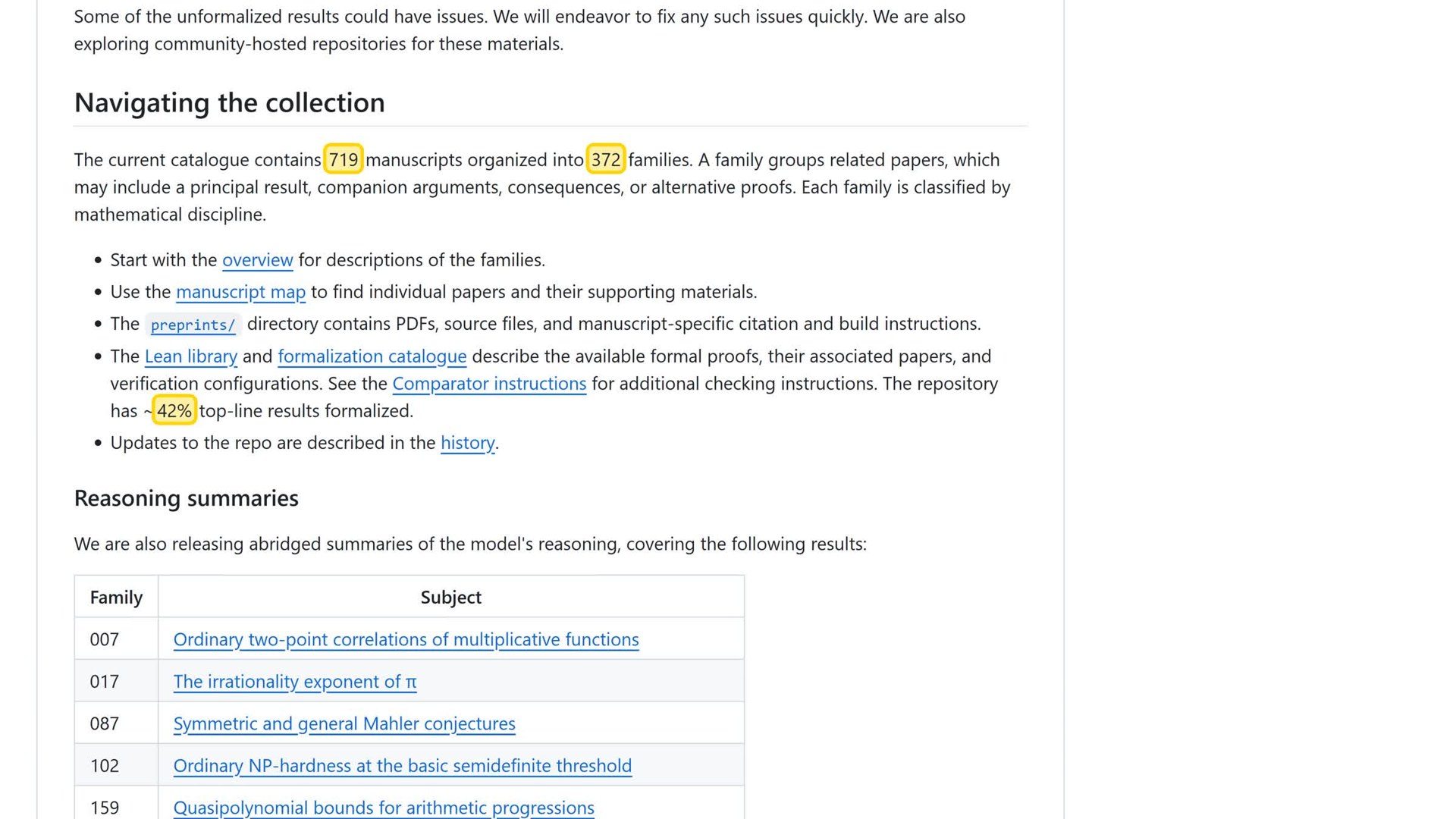
The number that circulates in some summaries is the share of results that are machine-verified. The README says about 42 percent of the top-line results are formalized in Lean, a proof language that a computer can check. It also says, in plain words, that not all results have accompanying Lean formalizations and that some of the unformalized results could have issues. So this is not 719 proven theorems. It is a large batch of claims, some already machine-checked and many waiting for mathematicians to read them. That is still remarkable as a scale of output, and it is exactly why the careful reading matters.
A materials-science experiment with the same caveat
The same caution applies to a post from Vals AI, which used a team of Claude Opus 5.5 agents to search for a particular kind of material: an antiferromagnetic semiconductor in which the magnetic effects cancel out, so bits can sit close together without interfering, but where electrons with different spins still behave differently, so the bit can be read. The agents proposed two candidates. One, YBaMnFeO5, is a new compound they designed, but it needs the manganese and iron atoms to sit in a perfect checkerboard, and the simulations show that order breaking down around 950 kelvin, so real synthesis would likely give a scrambled crystal. The other, KV[Cr(CN)6], a cyanide-based compound first made in 1999, stayed magnetically ordered up to 376 kelvin, about 103 degrees Celsius, in that old sample.
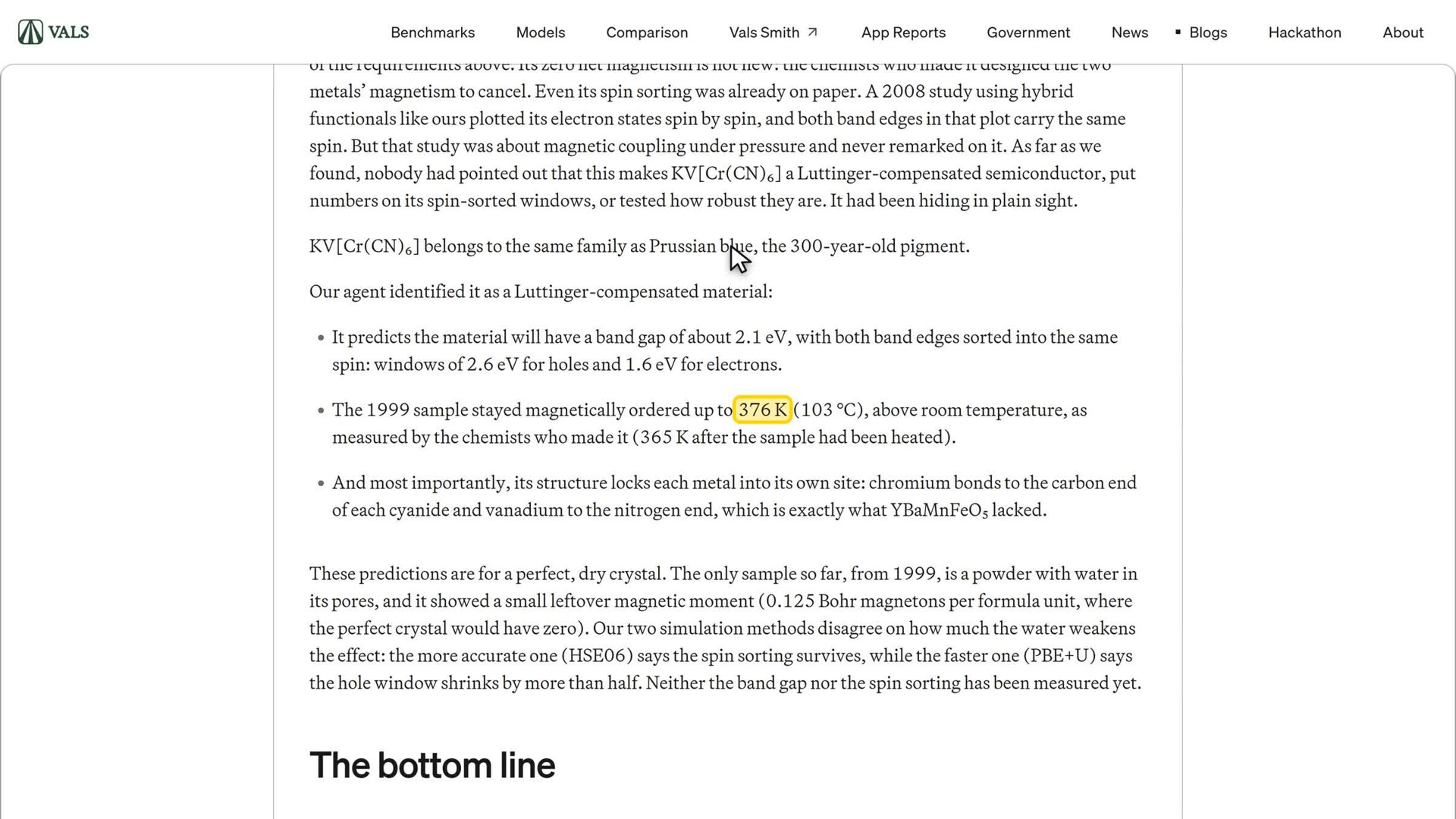
Everything in the article is density-functional simulation. The authors state that neither the band gap nor the spin sorting has been measured, and they publish the inputs and code in a public repository. It is a nice example of agents finding something useful in old literature, with a clear label on how far it has been confirmed.
Three Models and a Language-Model Oddity
Claude Haiku 5.5
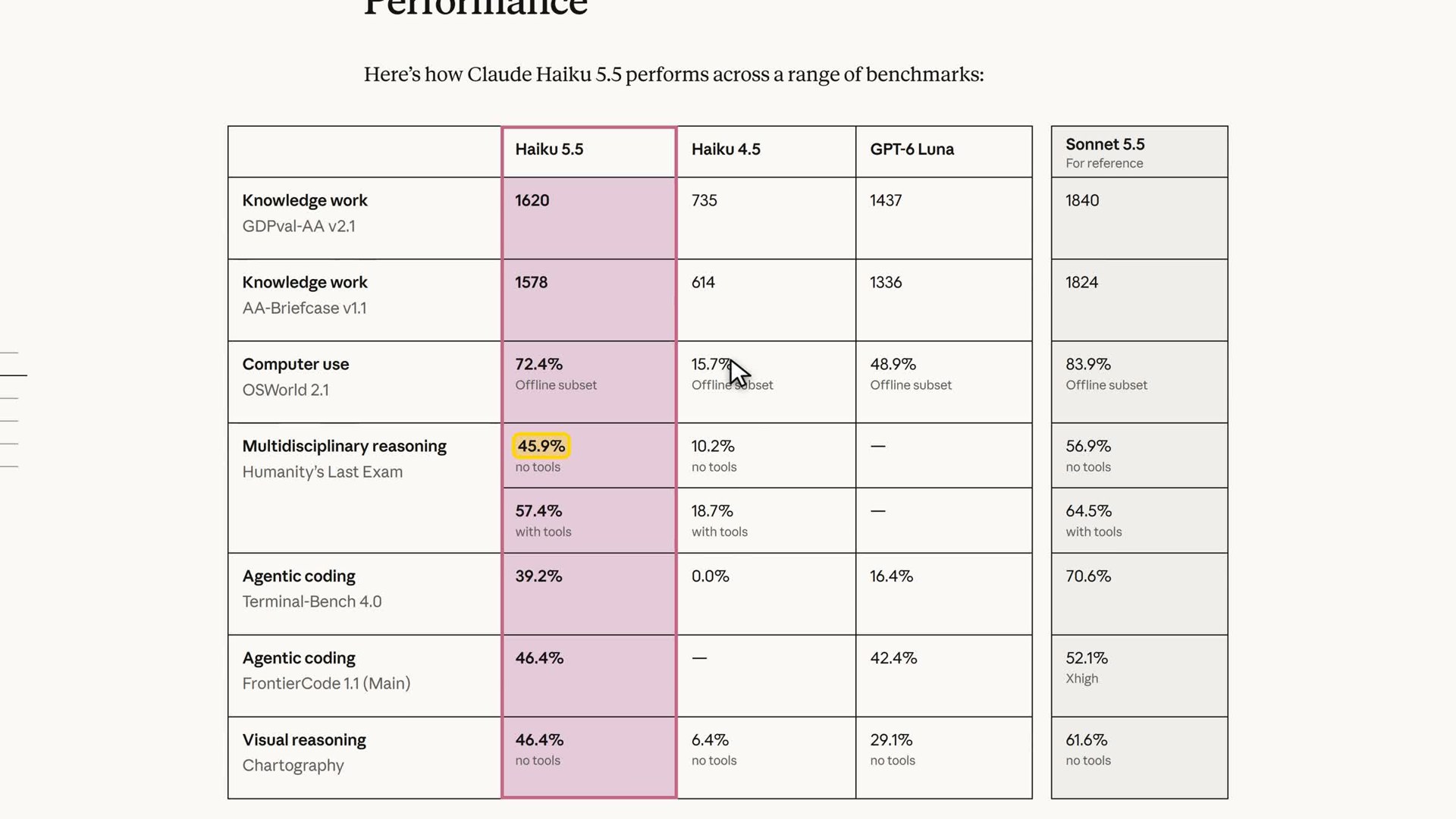
Claude Haiku 5.5, released on October 7, costs $0.10 per million input tokens and $0.50 per million output tokens for prompts up to 100,000 tokens, a tenth of the price of Haiku 4.5. Anthropic lists 45.9 percent on Humanity’s Last Exam without tools, up from 10.2 percent for the previous Haiku, and 72.4 percent on an offline subset of OSWorld 2.1. It is also the first Haiku with an adjustable effort setting, which matters a lot in the test below.
Reflection Beam
Reflection AI announced Beam on October 5: 501 billion parameters in total, 23 billion active per token, text only, with Apache 2.0 weights promised later in October. Right now it is a waitlist. Many cells in Reflection’s benchmark table are marked not reported, the compute comparison is described as approximate, and the company itself says Kimi K3 remains ahead on raw capability. Its pitch is efficiency: reasoning scores comparable to GLM-5.2 with three to four times less inference compute. I will believe it when the weights are out and someone independent has run them.
Microsoft Decision-1
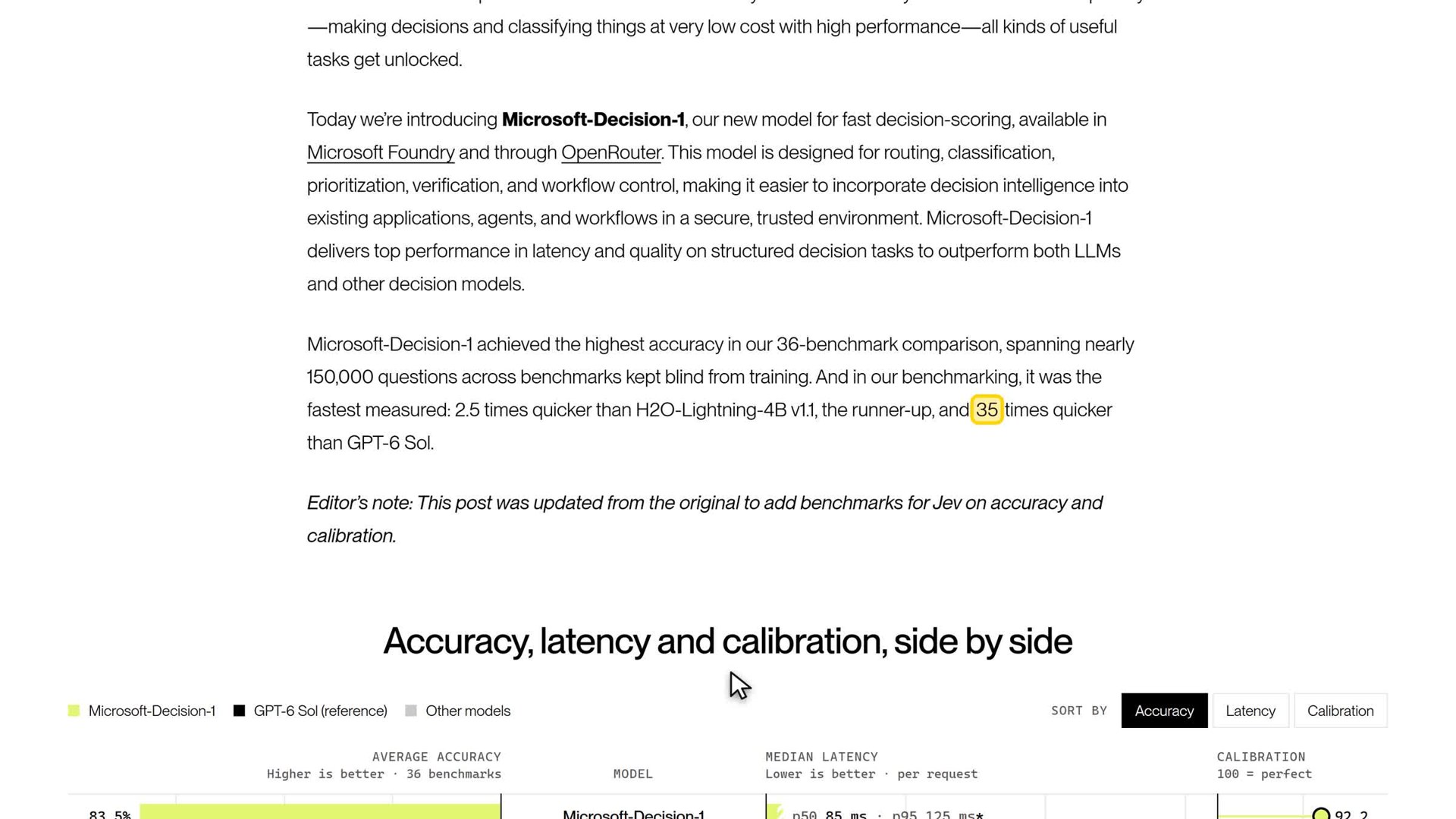
Microsoft-Decision-1 does not write text. Built by post-training Qwen3.5-9B, it takes a situation and a fixed list of answer options and returns a calibrated probability for each, which is useful for routing, classification, grading and safety checks. Microsoft says it achieved the highest accuracy in its own 36-benchmark comparison and is 35 times quicker than GPT-6 Sol. It is available in Microsoft Foundry and through OpenRouter at $0.042 per million input tokens, with free output tokens. The page does not say whether weights are released, and the benchmark numbers are Microsoft’s.
Amazon ALoDLM
Amazon’s ALoDLM is a diffusion language model that does not write strictly left to right. It drafts several tokens in parallel and loops shared layers to refine the unresolved ones, with a learned halting policy. At 8 billion parameters it averages 80.3 across eleven benchmarks against 78.5 for Qwen3-8B, which it was initialized from, and the 1.7-billion version averages 65.5 against 63.8. The weights are released under CC BY-NC 4.0, so for non-commercial use only.
The Test: Three Free Models Against Haiku 5.5
News is easy to read. The real question is what the models can do. So I picked the newest free models on OpenRouter that I could use without bending any rule: Dots3-Note Preview from Dots Studio, Laguna S 2.1 from Poolside, and NVIDIA Nemotron 3.5 Lightning. As a paid reference I used Claude Haiku 5.5. All four got the same six short prompts, one request each: a 60-second animated life, a voxel castle school, a short film, a 3D car showroom, a driving game and a music studio. The same six prompts I used in an earlier head-to-head of Opus 5.5 and GPT-6.1 Sol. The only thing I added to each prompt was the line asking for one self-contained HTML file.
Two rules made this fair and honest. Every file is exactly what the model wrote, with no hand edits. And when a file did not load in the browser, the model got one repair attempt: its own file back plus the browser’s error message, once. Those builds are labelled “second attempt” in the gallery. All 24 builds are on one page, and everything runs in your browser with no account:
A note on what “free” means
Some of the models I wanted to use were not usable honestly. Nemotron 3 Ultra refuses to run unless you allow free endpoints that may publish prompts, and Thinking Machines’ Inkling is limited to agentic harnesses, so I did not use either. For the three I did use, OpenRouter requires you to allow free endpoints that may retain and train on your prompts, so I sent only these public demo prompts and nothing private. Free endpoints also share an upstream pool: Laguna answered HTTP 429, too many requests, many times, and one of its repairs never completed. Liquid’s new 24-billion-parameter model was another candidate, but its endpoint caps output at 8,192 tokens and always reasons, which is too small for builds like these.
Prompt 1: a human life in 60 seconds
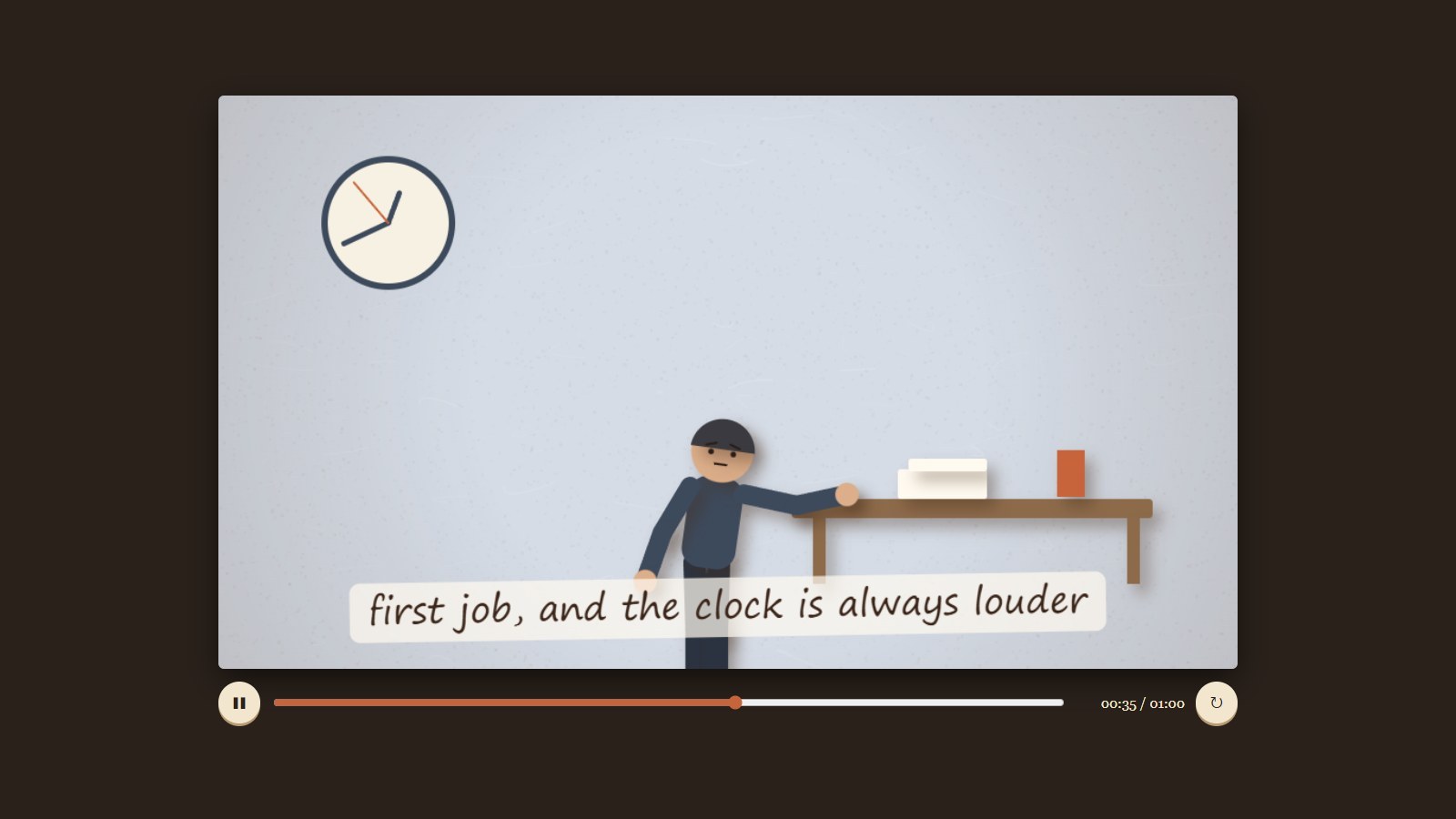
Haiku’s version is the only one that looks like a finished short: paper-cut scenes, a wall clock and a caption for each stage of life. Laguna draws a tiny figure on a flat background with captions, and it plays. Dots gives a stick figure at a desk with a timeline. Nemotron’s file did not load; after its repair it opens but the stage stays empty.
Prompt 2: the voxel castle
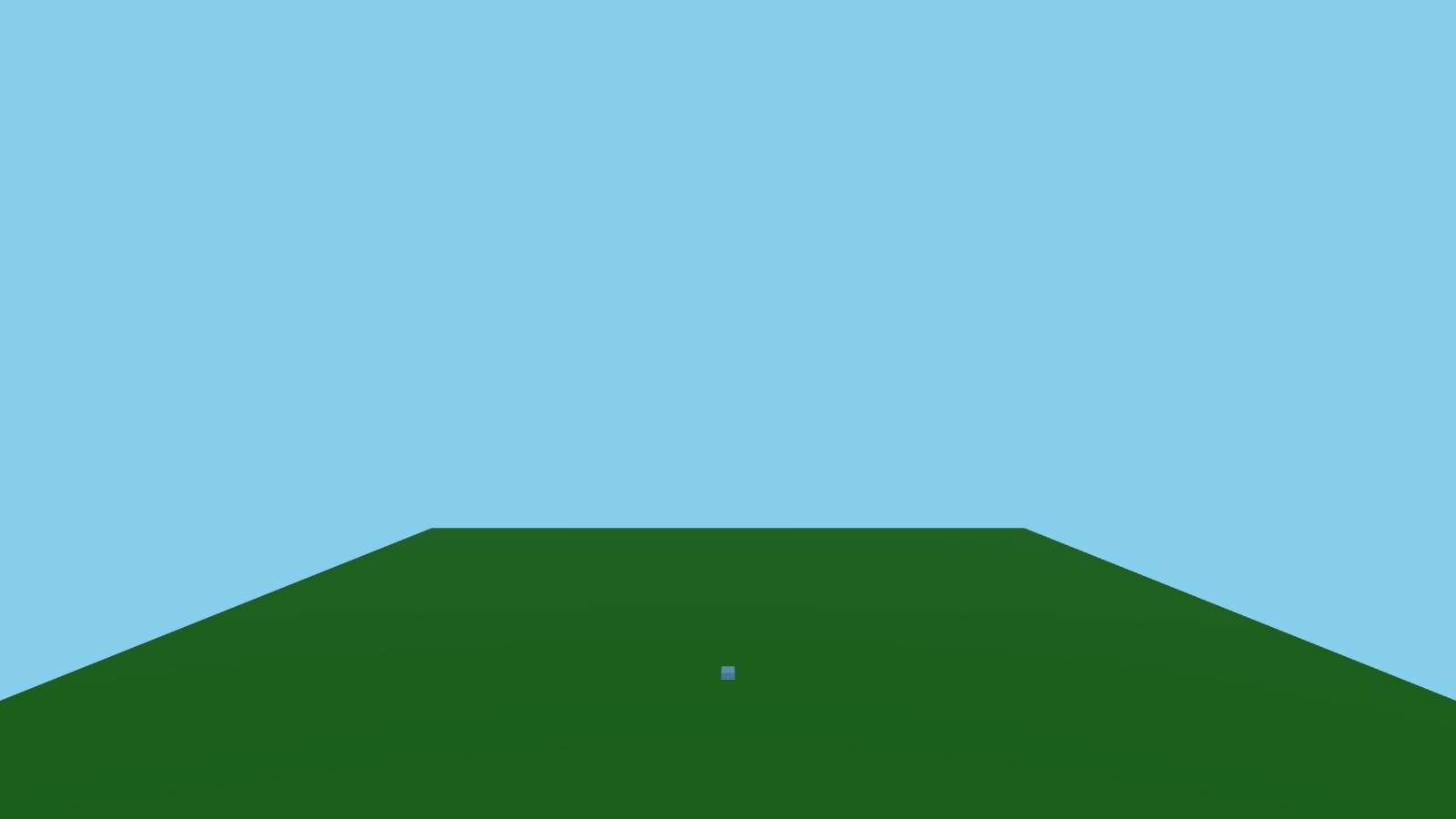
This is the hardest prompt: thousands of instanced blocks in 3D, a day and night cycle, a fly camera. Nobody delivered it. Laguna’s runs but shows a green field and a blue sky, with no castle. Haiku’s loads, shows its title and then draws only a black screen, with no error in the console. Dots crashed with an error, and its repair crashed with a different one. Nemotron’s repaired file loads and shows a dark blue screen.
Prompt 3: the short film
“The Last Lighthouse” is a 75-second film written in code, with a storm, a sweeping beam and a boat fighting its way to the harbour. Haiku’s is clearly the best: a stormy sea, lightning and a small boat with a lamp. Dots makes an abstract night sky of drifting particles. Laguna’s crashes. Nemotron’s repaired file shows a title and one Play button.

Prompt 4: the car showroom
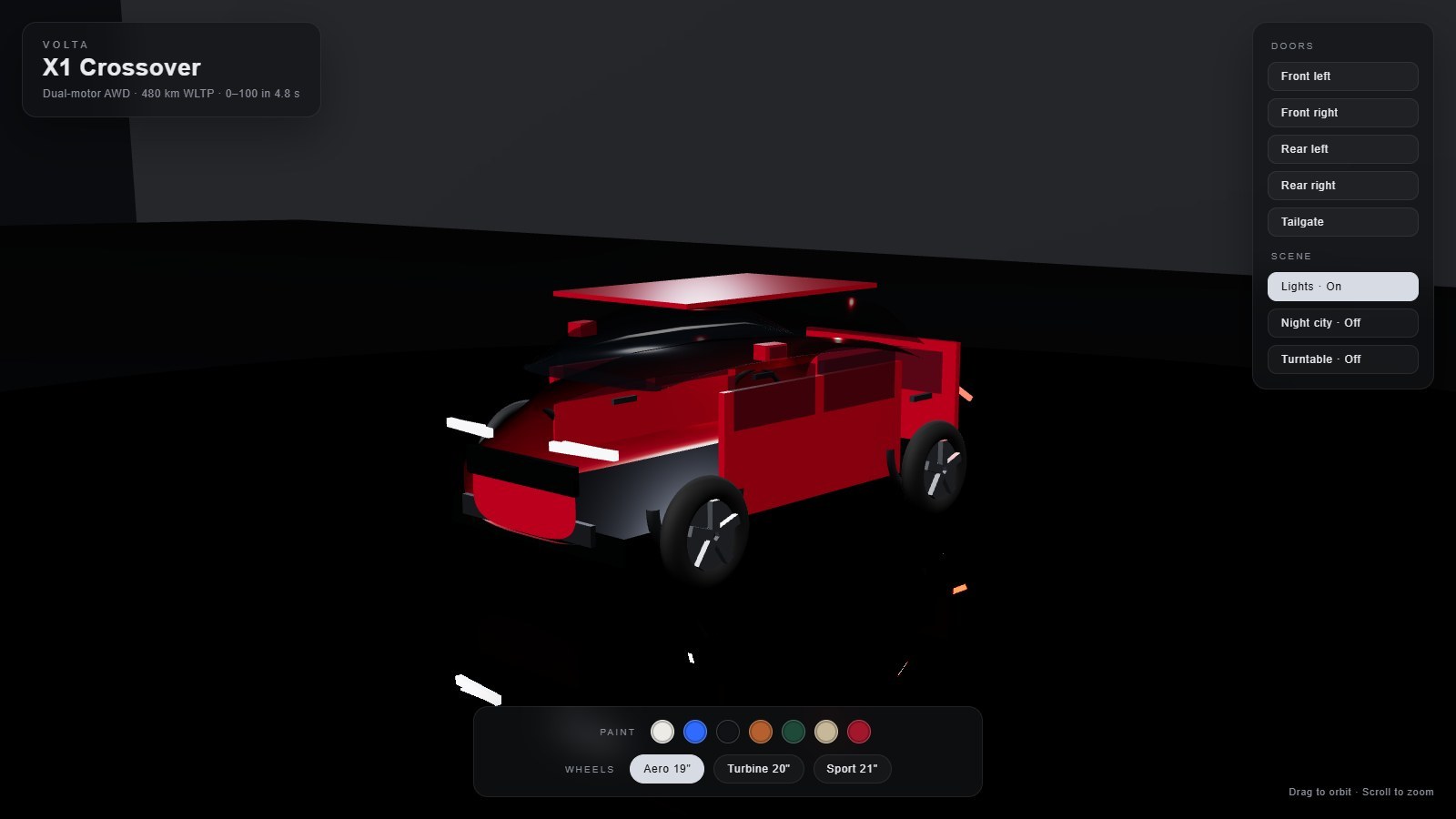
Haiku’s crossover is a real showroom: I changed the paint to red, opened a door and the tailgate, and switched the wheels. Dots’s car loads but is almost black against a white sky. Laguna’s fails because it never told the browser where to find Three.js, and its repair repeated the same mistake. Nemotron’s repaired file shows the buttons but draws no car.
Prompt 5: the driving game
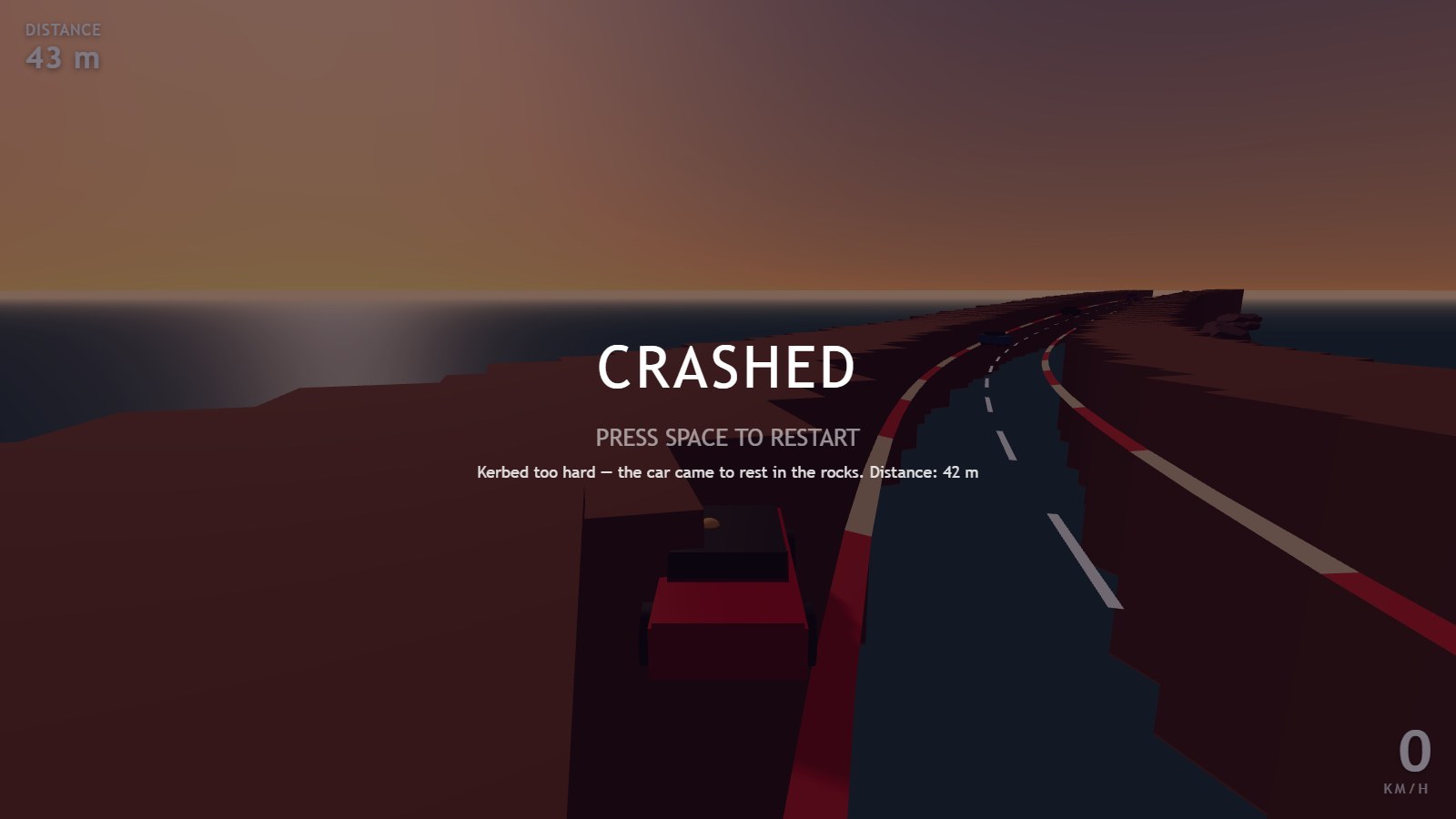
Haiku’s game puts a car on a cliff road at sunset with a speedometer, and it runs. Laguna’s is playable but crude, drawn in flat coloured blocks. Dots’s first file did not load; its repaired file runs, also crudely. This is where the effort setting matters: at low effort, Haiku spent the entire 60,000-token output cap on reasoning, twice, once for the car and once for the driving game, and returned nothing. With reasoning turned off it finished each in about a minute and the builds above are those.
Prompt 6: the music studio
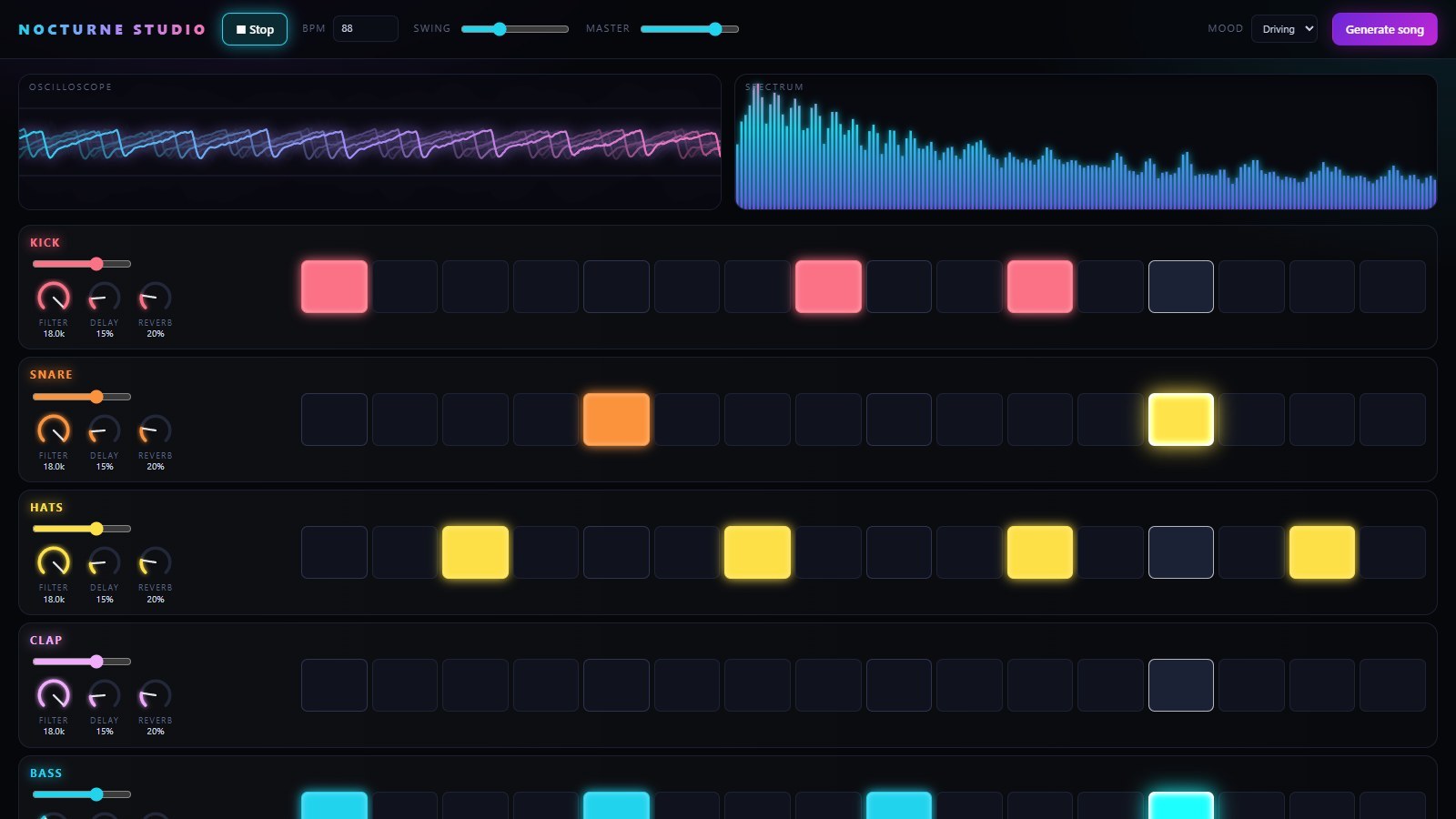
This is the one where the free models did well. Haiku’s studio has an oscilloscope, a spectrum analyser and glowing steps. Laguna’s has a Generate song button, and Dots’s gives you a clickable grid with mood buttons that fill it in. Nemotron’s did not work, even after its repair.
Verdict and Cost
Claude Haiku 5.5 delivered five builds that run, and all five look finished. The only miss was the castle. Dots3-Note Preview also got five to run, but one only after a repair, and they look rough next to Haiku’s. Laguna S 2.1 got four to run. Nemotron 3.5 Lightning, the newest of the free models, gave me almost nothing usable, even after repairs.
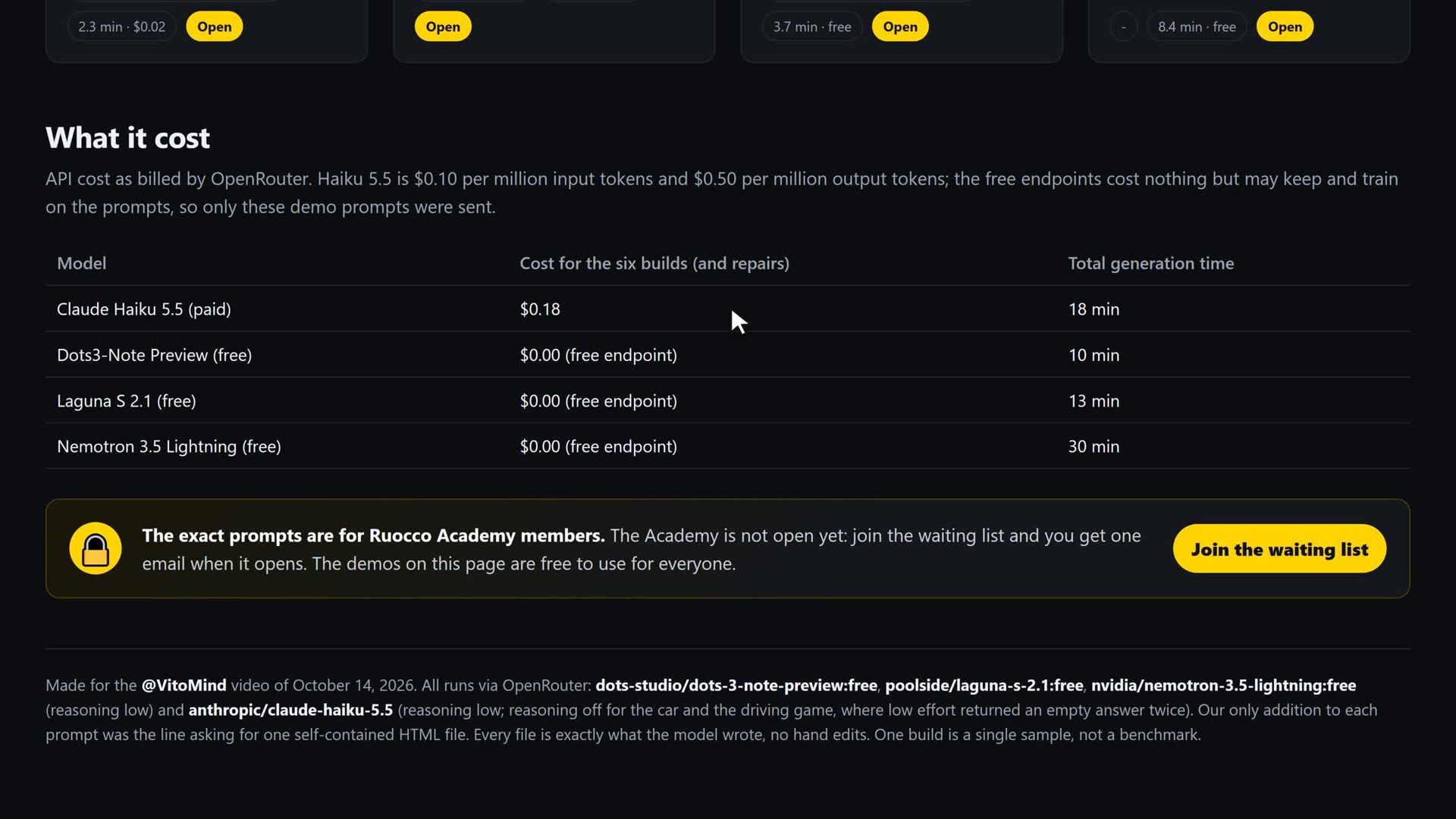
The cost is the part I find most interesting. Haiku 5.5, for all six builds plus the two attempts that returned nothing, cost about 18 cents. The free models cost zero dollars, but they took longer, hit rate limits and needed repairs. So free is not zero. It is your time, and in some cases your prompts. For a quick experiment, a free model is a fine way to learn. For anything where you want the file to run the first time, a very cheap paid model is the better deal, and Haiku 5.5 at these prices is a strong one.
One caveat: each build is a single sample. If I ran every prompt ten times, some of these results would change. Read this as a snapshot of what one request produced this week, not a benchmark.
Get the Prompts and the Code
The demos are free to play. The exact prompts, the settings, the repair tool and the QA scripts are part of Ruocco Academy, which is not open yet: you can join the waiting list at ruocco.it/academy and you get one email when it opens. The public gallery has no prompts, by design.