The Week AI Went Wild: Anthropic Opus 5.5, OpenAI GPT-6 Twins, and Meta’s Muse Takeover
September 27, 2026 — by Vito Ruocco
It was supposed to be a calm week in AI. Industry leaders from OpenAI and Anthropic had been talking about “pacing the frontier” — deliberately slowing capabilities advancement to let safety research catch up. But if September 2026 taught us anything, it’s that the frontier has its own rhythm. What unfolded was nothing short of a “model drop week” that reshuffled the competitive landscape overnight: Anthropic dropped Opus 5.5, OpenAI answered with GPT-6 Sol and Luna within 90 minutes, and Meta quietly emerged as the unexpected winner with Muse, its personal AI agent that’s already outpacing ChatGPT’s early adoption numbers — and coming soon to a Tamagotchi-style wearable near you.
Anthropic Kicks Off With Opus 5.5: Smarter, Cheaper, Faster
On Tuesday, September 22, Anthropic released Claude Opus 5.5, the latest iteration of its most capable model tier. The update didn’t just bump benchmark scores — it fundamentally changed how the model communicates. Anthropic claims Opus 5.5 sets a new state-of-the-art in coding and knowledge work, outperforming even the much larger “Fable” model across multiple benchmarks.
The improvements are measurable across the board. Opus 5.5 achieved superior results on formal coding evaluations, complex reasoning tasks, and multi-step knowledge synthesis. In internal testing, it completed a range of informal tasks that Fable, the company’s previous top-tier model, simply could not handle. “Opus 5.5 is comparable to Mythos in its biology and cybersecurity capabilities,” Anthropic noted in its release announcement.
Perhaps more striking than the raw performance is the pricing revolution. Output tokens dropped from $25 per million tokens (Opus 5) to $20 per million tokens for Opus 5.5 — a 20% reduction that reflects meaningful improvements in inference efficiency. The model is also notably faster to run, thanks to architectural optimizations that reduce the compute required per query.
The release also features a refined communication style. Earlier Claude models could be verbose and jargon-heavy. Opus 5.5 is trained to front-load important information and minimize technical terminology, making it more accessible for enterprise users who aren’t AI specialists. This may seem like a small change, but it signals a broader industry trend: models are increasingly designed not just for raw capability, but for user experience and trustworthiness.
Interestingly, Opus 5.5 is Anthropic’s first model release since CEO Dario Amodei publicly embraced the “pace the frontier” philosophy. In a widely circulated post earlier this month, Amodei wrote: “I have become convinced that fully addressing the risks requires even more prudence — not just investing in risk prevention, but pacing the rate of capabilities advancement so that risk prevention has time to keep up.” Despite this stance, the release went ahead with standard safety protocols: alignment testing, pre-release evaluation by METR and Frontier Design, and the same safeguards applied to Fable for biology and cybersecurity use cases.
OpenAI Strikes Back: GPT-6 Sol and Luna Drop 90 Minutes Later
If Anthropic thought it would have the week to itself, it was mistaken. Just 90 minutes after Opus 5.5’s release, OpenAI fired back with updates to its GPT-6 family: GPT-6 Sol and GPT-6 Luna.
These models extend the GPT-6 generation that debuted earlier in September with GPT-6 Astra, which OpenAI had heralded as “the world’s best model” for computer work and coding. Sol and Luna represent different tiers in OpenAI’s hierarchy: Sol is optimized for complex, computationally intensive tasks like coding and software engineering, while Luna targets high-volume clerical work — summarizing documents, extracting information, and answering quick questions.
The headline improvement is cost. The new 6-series models are available at half the price of their 5.6-series predecessors. OpenAI attributes this to advances in caching strategies and inference optimization. “GPT-6 Astra introduced a new generation of intelligence; these models extend its benefits by making that intelligence more efficient and accessible,” the company stated.
Accuracy improvements are equally significant. According to OpenAI’s internal factuality evaluation — based on de-identified real-world conversations where users flagged model mistakes — GPT-6 Sol makes “about half as many mistakes as its predecessor, reaching Astra-level reliability at much lower cost.” This is a critical metric for enterprise adoption, where factual reliability remains the single biggest barrier to deploying AI at scale.
The competitive subtext was impossible to miss. OpenAI’s announcement repeatedly claimed that GPT-6 Sol and Luna handle tasks “substantially better” than Anthropic’s top models, including both Fable and Opus 5.5. The timing — 90 minutes after Anthropic’s launch — was a deliberate flex, designed to position OpenAI as the company setting the pace, not following it.
Both models are now available in ChatGPT Work and Codex for paid accounts, as well as through the ChatGPT API. Luna is also rolling out to the desktop app and Free/Go tier users, signaling OpenAI’s intent to democratize access to its most advanced capabilities.
The Quiet Giant: Meta’s Muse Is Outpacing ChatGPT’s Early Numbers
While the Anthropic-OpenAI rivalry dominated headlines, a different story was unfolding in the consumer AI space. Meta’s personal AI agent, Muse, launched in early September and is already posting numbers that rival ChatGPT’s historic debut.
According to data from Apptopia, Muse accumulated 1.8 million iOS downloads in the US and Canada during its first 12 days — compared to ChatGPT’s 1.3 million in the same window. The app has now climbed to the #1 spot on the US App Store, a position ChatGPT never achieved in its early days. Muse’s US daily active users stand at 642,000, nearly three times ChatGPT’s 231,000 at the equivalent post-launch point.
“Meta already perfected its cross-promotion strategy when it launched Instagram’s Threads, which now has 500+ million users,” noted TechCrunch. “Muse is likely to get a similar push.” Over 95% of Muse’s users are also Facebook users, and 63% are Instagram users — giving Meta an unparalleled distribution advantage that pure-play AI companies simply cannot match.
At Meta’s Connect event on Wednesday, CEO Mark Zuckerberg made it clear that Muse is the centerpiece of the company’s AI strategy — and perhaps its entire future. “In the coming years, I expect that Muse is going to grow into the personal superintelligence that billions of people around the world are going to use to accomplish their goals and improve their lives,” Zuckerberg declared.
The monetization strategy is characteristically Meta: Muse is free for a generous token allocation, with the company planning to take “a small fee from transactions” rather than charging subscription fees. This approach mirrors the ad-supported model that made Facebook a trillion-dollar company, applied to the AI agent paradigm.
Muse Gets a Face, a Body, and a Tamagotchi Body
Perhaps the most intriguing announcement from Connect was Muse Realtime Avatar — a new AI model that gives Muse a digital face, body, and voice for real-time video conversations. Users will be able to conjure a distinct avatar for their agent and hold live video chats, complete with natural conversational turn-taking.
There’s a distinctly Metaverse-ish quality to this feature, and indeed it signals Meta’s continued belief that avatars and immersive interaction are the future of human-computer interaction. But Meta is hedging its bets with physical hardware too.
The company announced a Tamagotchi-style wearable device for Muse — a tiny, screen-equipped companion that users can carry with them and interact with throughout the day. It’s a bold departure from the screen-dominated paradigm of smartphones and smart glasses, harking back to the tactile, emotional connection of 1990s digital pets. Whether consumers will embrace this remains to be seen, but it demonstrates Meta’s willingness to experiment with form factors that competitors wouldn’t consider.
Muse is also coming to smart glasses, with a new camera-free AI glasses model that activates via a wake word. The glasses version will guide users through personalized workouts, log meals, book appointments, and enable purchases of products users see — all through voice interaction. “Muse will work in the background and check back in when it’s done,” Meta promised.
Perhaps most practically, Muse is gaining the ability to control a user’s Mac. Much like competitive agents from OpenAI and Anthropic, Muse will be able to operate any application on a desktop computer, allowing users to walk away while the agent completes tasks. Meta’s chief AI officer Alexandr Wang demonstrated the feature at Connect: “You can have it help you run your small business, or just get work done for you. You can walk away from your computer and it keeps working for you on all the jobs you lined up.”
Google Enters the Voice AI Arena with Gemini 3.8 Flash TTS
Amidst the model wars, Google quietly released its Gemini 3.8 Flash TTS and Gemini 3.8 Flash-Lite TTS — dedicated text-to-speech models engineered for high-quality, large-scale audio production. This isn’t a general-purpose language model release, but a specialized tool that reveals Google’s strategy of dominating vertical AI applications rather than general-purpose chatbots.
Gemini 3.8 Flash TTS targets interactive entertainment, game development, and long-form narration. The Lite variant is optimized for automated dubbing, customer-facing conversational agents, and high-volume translation pipelines. On the Hume AI Voice Design Benchmark, Gemini 3.8 Flash TTS scored an overall 71.4 and a category-leading 60.8 in accent modeling. Both models outperformed their Gemini 3.1 Flash TTS predecessor.
The most impressive technical detail: developers can access a directory of over 2,000 pre-built vocal profiles covering regional linguistic variations — Quebec French, Scots English, Mexican Spanish — across more than 100 languages. A forthcoming voice remixing module will allow engineers to adjust timbre, pitch, pace, and accent contours through text commands.
Voice cloning safeguards are robust: recreating a vocal profile requires a 30-second reference recording and explicit verbal consent from the original voice owner. Google validates acoustic alignment between both tracks before processing custom profiles, and all generated audio embeds SynthID watermarks and C2PA provenance metadata for downstream detection.
When AI Ethics Catches Up With AI Builders
Not everyone in AI is celebrating this week’s rapid releases. Robert O’Callahan, a longtime engineer at Google DeepMind working on AI chip design tools, publicly resigned on September 24, citing moral concerns about the pace of AI development.
“My team’s goal is ultimately to make AI much cheaper and lower-latency, and I don’t think that’s good for people right now,” O’Callahan wrote in his resignation letter. “I firmly believe AI progress is currently far too rapid (and I have doubts about the destination too).”
O’Callahan, who is also a Christian elder and lay preacher in Auckland, New Zealand, wrote extensively about the ethical dimensions of his decision: “It’s tempting to just turn a blind eye to the impact of my work, but that would not be a Jesus-following thing to do.” His concerns range from existential risk from artificial superintelligence to cognitive surrender, AI-induced psychosis and loneliness, power concentration, and economic disruption.
“I am not convinced the chance of ASI doom is 100%. Rather, I think the risk is real but uncertain — but that itself is very alarming,” he wrote. “We are morally obliged to make a massive effort to minimize such risk.”
O’Callahan’s resignation follows a pattern of high-profile departures from major AI labs by engineers who feel the technology is advancing faster than society can adapt. While individual resignations may have negligible impact on industry momentum, they represent a growing moral unease within the very institutions building this technology.
The Pentagon Bets on Randomization: TRANSCOM’s AI Logistics
In a different corner of the AI world, the US military is deploying randomized AI to protect supply chains. General Randall Reed, head of US Transportation Command (TRANSCOM), revealed this week at the DefenseTalks conference that the military is using adaptive, randomized logistics algorithms to counter adversarial machine learning systems.
The concept is elegant in its simplicity. Traditional logistics prioritizes predictability — fixed schedules, steady delivery windows, just-in-time routing. In a contested environment, however, those predictable patterns become vulnerabilities. Adversaries can train ML models on observed supply routes and predict where critical shipments will be, enabling targeted interdiction.
TRANSCOM’s solution: inject controlled randomness into transport routes, frequencies, and destination nodes. By making logistics output genuinely unpredictable, the military strips adversaries of their predictive advantage. “The adversary can, and will, contest our logistics at any point within the chain,” said Reed. “AI in our adversaries can act as a barrier. It multiplies disruptions.”
The system goes beyond simple route randomization. Algorithmic network healing continuously recalculates delivery paths when physical disruptions or communication outages occur. Predictive demand engines anticipate supply deficits before field units submit formal requisitions. IoT sensors track cargo in transit, digital twins simulate distribution corridors, and blockchain secures data against manipulation.
TRANSCOM is also building a “secure, authoritative data layer” to supply clean, verified inputs directly to predictive models — filtering corrupted entries and protecting decision pipelines from manipulation during live combat. As Reed put it, the goal is to ensure that “under fire, we are the ones who can out-deliver the adversary in ammunition, batteries, medical supplies, and even Cheetos.”
What This All Means
The week of September 22, 2026, will be remembered as a turning point. Not because any single model was revolutionary — though Opus 5.5, GPT-6 Sol, and Luna are all impressive — but because the competitive dynamics of the AI industry fundamentally shifted.
Three dynamics stand out:
1. Price collapse is accelerating adoption faster than capability gains. Both OpenAI and Anthropic cut prices significantly with this week’s releases. The cost of GPT-6 Sol is half that of its predecessor. Opus 5.5 is 20% cheaper than Opus 5. At these rates, AI inference is becoming cheap enough to embed in every software product, every workflow, every device. The Tamagotgi-sized Muse wearable is a physical manifestation of this trend — AI is becoming ambient, always-on, and essentially free.
2. Consumer AI has a new king, and it’s Meta. OpenAI and Anthropic are locked in a battle for enterprise supremacy, but Meta’s Muse is winning the consumer war by a landslide. With 2.8 million downloads in 12 days, integration with Facebook, Instagram, and WhatsApp, and a strategy that prioritizes distribution over subscription revenue, Meta has found a formula that pure-play AI companies cannot replicate.
3. The safety conversation is no longer abstract. Dario Amodei’s “pace the frontier” essay, Robert O’Callahan’s resignation, and the ongoing debate about AI risk have moved from academic circles to boardroom conversations. Even as models get faster and cheaper, the people building them are increasingly uncomfortable with the speed of change. This tension — between competitive pressure and ethical unease — will define the next phase of the AI era.
As for the models themselves? The benchmarks will continue to climb. The prices will continue to fall. The release cadence will continue to accelerate. But the deeper question — whether we can build this technology fast enough to be useful, yet carefully enough to be safe — remains unanswered.
September 2026 gave us answers about what AI can do. It left us with even bigger questions about what we should do with it.
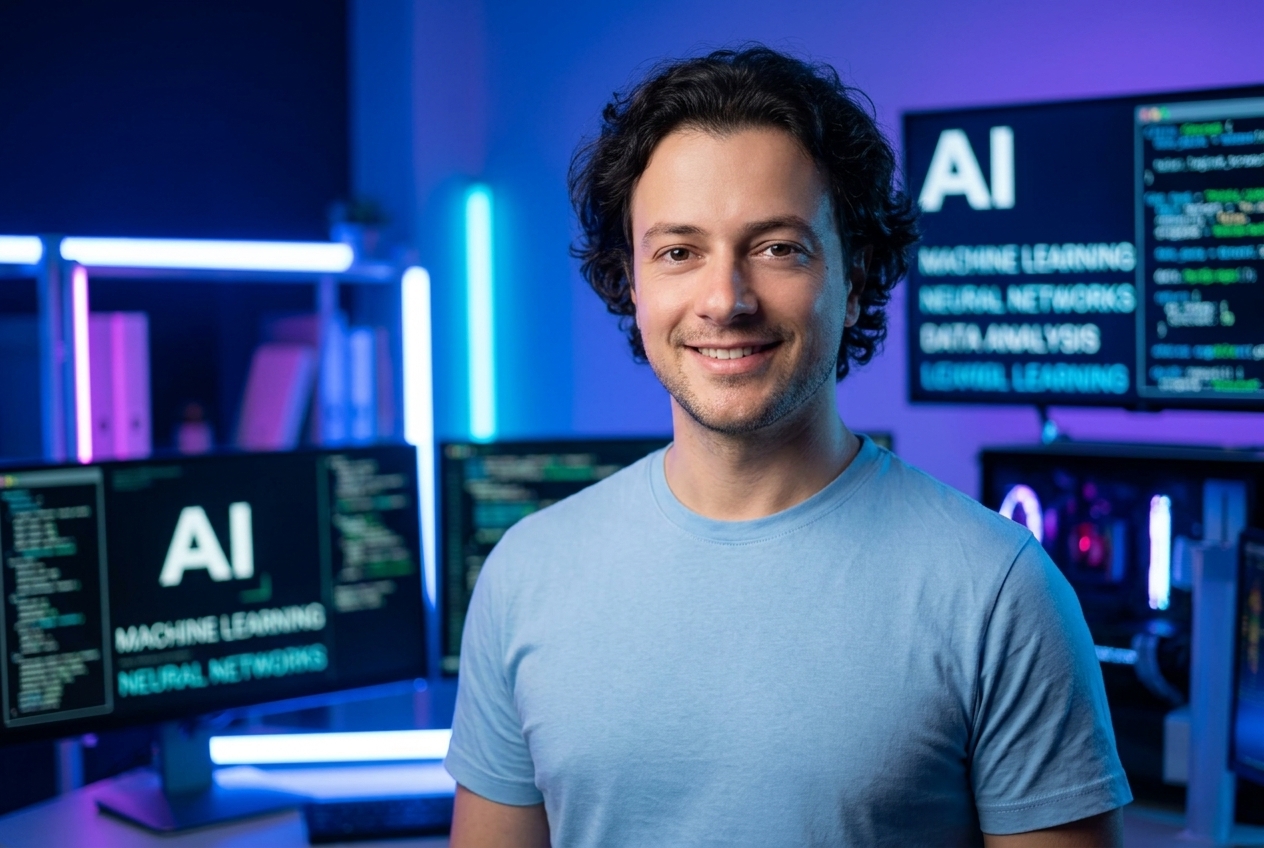
Cover image: Vito Ruocco analyzes the week’s biggest AI developments in a futuristic tech studio, surrounded by holographic displays showing real-time model benchmarks and competitive intelligence from the AI industry.